EV Charger Circuit Calculator
Size EV charger branch circuits for NEC Article 625 (208/240 V 125% continuous OCPD, 75°C THWN vs 60°C NM-B, GFCI rules, and 2026 NEC 120.7 PCS) and IEC 60364-7-722 / BS 7671 Section 722 (230 V 1φ / 400 V 3φ, 100% MCB, Type A + 6 mA RDC-DD, and PME earthing).
Step-by-step calculation
- Active Context: NFPA 70 (NEC 2026) | 1-Phase | Copper | 75°C THWN-2 / MC
- EVSE Nameplate Output = 240 V × 32 A = 7.68 kW
- Mandatory 125% Continuous Load Factor (NEC 625.41) = 32 A × 1.25 = 40.0 A
- Minimum Standard 2-Pole Breaker (NEC 240.6(A)) = 40 A
- Minimum Copper Phase Conductor (75°C THWN-2 / MC Cable per NEC 310.16) = 8 AWG Cu (50 A reference)
- Equipment Grounding Conductor (NEC Table 250.122 for 40 A OCPD) = 10 AWG Cu
- Hardwired Installation: EVSE contains integral 20 mA CCID ground-fault protection; a standard non-GFCI two-pole thermal-magnetic breaker is typically used unless local amendments require breaker GFCI.
Formula
Input definitions
| Symbol | Input | Unit | Meaning & code relevance |
|---|---|---|---|
| Std | Engineering Standard | — | Engineering input parameter for engineering standard, evaluated in real-time by the solver. |
| I_EVSE | EVSE Continuous Output Current | A | Steady-state operating load current in amperes; compare with NEC Table 310.16 or IEC 60364-5-52 conductor ampacity. |
| φ | Supply Phase | — | Electrical supply configuration: Single-Phase (2-wire) or balanced Three-Phase (3-wire/4-wire with √3 factor). |
| V | Nominal Supply Voltage | V | Nominal RMS AC or steady-state DC system potential (e.g., 120V/240V/480V NEC or 230V/400V IEC 60038). |
| Conn | EVSE Termination Type (NEC 625.44 / 625.54) | — | Engineering input parameter for evse termination type (nec 625.44 / 625.54), evaluated in real-time by the solver. |
| Wire | Cable / Conduit Method | — | Engineering input parameter for cable / conduit method, evaluated in real-time by the solver. |
| PCS | NEC Load Management / Power Control System (PCS) | — | Active electrical or mechanical power transfer (W/kW) dissipated or delivered to the load. |
Worked example
32 A EVSE: NEC 240 V 1φ (7.68 kW) vs. IEC 400 V 3φ (22.17 kW)
Compare North American NEC Article 625 sizing against European/UK IEC 60364-7-722 sizing.
- NEC 240 V 1φ @ 32 A (7.68 kW): Mandatory 125% continuous factor = 32 A × 1.25 = 40 A → 40 A 2-Pole Breaker, 8 AWG Cu (75 °C THWN or 60 °C NM-B), and 10 AWG Cu EGC.
- IEC 230 V 1φ @ 32 A (7.36 kW) or 400 V 3φ @ 32 A (22.17 kW): 100% continuous MCB rating (Ib ≤ In ≤ Iz) → 32 A Type B/C MCB + 6 mm² Cu (Method C) + 30 mA Type A RCD with 6 mA DC RDC-DD.
Assumptions
- In NEC mode, EV charging equipment is classified as a continuous load under NEC 625.41, requiring a 125% multiplier on maximum charger amps.
- In IEC 60364-7-722 / BS 7671 Section 722 mode, a dedicated EV circuit has a diversity factor of 1.0 and uses 100% continuous-rated EN 60898-1 / EN 61009-1 devices.
- Equipment grounding conductor in NEC mode is sized from the breaker rating per NEC Table 250.122.
Limitations
- Romex (NM-B) indoor cable is restricted by NEC 334.80 to the 60 °C ampacity column (6 AWG NM-B is capped at 55 A, so a 48 A charger on a 60 A breaker cannot use 6 AWG NM-B and requires 6 AWG THWN in conduit or 4 AWG NM-B).
- Long runs (>100 ft / 30 m) should be checked with the Voltage Drop Calculator to keep drop below 3%–5%.
How it works
In NEC mode, applies Article 625.41 continuous load factor (125%) to determine standard breaker rating, 75 °C (THWN/MC) vs. 60 °C (NM-B Romex per NEC 334.80) copper conductor gauge, NEC 250.122 EGC size, NEC 625.54 receptacle GFCI requirements, and 2026 NEC 120.7 Power Control System (PCS) load management notes. In IEC 60364-7-722 / BS 7671 Section 722 mode, computes 1-phase (230 V) or 3-phase (400 V) charging power, selects a 100% continuous-rated MCB (Ib ≤ In ≤ Iz with diversity = 1.0), and details 6 mA DC fault protection (RDC-DD) and PME/PEN earthing requirements.
When to use it
- Sizing the dedicated branch-circuit breaker (OCPD), phase conductors (AWG or mm²), and protective earth / ground wire for a Level 2 EV charger.
- Applying the mandatory NEC 625.41 / 120.7 125% continuous-load multiplier alongside NEC 110.14(C) 75 °C terminal limits and cable insulation rules.
- Designing 230 V single-phase (7.4 kW / 32 A) or 400 V three-phase (11 kW / 16 A and 22 kW / 32 A) EVSE circuits under IEC 60364-7-722 / BS 7671 Section 722.
Practical real-world applications
- Hardwired 48 A (11.5 kW) Home Wallbox Installation: Sizing a 60 A 2-pole breaker and 6 AWG THHN copper in conduit (or 4 AWG NM-B Romex due to the 60 °C 55 A limit).
- NEMA 14-50 Plug-In EVSE Setup: Verifying that a 50 A receptacle circuit is legally capped at 40 A (9.6 kW) continuous EV charger output under the 80% rule.
- Three-Phase Commercial Workplace EVSE Feeder: Sizing 5-core metric SWA/XLPE cable and Type A / Type B RCD protection for 11 kW and 22 kW charging posts.
Original Editorial Review & Technical Evaluation
Designs dedicated EVSE branch circuits (breaker rating, conductor size, and EGC/PE earthing) under NEC 2023/2026 Article 625 or IEC 60364-7-722 / BS 7671 Section 722.
Licensed electricians installing home & commercial EV chargers, electrical inspectors checking NEC 625 / PME rules, and EV homeowners planning panel capacity.
- Applies mandatory NEC 625 125% continuous-duty sizing (e.g., 48A EVSE → 60A breaker, hardwired requirement > 40A EVSE / > 50A circuit)
- Supports IEC/UK single-phase & three-phase Mode 3 EVSE circuits (Ib ≤ In ≤ Iz) plus open-PEN / PME earthing protection checks
- Verifies voltage drop across garage/driveway run length and checks NEC 2026 Section 120.7 Power Control Systems (PCS) headroom
Accuracy & methodology: Treats EVSE charging as a continuous load (100% duty ≥ 3 hours) and pairs dual-criteria ampacity + voltage-drop conductor sizing with non-normative planning reference defaults. Receptacle installations (e.g., NEMA 14-50) require GFCI protection and continuous-duty heavy-duty receptacles that differ from hardwired EVSEs. Computational standards →
What to verify independently: Verify hardwired vs. GFCI receptacle rules, terminal ratings (75 °C), and PME/open-PEN fault detection against NFPA 70 Article 625 or BS 7671 Section 722 / IEC 60364-7-722.
Put the numbers to work with the Voltage Drop Calculator, Wire Size Calculator (Dual-Criteria Solver) and Circuit Breaker Size Calculator. For the background behind the numbers, read Best EV Chargers of 2026: Home & Field Guide and How to Size a Circuit Breaker Correctly.
Common mistakes
- Wiring a 48 A EVSE (which requires a 60 A circuit) with 6 AWG NM-B Romex cable (which is limited to 55 A in the 60 °C column under NEC 334.80).
- Installing a 48 A EVSE on a NEMA 14-50 receptacle (which is rated 50 A maximum and supports at most 40 A continuous EVSE load).
- Connecting an outdoor UK/IEC EV charger directly to a PME (TN-C-S) earthing terminal without Open-PEN fault detection per BS 7671 Reg. 722.411.4.1.
Safety & code notice
Calculator results are planning estimates. Always verify electrical designs against applicable local codes, standards (NEC / IEC), and consult a qualified professional.
Frequently asked questions
Related Calculators
Voltage Drop Calculator
Calculate AC and DC voltage drop across AWG or metric mm² copper and aluminum runs.
Wire Size Calculator (Dual-Criteria Solver)
Size copper and aluminum conductors in AWG or mm² for ampacity and voltage drop.
Circuit Breaker Size Calculator
Select circuit breaker and MCB ratings for continuous loads and cable ampacity.
Earthing & Grounding Conductor Calculator (PE / CPC / EGC)
Size protective earthing (PE / CPC) and equipment grounding conductors (EGC).
Related Unit Converters
kW to Watts Converter (Kilowatts to Watts)
Convert kilowatts (kW) to watts (W), megawatts, and mechanical horsepower (HP).
Watts to Amps Converter
Convert active power in watts (W) to current in amps (A) for DC and AC circuits.
Electrical Energy Converter (kWh, Wh, Joules, kJ, MJ, BTU)
Convert electrical and thermal energy between kWh, Wh, joules, kJ, and BTU.
Electrical Length Converter (Meters, Feet, Inches, Yards, km, Miles)
Convert cable lengths between meters, feet, inches, millimeters, yards, and miles.
Related Engineering Guides
Best EV Chargers of 2026: Home & Field Guide
Compare Level 2 home EV chargers, plugs, load management, and branch circuit rules.
How to Size a Circuit Breaker Correctly
Match breaker current ratings and trip curves to load demand and cable ampacity.
How to Choose Cables & Wire
Select conductor sizes, insulation ratings, and cables for ampacity and drop limits.
Recommended Level 2 EV Chargers, Adapters & Feeder Protection
Size continuous EVSE branch circuits at 125% of charger output, protect receptacle circuits with Class A GFCI breakers where required, and torque terminal lugs to nameplate specifications.
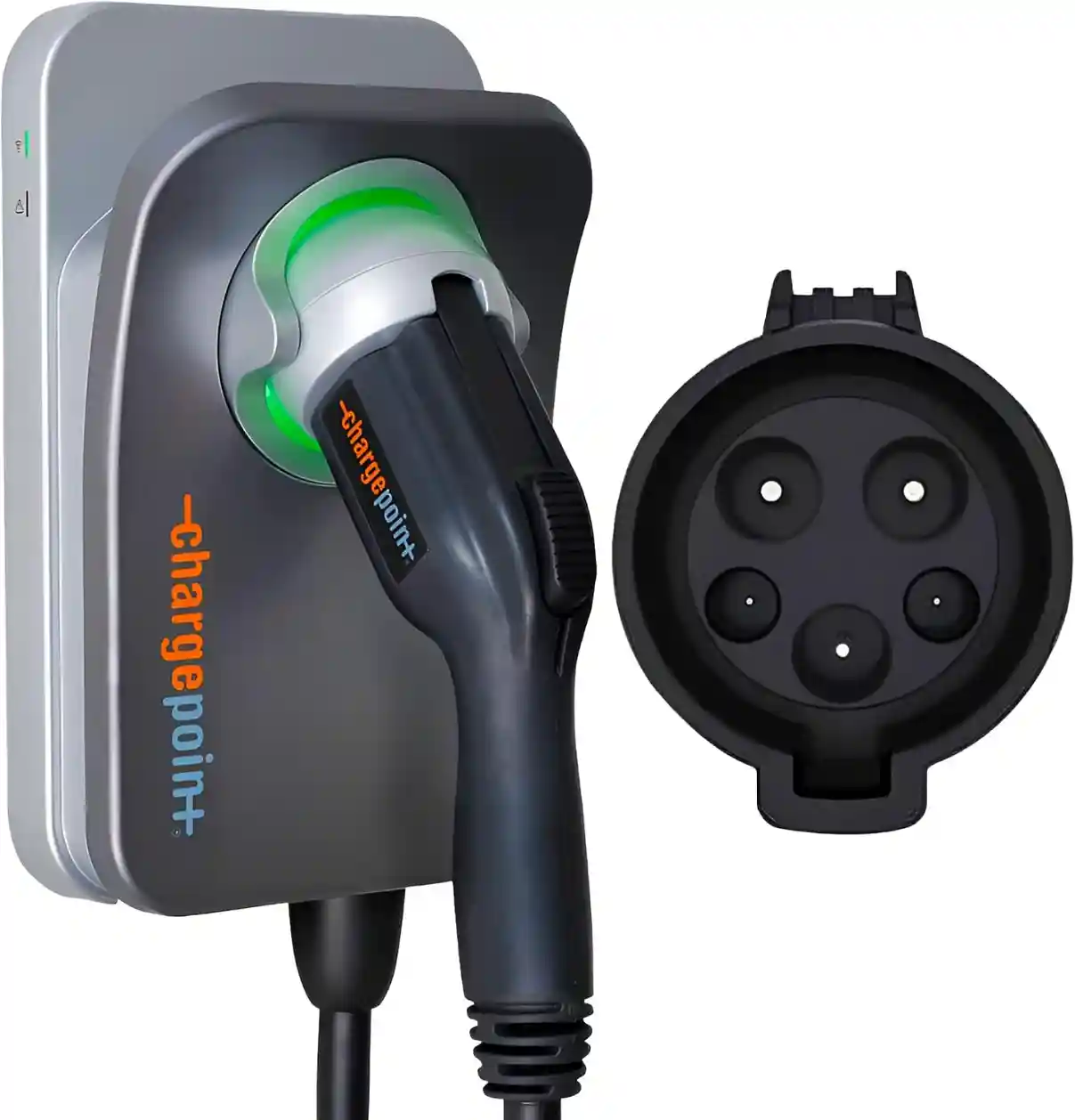
ChargePoint Home Flex Level 2 EV Charger (J1772)
Hardwired 240 V charging up to 50 A — as fast as most EVs can accept at home, with adjustable current and app scheduling.
- Up to 50 A on a hardwired 240 V circuit — around 12 kW, which adds roughly 30 to 37 miles of range per hour on an efficient EV, so an overnight charge covers the next day several times over.
- Adjustable current from 16 A to 50 A in 1 A steps — set it to match the capacity of the circuit you have, which makes an existing 240 V feed usable instead of requiring a service upgrade.
- J1772 connector — plugs directly into every non-Tesla EV; Tesla drivers use the J1772 adapter that came with the car.
Siemens QF250A 50-Amp GFCI Circuit Breaker
A 50-amp two-pole GFCI breaker for hot tubs, pools and outdoor 240 V circuits that need ground-fault protection.
- Class A ground-fault protection — trips on a small imbalance between hot and neutral, protecting people rather than just wiring.
- 50 amps, two poles, 120/240 V — the standard feed for a residential hot tub or spa.
- Neutral pigtail and load neutral terminal — the breaker monitors the neutral so the imbalance can be measured.
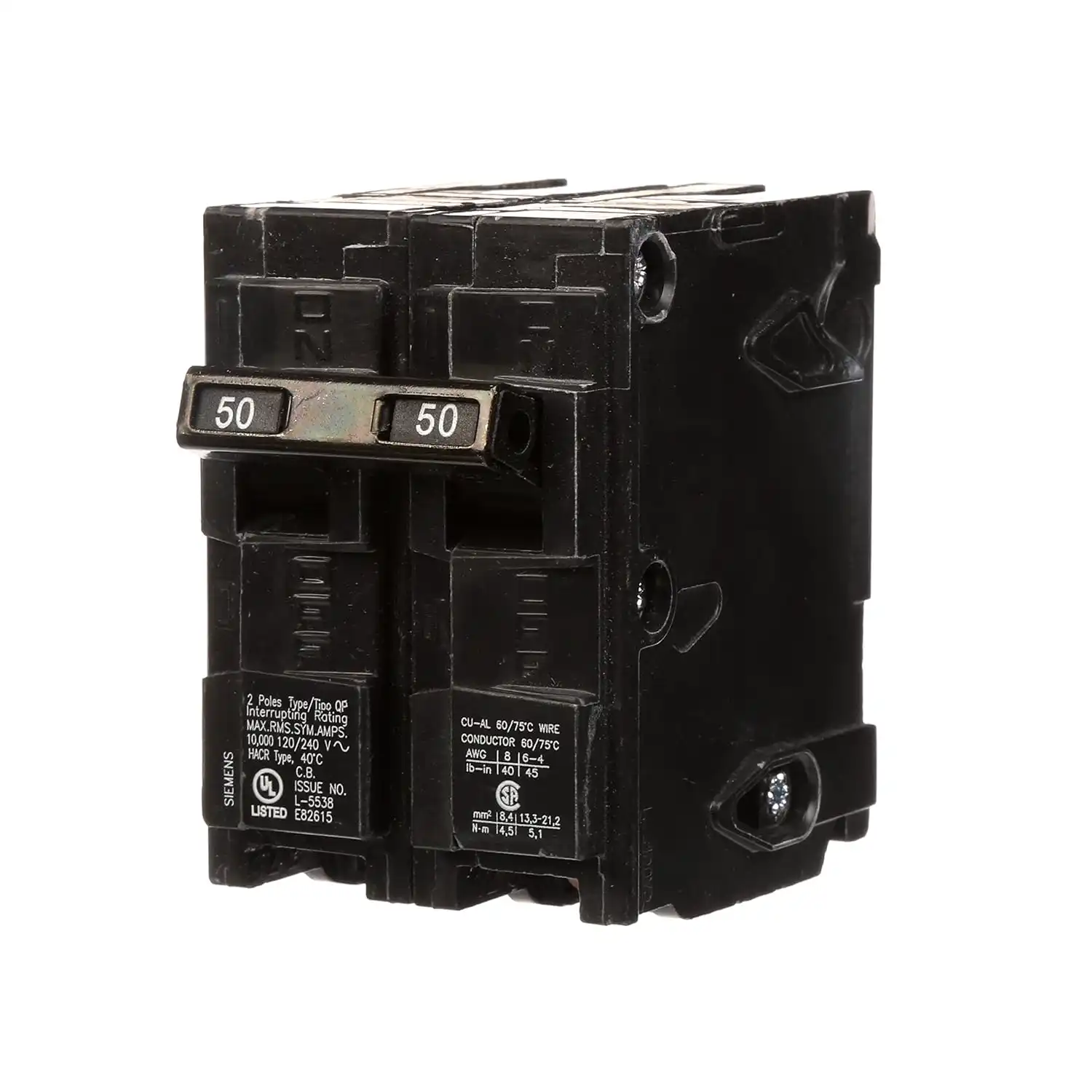
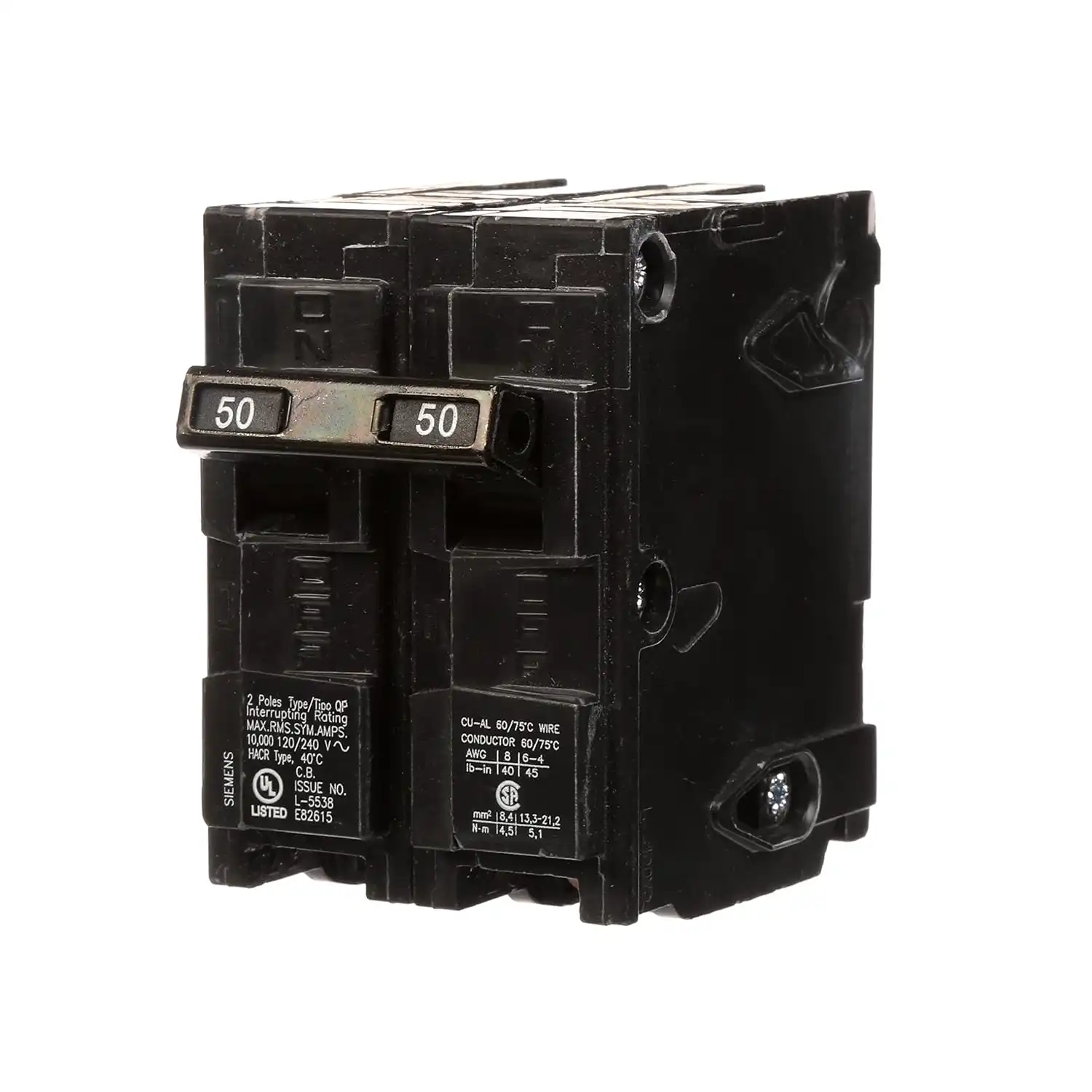
Siemens Q250 50-Amp Double-Pole Circuit Breaker
A 50-amp two-pole breaker for ranges, spa feeds, subpanels and 40-amp EV charging.
- 50 amps per pole at 120/240 V — ranges, spa circuits, subpanel feeds and 40 A EV charging.
- Common trip — both poles open together on overload or fault.
- 10 kA interrupting rating and HACR listing.
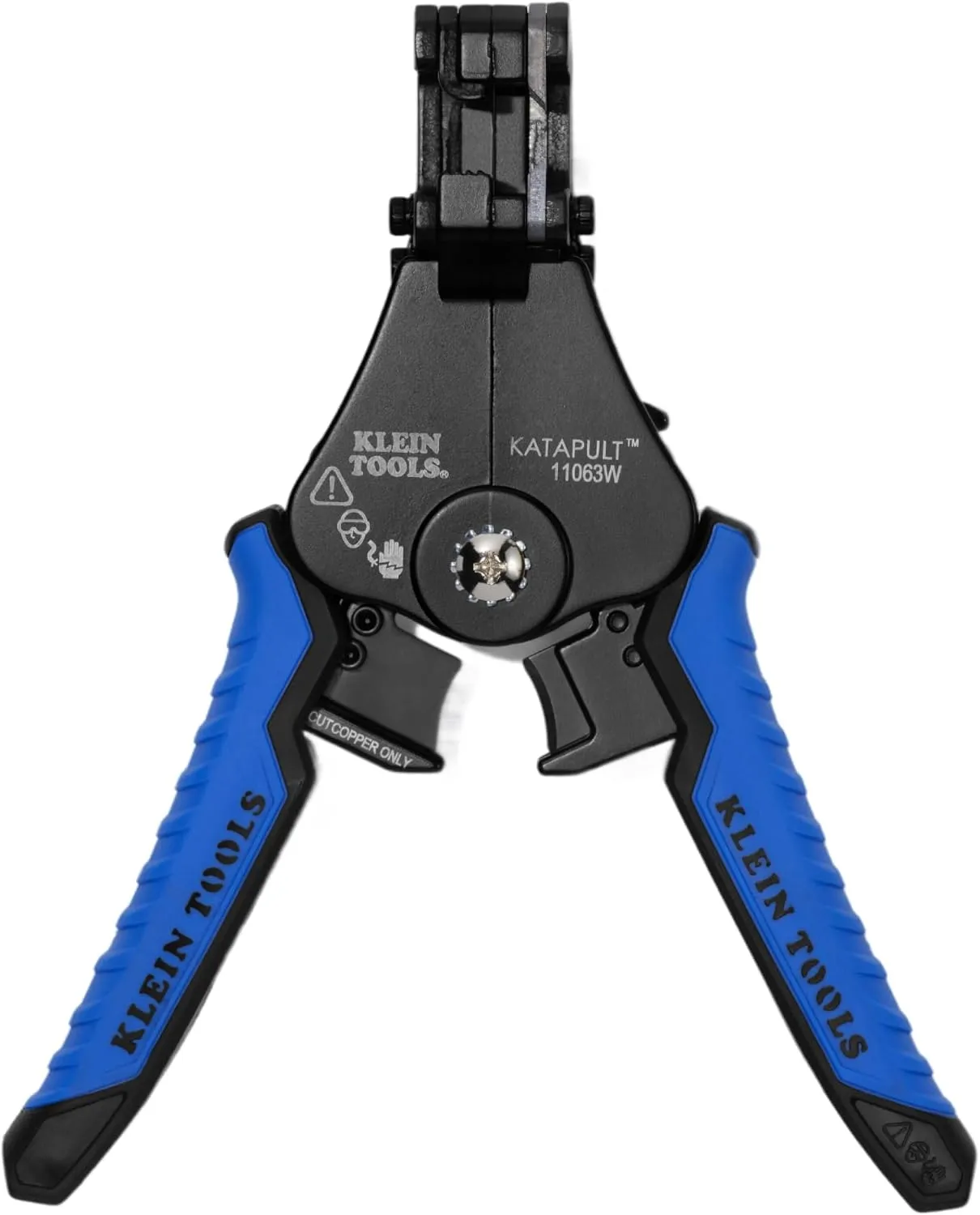
Klein Tools 11063W Wire Stripper and Cutter
Self-adjusting stripper that grips, strips and cuts common building wire in one motion.
- Self-adjusting action — squeeze once and the tool sets itself to the conductor size, so strips are repeatable.
- Clean strip without nicking — protects the copper, which is what keeps a termination reliable long term.
- Built-in cutter and plier nose — you can cut, strip and twist without swapping tools.