How to Size a Circuit Breaker Correctly
Two constraints, one decision
A breaker must do two things at once: carry the normal load without nuisance tripping, and protect the cable from overload. That gives two constraints:
- Breaker rating ≥ load current (with margin for continuous loads)
- Breaker rating ≤ cable ampacity
The correct breaker is one that satisfies both.
Step one: find the load current
For a resistive load, current is power divided by voltage. For motors and other inductive loads, include power factor and efficiency. Use the Electrical Load Calculator if you are working from a connected load.
Step two: add margin
Continuous loads should not exceed about 80% of a breaker's rating, which is equivalent to sizing the breaker at 1.25× the load current. Then round up to the next standard rating — 6, 10, 16, 20, 25, 32 A and so on.
Step three: check the cable
Look up the cable's current-carrying capacity for its insulation type, installation method, ambient temperature and grouping. If the chosen breaker exceeds that figure, either use a larger cable or a smaller breaker.
Step four: consider the trip curve
- Type B — general lighting and socket circuits with low inrush.
- Type C — small motors and inductive loads with moderate inrush.
- Type D — transformers and large motors with high inrush.
Why this matters
An oversized breaker lets a cable overheat before it trips — a fire risk. An undersized breaker trips constantly and tempts users to bypass it. Neither is acceptable.
The Circuit Breaker Size Calculator gives you the starting rating; always confirm against the cable's published capacity and your local code.
Side-by-Side Worked Examples: North America (NEC) vs. International (IEC 60364 / BS 7671)
North American (NEC 2023/2026) Worked Example
Size the breaker and conductor for a 240 V single-phase, 28 A continuous commercial HVAC heat strip running 75 ft (22.9 m) in copper THHN.
- Breaker sizing: Continuous factor = 28 × 1.25 = 35.0 A -> round up to a 40 A 2-pole breaker (standard NEC 240.6 rating).
- Conductor & terminal check: Select 8 AWG Cu (50 A at 75 °C; verify against NFPA 70 Table 310.16, Table 310.15(B)(1)(1) ambient/bundling, and NEC 110.14(C) 75 °C terminal limits). Voltage drop = 2 × 28 × (0.0175 × 22.9 ÷ 8.37) = 2.68 V (1.12%).
- Note on residential allowances: Dwelling service-entrance reductions (e.g., NEC 310.12 for 100 A/200 A main services) apply solely in North America and never to branch circuits.
International (IEC 60364 / BS 7671) Worked Example
Size an MCB and cable for a 230 V 1-phase, 26 A (I_b) commercial load installed clipped direct (Method C) for 35 m at 35 °C ambient beside two circuits (C_a = 0.94, C_g = 0.70, non-normative planning defaults; verify against IEC 60364-5-52 / BS 7671 Appendix 4 Table 4Ab).
- Coordination (I_b ≤ I_n ≤ I_z): Select standard breaker I_n = 32 A (Type B). Minimum un-derated cable capacity = 32 ÷ (0.94 × 0.70) = 48.6 A, so pick 10 mm² copper (~64 A Method C base -> derated I_z = 42.1 A would require 10 mm² XLPE at ~75 A base -> I_z = 49.4 A).
- Voltage drop & PE sizing: Drop = 2 × 26 × (0.0175 × 35 ÷ 10) = 3.19 V (1.39%). Adiabatic PE check at 1,500 A fault for 0.1 s (k = 143): S = √(1,500² × 0.1) ÷ 143 = 3.32 mm² -> 4 mm² CPC.
Related Calculators
Circuit Breaker Size Calculator
Select circuit breaker and MCB ratings for continuous loads and cable ampacity.
Wire Size Calculator (Dual-Criteria Solver)
Size copper and aluminum conductors in AWG or mm² for ampacity and voltage drop.
Voltage Drop Calculator
Calculate AC and DC voltage drop across AWG or metric mm² copper and aluminum runs.
Related Unit Converters
Watts to Amps Converter
Convert active power in watts (W) to current in amps (A) for DC and AC circuits.
Amps to Watts Converter
Convert current in amps (A) to active power in watts (W) for DC and AC systems.
AWG to mm² Converter (American Wire Gauge to Metric)
Convert American Wire Gauge (AWG) to metric mm² area, diameter, and resistance.
Frequently Asked Questions
Recommended Tools & Equipment for This Guide
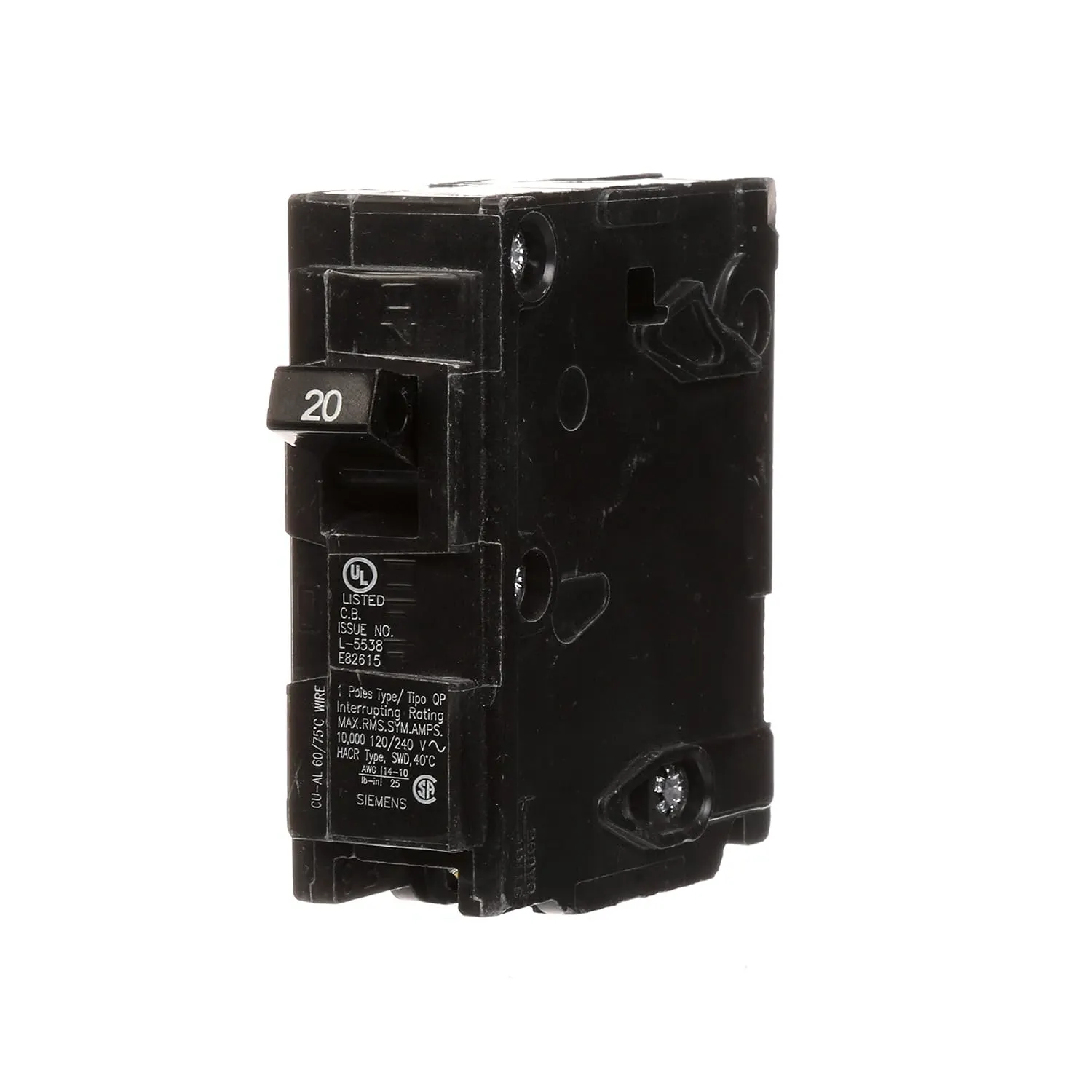
Siemens Q120 20-Amp Single-Pole Circuit Breaker
The standard 20-amp single-pole breaker for lighting, receptacles and small appliances on 120 V circuits.
- 20-amp single pole for 120 V circuits — sized for standard 12 AWG receptacle and lighting circuits.
- 10 kA interrupting rating — handles the fault current available in typical residential panels.
- SWD (switching duty) listed — approved for switching fluorescent lighting loads, not just overload protection.
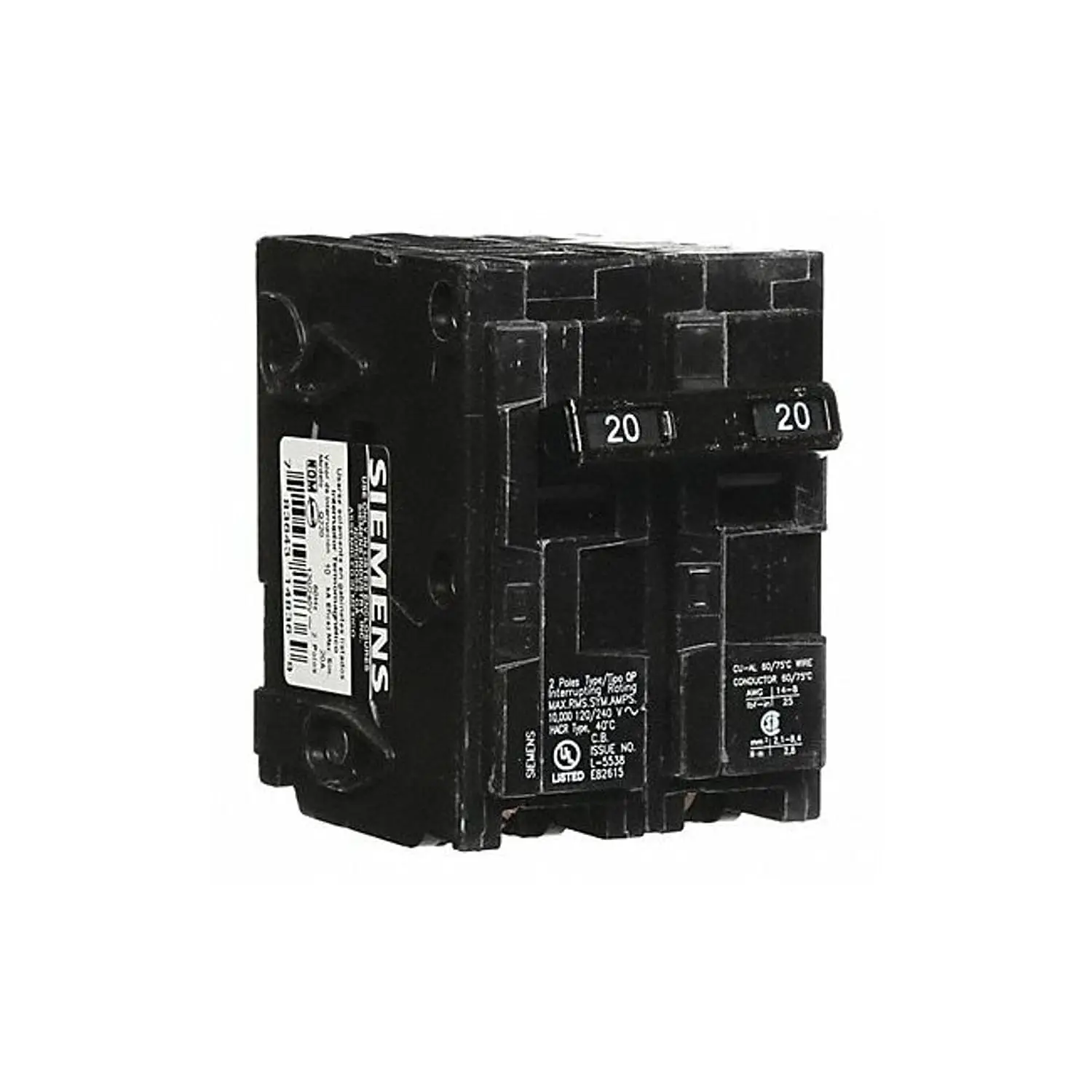
Siemens Q220 20-Amp Double-Pole Circuit Breaker
A 20-amp two-pole breaker for 240 V loads such as a small air conditioner, well pump or baseboard heater.
- 20 amps per pole at 120/240 V — supplies a 240 V load with a common-trip action.
- Common trip — both poles open together, so a fault cannot leave one leg live.
- 10 kA interrupting rating — appropriate for typical residential service fault levels.
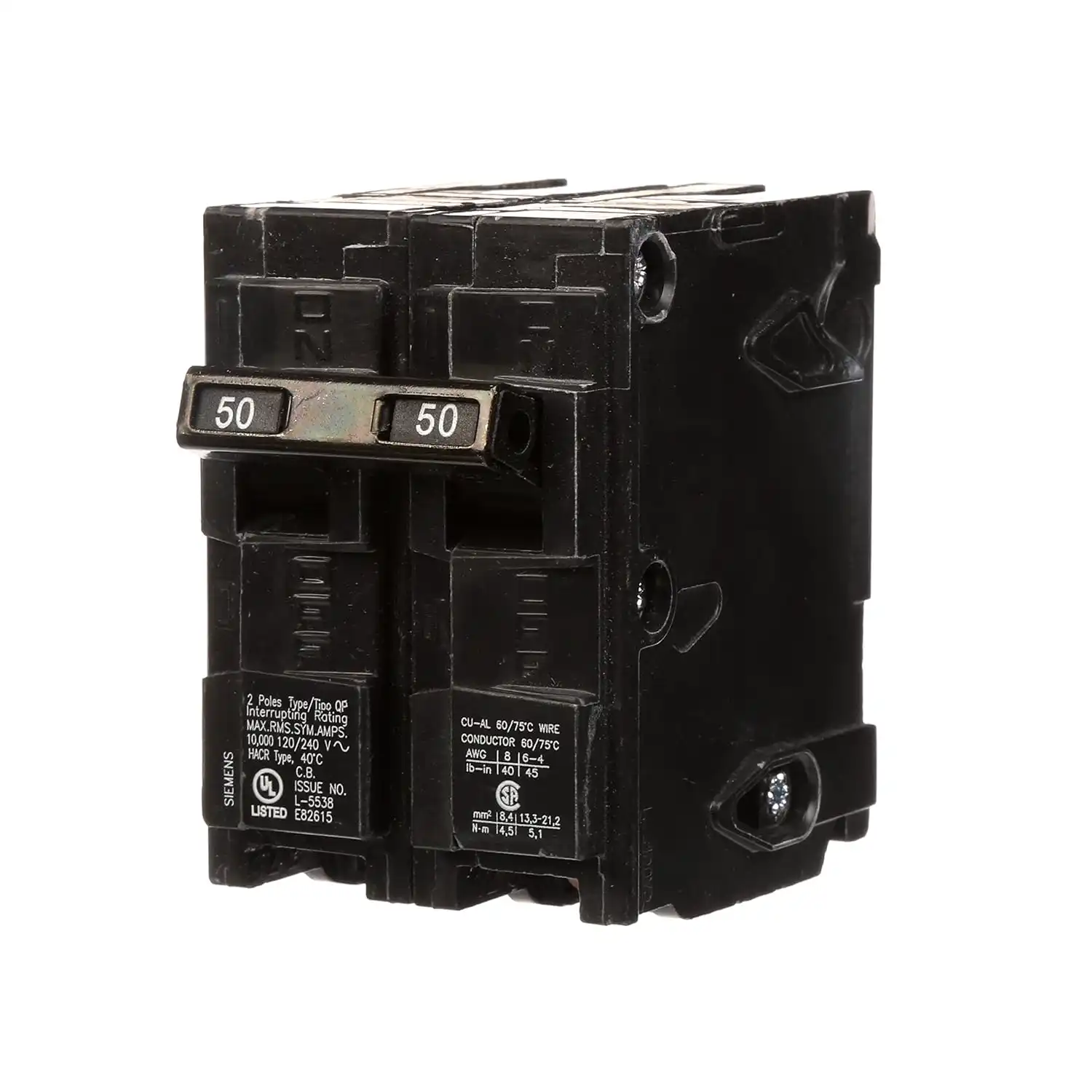
Siemens Q250 50-Amp Double-Pole Circuit Breaker
A 50-amp two-pole breaker for ranges, spa feeds, subpanels and 40-amp EV charging.
- 50 amps per pole at 120/240 V — ranges, spa circuits, subpanel feeds and 40 A EV charging.
- Common trip — both poles open together on overload or fault.
- 10 kA interrupting rating and HACR listing.
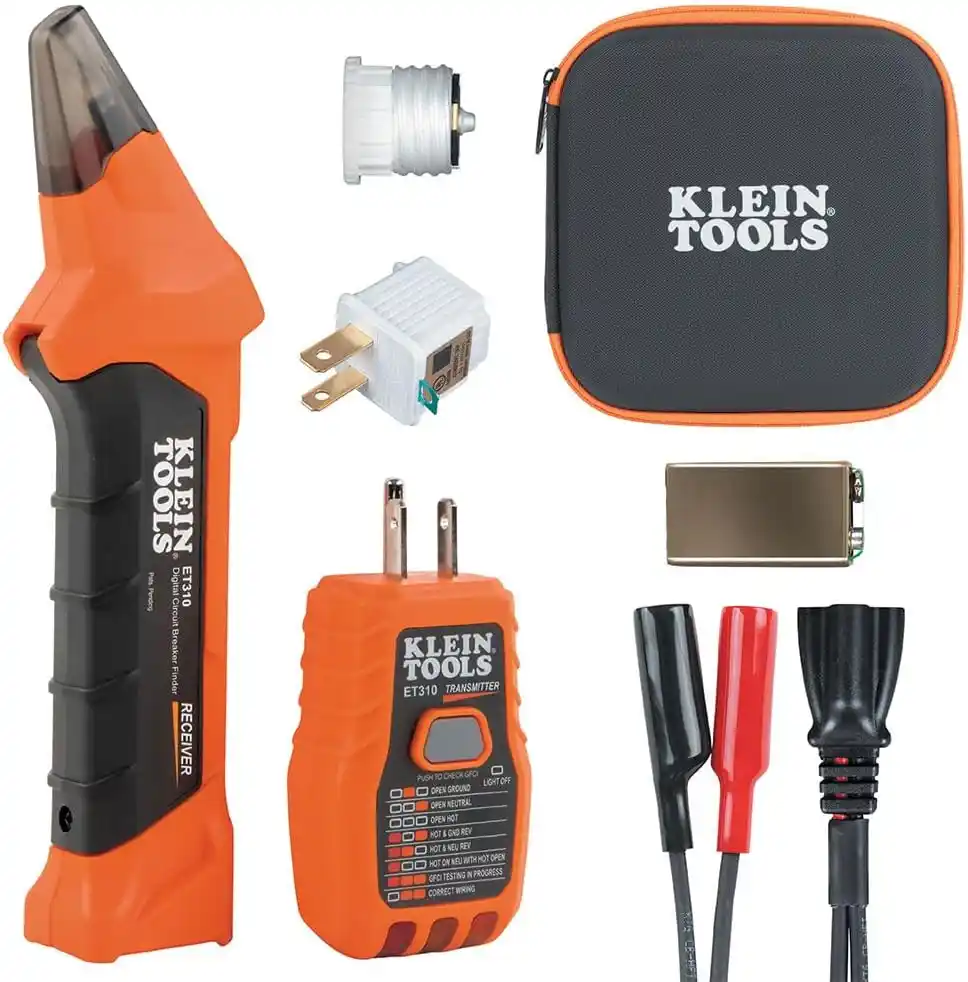
Klein Tools ET310 Circuit Breaker Finder Kit
Finds the breaker feeding a circuit without shutting the panel down — the transmitter plugs into the outlet, the receiver traces it back.
- Transmitter and receiver pair — plug the transmitter into the socket, then sweep the receiver across the panel to identify the matching breaker.
- Wiring status indicator on the transmitter — the same open ground, open neutral, open hot, reversed hot/neutral and reversed hot/ground checks as a standard outlet tester.
- GFCI test button — trips a GFCI device to confirm it is actually protecting the circuit, not just installed.
Related Engineering Guides
Circuit Protection Basics: Breakers, Fuses, RCDs and Coordination
Coordinate miniature circuit breakers, fuses, and RCDs against faults and overloads.
How to Choose Cables & Wire
Select conductor sizes, insulation ratings, and cables for ampacity and drop limits.
100 Amp Wire Size: What Gauge You Actually Need
Select copper and aluminum conductor sizes in AWG and mm² for 100 A subpanel runs.