Electrical Load Calculator
Calculate residential & commercial demand load under NEC 2026 Article 120 (with Section 120.7 PCS & Table 120.54 dryer demand), NEC 2023 Article 220, or IEC 60364 simultaneity (ks) & 3-phase L1/L2/L3 neutral unbalance.
Step-by-step calculation
- Active Context: NFPA 70 (NEC 2026) | Dwelling Service 240 V (1-Phase)
- General Lighting & Receptacles = 2000 ft² × 3 VA/ft² = 6,000 VA
- Small-Appliance (2 × 1,500 VA = 3,000 VA) + Laundry (1,500 VA)
- Appliances Pool (Dryer per Table 120.54 = 5,000 VA, Range = 8,000 VA, Fixed = 12,000 VA) → General Pool = 35,500 VA
- Demand Factor (First 10,000 VA @ 100% + 25,500 VA @ 40%) = 20,200 VA
- HVAC Load = 6,000 VA | EVSE Load Included = 9,600 VA
- Total Demand = 35.80 kVA ÷ 240 V = 149.2 A → Recommended 150 A Service
Formula
Input definitions
| Symbol | Input | Unit | Meaning & code relevance |
|---|---|---|---|
| Mode | Load Calculation Method | — | Engineering input parameter for load calculation method, evaluated in real-time by the solver. |
| V | System Voltage | V | Nominal RMS AC or steady-state DC system potential (e.g., 120V/240V/480V NEC or 230V/400V IEC 60038). |
| Area | Dwelling Floor Area (NEC 3 VA/ft² or 33 VA/m²) | ft² / m² | Engineering input parameter for dwelling floor area (nec 3 va/ft² or 33 va/m²) measured in ft² / m², evaluated in real-time by the solver. |
| Unit | Floor Area Unit | — | Engineering input parameter for floor area unit, evaluated in real-time by the solver. |
| N_sa | 20A Small-Appliance Branch Circuits (min 2 @ 1500 VA) | ckts | Engineering input parameter for 20a small-appliance branch circuits (min 2 @ 1500 va) measured in ckts, evaluated in real-time by the solver. |
| N_la | Laundry Branch Circuits (@ 1500 VA) | ckts | Engineering input parameter for laundry branch circuits (@ 1500 va) measured in ckts, evaluated in real-time by the solver. |
| VA_fix | Fastened-in-Place Appliances (Water Heater, Range, Dishwasher) | VA | Engineering input parameter for fastened-in-place appliances (water heater, range, dishwasher) measured in VA, evaluated in real-time by the solver. |
| VA_dry | Electric Clothes Dryer Nameplate (NEC Table 120.54 min 5000 VA) | VA | Engineering input parameter for electric clothes dryer nameplate (nec table 120.54 min 5000 va) measured in VA, evaluated in real-time by the solver. |
| VA_hvac | Largest HVAC / Heat Pump / Space Heating Load (100%) | VA | Engineering input parameter for largest hvac / heat pump / space heating load (100%) measured in VA, evaluated in real-time by the solver. |
| VA_ev | EV Charger / EVSE Load (Optional) | VA | Engineering input parameter for ev charger / evse load (optional) measured in VA, evaluated in real-time by the solver. |
| I_PCS | NEC 2026 Sec. 120.7 Power Control System (PCS) Limit (Optional) | A | Active electrical or mechanical power transfer (A) dissipated or delivered to the load. |
| W | Connected Load (for IEC / Quick Mode) | W | Engineering input parameter for connected load (for iec / quick mode) measured in W, evaluated in real-time by the solver. |
| DF | Demand / Simultaneity Factor ks (for IEC / Quick Mode) | % | Engineering input parameter for demand / simultaneity factor ks (for iec / quick mode) measured in %, evaluated in real-time by the solver. |
| I_L1 | IEC 3-Phase L1 Current (Optional Unbalance Check) | A | Steady-state operating load current in amperes; compare with NEC Table 310.16 or IEC 60364-5-52 conductor ampacity. |
| I_L2 | IEC 3-Phase L2 Current (Optional Unbalance Check) | A | Steady-state operating load current in amperes; compare with NEC Table 310.16 or IEC 60364-5-52 conductor ampacity. |
| I_L3 | IEC 3-Phase L3 Current (Optional Unbalance Check) | A | Steady-state operating load current in amperes; compare with NEC Table 310.16 or IEC 60364-5-52 conductor ampacity. |
Worked example
Subpanel Demand Load
12,000 W connected load with 80% diversity demand factor at 240 V.
- Demand Load = 12000 × 0.80 = 9600 W
- Demand Current = 9600 ÷ 240 = 40 A
- 125% Breaker = 50 A
Assumptions
- Connected load is the sum of nameplate wattage ratings fed by the circuit or panel.
- The user-entered demand factor represents the simultaneous diversity allowed by the applicable code.
- Single-phase/split-phase current is calculated as Demand Watts ÷ System Voltage.
Limitations
- A single overall demand factor is a quick planning estimate; formal NEC Article 220 residential/commercial service calculations apply tiered demand tables by appliance category.
- Largest motor 125% rule and non-coincident HVAC/heating rules must be checked separately for service entrance permitting.
How it works
Applies diversity/demand factors to total connected appliance ratings to estimate realistic panel current and supply breaker sizing.
When to use it
- Performing a residential dwelling or commercial service/feeder demand load calculation under NEC Article 120/220 or IEC 60364 diversity factor (k_s) rules.
- Determining whether an existing 100 A or 200 A main service panel has sufficient spare capacity to add an EV charger, heat pump, or hot tub.
- Calculating three-phase unbalanced phase currents and neutral conductor current in 4-wire wye/star distribution panels.
Practical real-world applications
- Dwelling Service Upgrade Check: Evaluating a 2,400 sq ft home with an electric range, dryer, HVAC heat pump, and 48 A EV charger to determine if a 200 A service or Power Control System (NEC 120.7 PCS) is required.
- Subpanel Feeder Sizing: Applying general lighting, small-appliance, and appliance demand factors to size a detached workshop or ADU subpanel feeder.
- Three-Phase Panel Balancing: Computing maximum phase leg amperage and vector neutral current across L1, L2, and L3 in a 230/400 V or 120/208 V board.
Original Editorial Review & Technical Evaluation
Computes total connected and demand electrical load using NEC 2023/2026 Article 120/220 Optional Feeder rules or IEC 60364 / BS 7671 simultaneity factors (k_s).
Master electricians sizing residential 100A–400A service entrances, solar/EV retrofit contractors checking main panel headroom, and MEP load analysts.
- Dual-code engine switching between NEC Optional Calculation (10 kVA @ 100% + 40% remainder + HVAC/EV) and IEC P_dem = P_conn × k_s
- Evaluates NEC 2026 Article 120 Section 120.7 Power Control Systems (PCS) dynamic EVSE load-management impact
- Recommends minimum service ampacity and main breaker rating against standard North American and IEC frames
Accuracy & methodology: Applies standard dwelling/branch demand multipliers as planning defaults while allowing engineering overrides for HVAC, electric heating, ranges, dryers, and EV chargers. Local utility diversity rules and commercial non-dwelling demand tables vary by occupancy and must be checked explicitly. Computational standards →
What to verify independently: Submit formal load calculations compliant with NFPA 70 (NEC 2023 Art. 220 / NEC 2026 Art. 120) or BS 7671 / IEC 60364-1 to your Authority Having Jurisdiction (AHJ).
Put the numbers to work with the Power Calculator, VA Calculator and Wire Size Calculator (Dual-Criteria Solver). For the background behind the numbers, read 100 Amp Wire Size: What Gauge You Actually Need and 200 Amp Wire Size: Gauge, Cable and Breaker.
Common mistakes
- Simply summing 100% of every circuit breaker handle rating in a panelboard instead of applying code demand/diversity factors to actual connected VA loads.
- Applying residential dwelling diversity/demand reductions to continuous EV charger loads (which must be taken at 125% continuous or managed by a listed EMS/PCS).
- Subtracting minimum phase current from maximum phase current on a 3-phase 4-wire panel instead of using the 120° vector neutral current equation.
Safety & code notice
Calculator results are planning estimates. Always verify electrical designs against applicable local codes, standards (NEC / IEC), and consult a qualified professional.
Frequently asked questions
Related Calculators
Power Calculator
Calculate active, apparent, and reactive power from voltage, current, or PF.
VA Calculator
Calculate apparent power in VA and kVA for transformers, UPS units, and generators.
Wire Size Calculator (Dual-Criteria Solver)
Size copper and aluminum conductors in AWG or mm² for ampacity and voltage drop.
Circuit Breaker Size Calculator
Select circuit breaker and MCB ratings for continuous loads and cable ampacity.
Related Unit Converters
Watts to Amps Converter
Convert active power in watts (W) to current in amps (A) for DC and AC circuits.
Amps to Watts Converter
Convert current in amps (A) to active power in watts (W) for DC and AC systems.
Volts to Watts Converter
Convert voltage (V) and current (A) into real power in watts for DC and AC loads.
Related Engineering Guides
100 Amp Wire Size: What Gauge You Actually Need
Select copper and aluminum conductor sizes in AWG and mm² for 100 A subpanel runs.
200 Amp Wire Size: Gauge, Cable and Breaker
Size copper and aluminum service and feeder cables in AWG and mm² for 200 A panels.
How to Size a Circuit Breaker Correctly
Match breaker current ratings and trip curves to load demand and cable ampacity.
Recommended Clamp Meters & Diagnostic Tools for Power & Load Verification
Measure per-phase feeder current and line voltage with a CAT III/IV True-RMS clamp meter and trace branch circuit breakers before balancing panelboard loads.
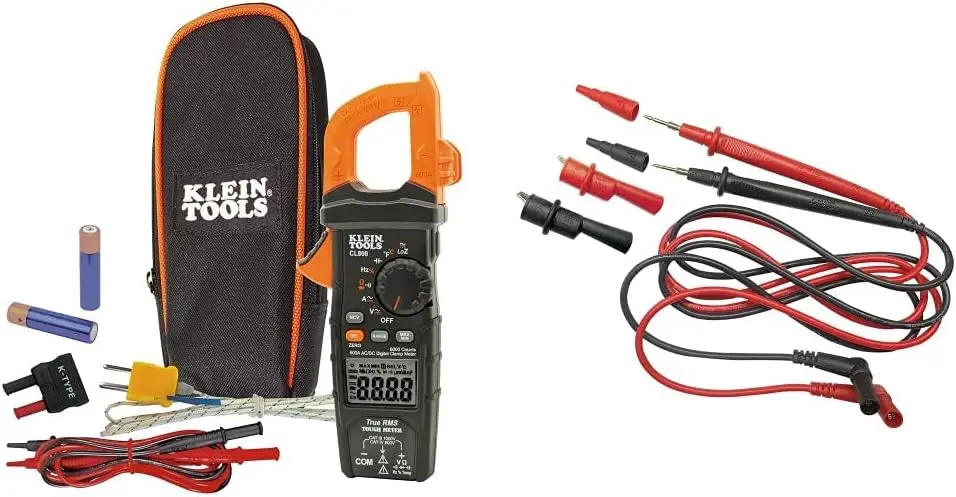
Klein Tools CL800 Digital Clamp Meter
Wide-jaw auto-ranging clamp meter with inrush capture for motor and compressor starting currents.
- Inrush current capture — see the starting surge that trips breakers, not just the running current.
- Wide jaw opening — accepts larger conductors and bundled cables that slim clamps cannot.
- Auto-ranging true-RMS measurement — fast readings you can trust on non-linear loads.
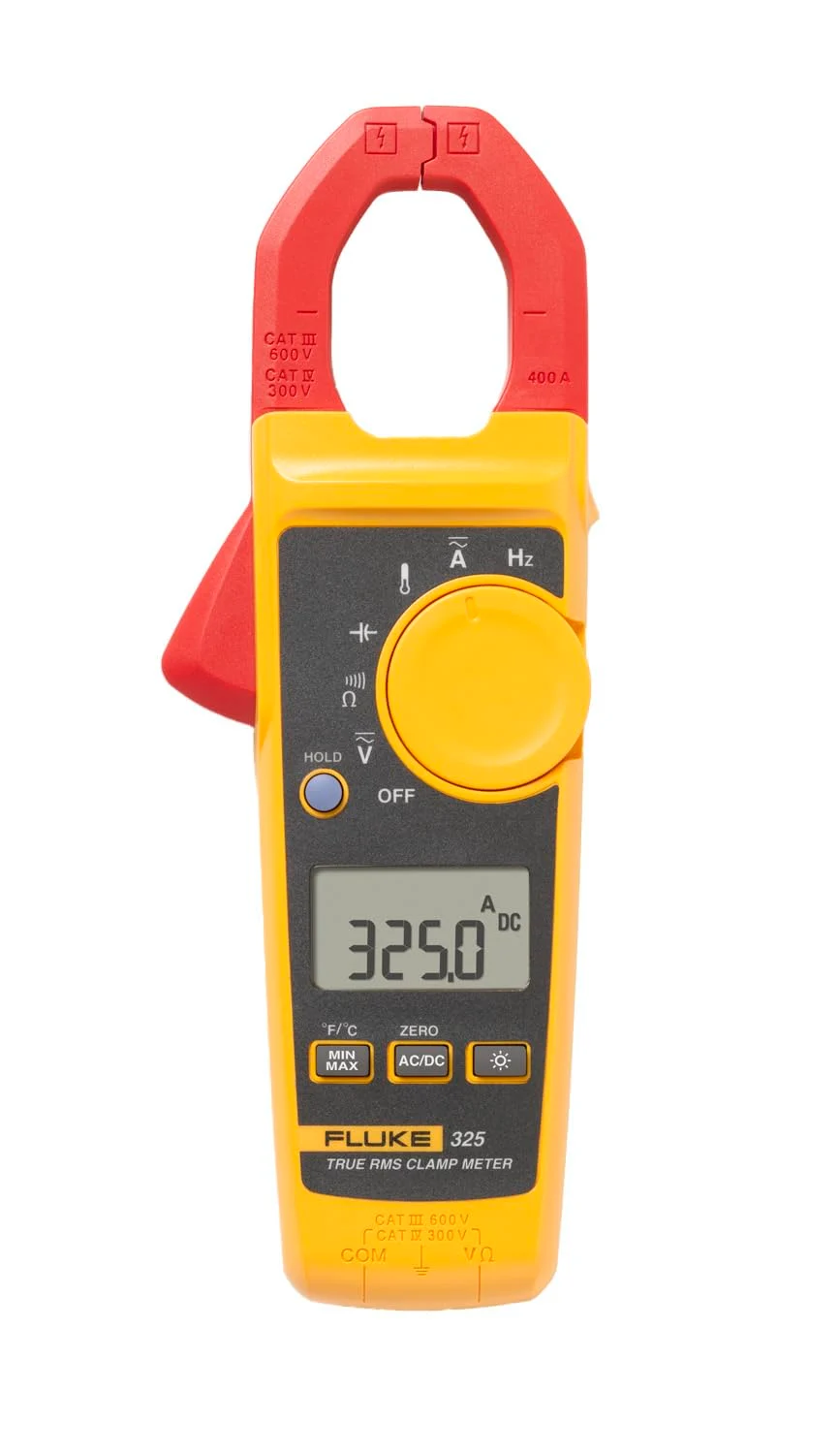
Fluke 325 True-RMS Clamp Meter
Clamp-on AC/DC current measurement in tight panels, with true-RMS accuracy and a CAT III 600 V rating.
- AC and DC current measurement — covers mains circuits, battery banks and solar strings with one tool.
- Clamp-on measurement — read current without disconnecting or disturbing the circuit.
- Slim jaw profile — slides into crowded panels where bulky clamps will not fit.
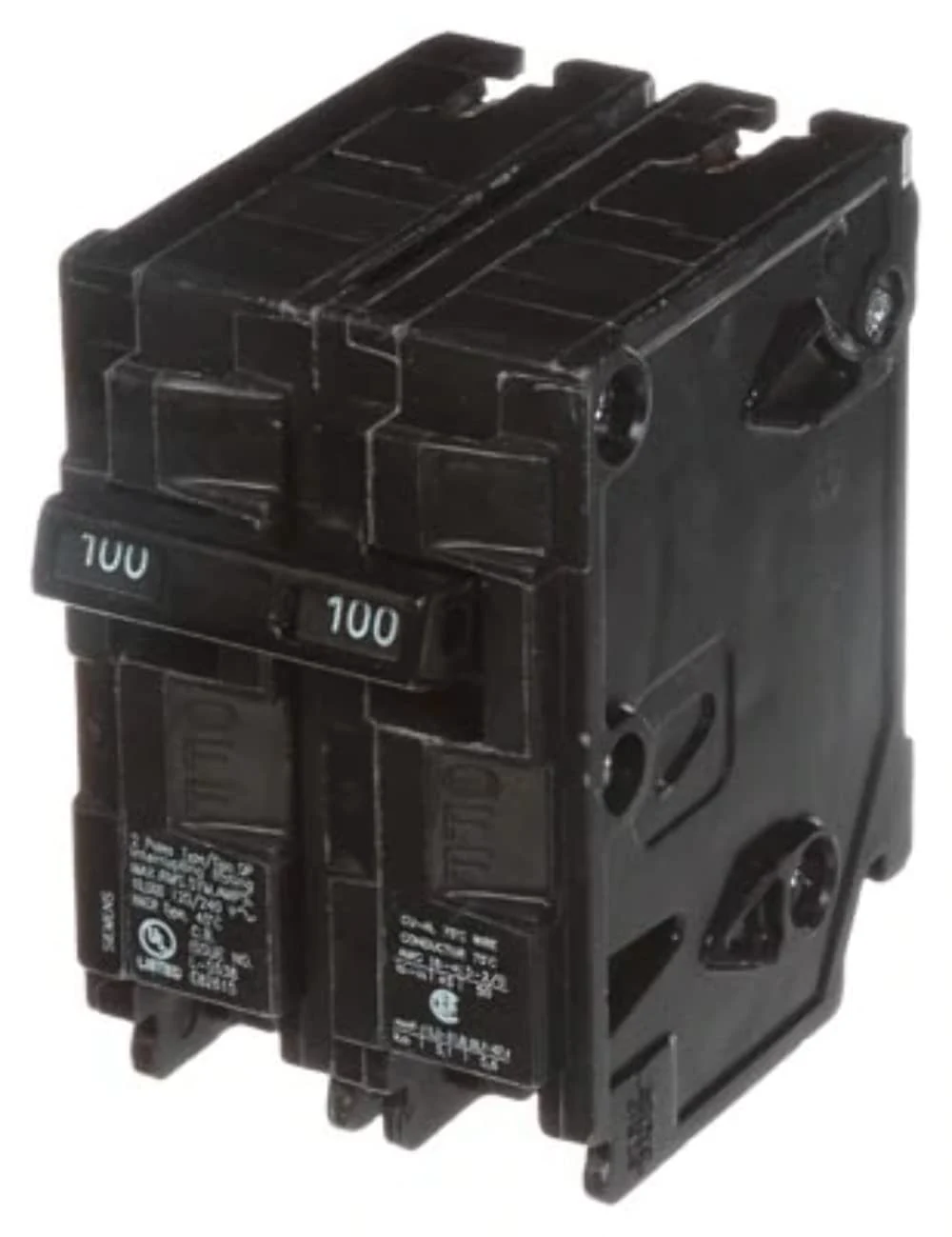
Siemens Q2100 100-Amp Double-Pole Circuit Breaker
A 100-amp two-pole breaker for feeding a subpanel or a very large 240 V load.
- 100 amps per pole at 120/240 V — sized for subpanel feeders and very large 240 V loads.
- Common trip — both poles open together, as a feeder protection device must.
- Accepts 1 AWG through 4/0 conductors, torqued to 35 or 50 lb-in depending on the conductor size.
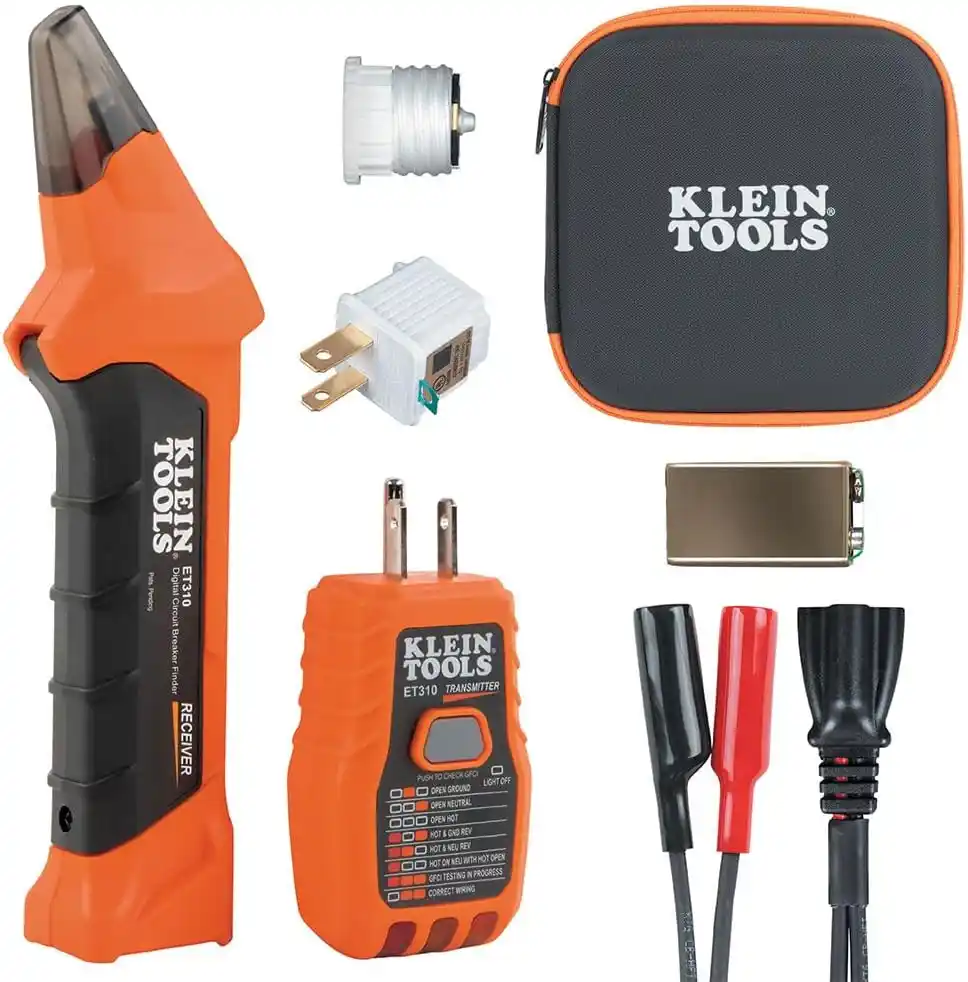
Klein Tools ET310 Circuit Breaker Finder Kit
Finds the breaker feeding a circuit without shutting the panel down — the transmitter plugs into the outlet, the receiver traces it back.
- Transmitter and receiver pair — plug the transmitter into the socket, then sweep the receiver across the panel to identify the matching breaker.
- Wiring status indicator on the transmitter — the same open ground, open neutral, open hot, reversed hot/neutral and reversed hot/ground checks as a standard outlet tester.
- GFCI test button — trips a GFCI device to confirm it is actually protecting the circuit, not just installed.