Electrical Efficiency Calculator
Calculate efficiency as the ratio of output power to input power.
Step-by-step calculation
- η = (880 W ÷ 1000 W) × 100%
- η = 88%
Formula
Input definitions
| Symbol | Input | Unit | Meaning & code relevance |
|---|---|---|---|
| P_out | Output Power | W | Active electrical or mechanical power transfer (W) dissipated or delivered to the load. |
| P_in | Input Power | W | Active electrical or mechanical power transfer (W) dissipated or delivered to the load. |
Worked example
Power Supply Conversion Efficiency
1000 W drawn from mains, 880 W delivered to DC load.
- η = (880 ÷ 1000) × 100 = 88%
- Heat losses = 1000 − 880 = 120 W
Assumptions
- Input power and output power are expressed in the same unit (Watts or kW) at the same operating load point.
- The difference between input power and output power (P_in − P_out) is dissipated primarily as heat.
- Measurements represent steady-state real power (not apparent VA).
Limitations
- Efficiency varies with load percentage — most inverters, transformers, and motors peak between 50% and 85% load and drop off at very light load.
- Physical conservation of energy requires output power not to exceed input power (η ≤ 100%).
How it works
Divides useful output power by total electrical input power to determine system conversion efficiency and thermal waste.
When to use it
- Calculating percentage efficiency (η = P_out ÷ P_in × 100%) of electric motors, transformers, solar inverters, and DC-DC power supplies.
- Finding electrical input power required to deliver a target mechanical shaft output (such as a 15 kW pump driven by a 92% efficient motor).
- Quantifying wasted heat loss (P_loss = P_in − P_out) to size enclosure cooling fans, heat sinks, or electrical room air conditioning.
Practical real-world applications
- Comparing IE3 Premium Efficiency vs. IE4 Super Premium Efficiency industrial motors to calculate kilowatt-hour savings over 6,000 annual operating hours.
- Calculating heat rejection in watts inside a sealed NEMA / IP66 control cabinet housing 24 V DC switch-mode power supplies and VFDs.
- Determining true AC wall power drawn by an EV onboard charger or bench power supply from its DC output wattage and conversion efficiency.
Original Editorial Review & Technical Evaluation
Determines system conversion efficiency η (%), wasted thermal power loss (P_in − P_out), and required input power across motors, power supplies, inverters, and transformers.
Industrial plant engineers auditing motor/drive losses, solar/UPS integrators sizing thermal cooling, and power-supply validation engineers.
- Solves efficiency η = (P_out ÷ P_in) × 100% or derives missing output/input wattage cleanly
- Quantifies exact thermal heat rejection in Watts and BTU/hr for enclosure ventilation sizing
- Accepts W or kW inputs across low-power electronics and industrial drives
Accuracy & methodology: Computes steady-state scalar ratio between useful output power and total electrical input power at a single operating load point. Efficiency curves vary non-linearly below 25% load or above rated overload, which single-point inputs do not interpolate. Computational standards →
What to verify independently: Check manufacturer efficiency curves at your exact % load factor (e.g., 50%, 75%, 100%) and verify enclosure heat-dissipation limits.
Put the numbers to work with the Power Calculator, Motor Power Calculator and Inverter Size Calculator. For the background behind the numbers, read How to Choose an Inverter or UPS and Transformer Maintenance: A Practical Inspection and Testing Guide.
Common mistakes
- Multiplying output power by efficiency (P_out × η) instead of dividing (P_in = P_out ÷ η) when calculating input power, which understates input current.
- Entering efficiency as a whole number (e.g., 92) into a decimal formula expecting 0.92 without dividing by 100.
- Assuming nameplate full-load efficiency remains constant when a motor or inverter operates below 30% light-load capacity.
Safety & code notice
Calculator results are planning estimates. Always verify electrical designs against applicable local codes, standards (NEC / IEC), and consult a qualified professional.
Frequently asked questions
Related Calculators
Power Calculator
Calculate active, apparent, and reactive power from voltage, current, or PF.
Motor Power Calculator
Calculate motor shaft output power in kW and HP, speed, and full-load torque.
Inverter Size Calculator
Determine continuous and surge watt ratings for an off-grid or backup inverter.
Joule Heating Calculator
Calculate thermal heat energy in joules, calories, and BTU from I²R and time.
Related Unit Converters
Watts to Amps Converter
Convert active power in watts (W) to current in amps (A) for DC and AC circuits.
Amps to Watts Converter
Convert current in amps (A) to active power in watts (W) for DC and AC systems.
Volts to Watts Converter
Convert voltage (V) and current (A) into real power in watts for DC and AC loads.
Related Engineering Guides
Recommended Clamp Meters & Diagnostic Tools for Power & Load Verification
Measure per-phase feeder current and line voltage with a CAT III/IV True-RMS clamp meter and trace branch circuit breakers before balancing panelboard loads.
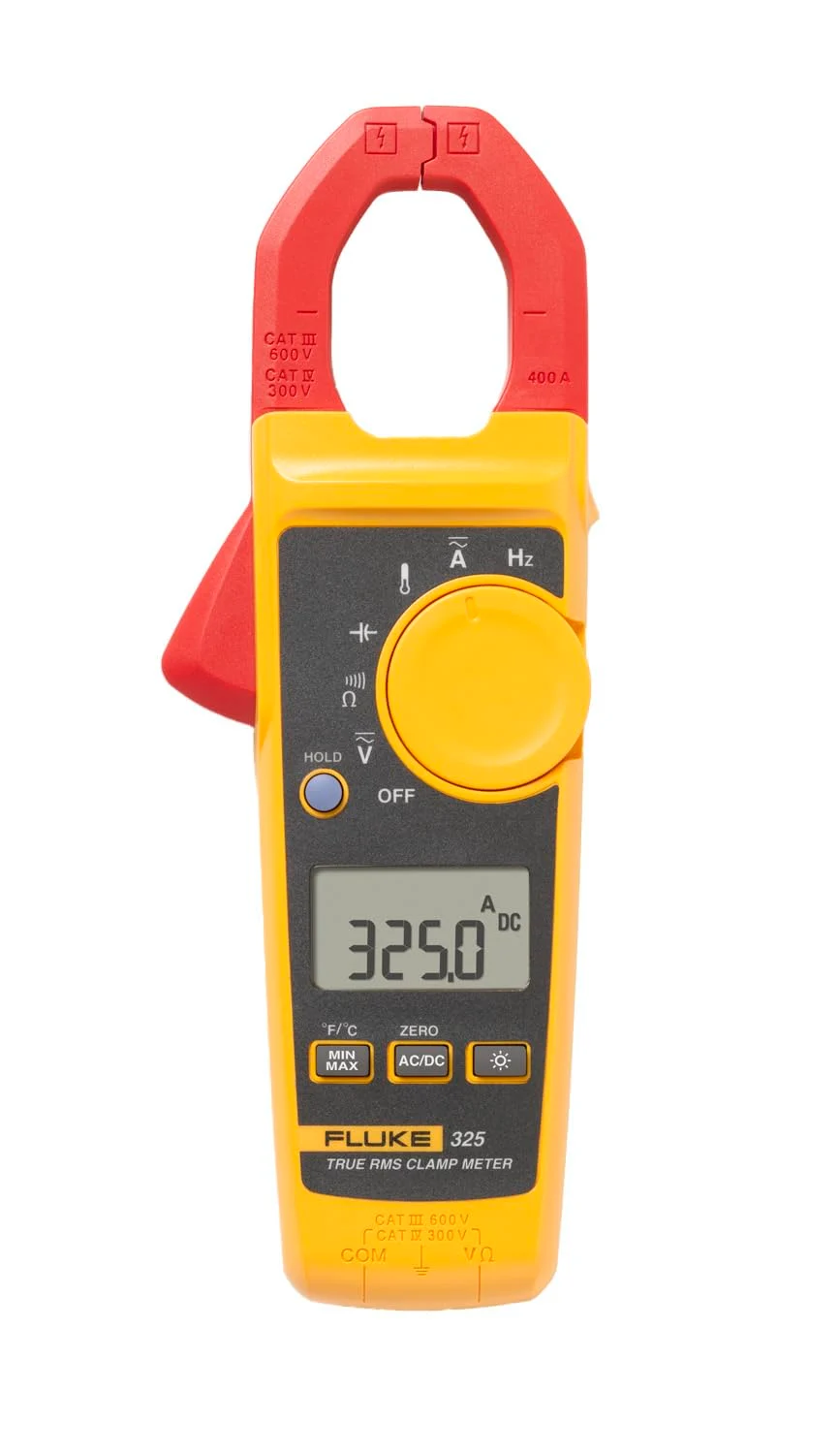
Fluke 325 True-RMS Clamp Meter
Clamp-on AC/DC current measurement in tight panels, with true-RMS accuracy and a CAT III 600 V rating.
- AC and DC current measurement — covers mains circuits, battery banks and solar strings with one tool.
- Clamp-on measurement — read current without disconnecting or disturbing the circuit.
- Slim jaw profile — slides into crowded panels where bulky clamps will not fit.
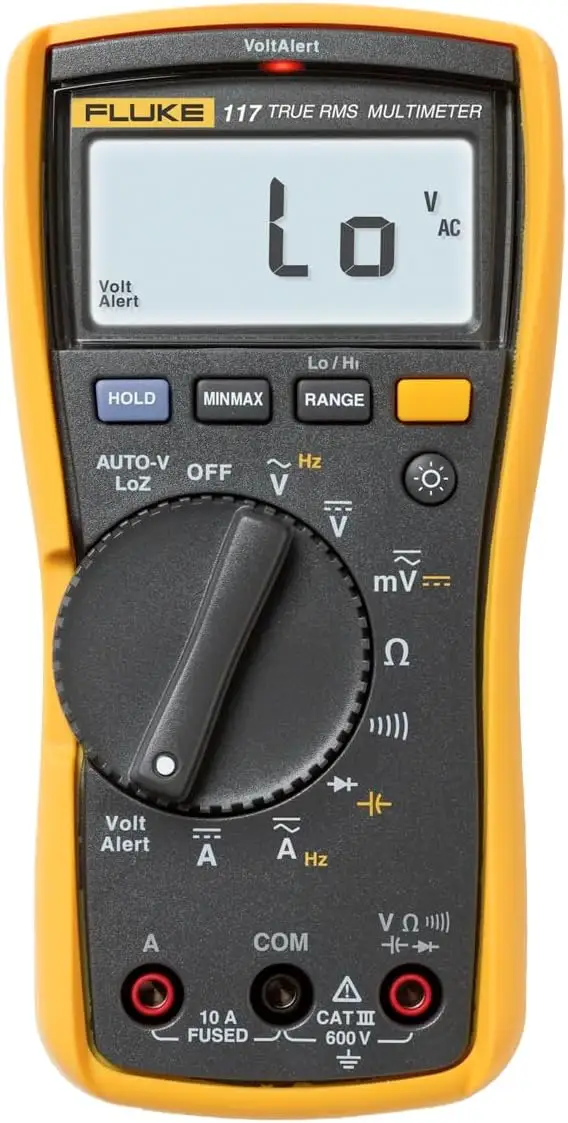
Fluke 117 True-RMS Multimeter
The everyday electrician's meter: true-RMS AC measurement, non-contact voltage detection and a CAT III 600 V rating in a compact body.
- True-RMS AC measurement — accurate readings on the electronic loads that fool cheaper average-sensing meters.
- Built-in non-contact voltage detection — confirm a circuit is live before you put a probe anywhere near it.
- CAT III 600 V safety rating — rated for the transient energy you meet in distribution panels and fixed wiring.
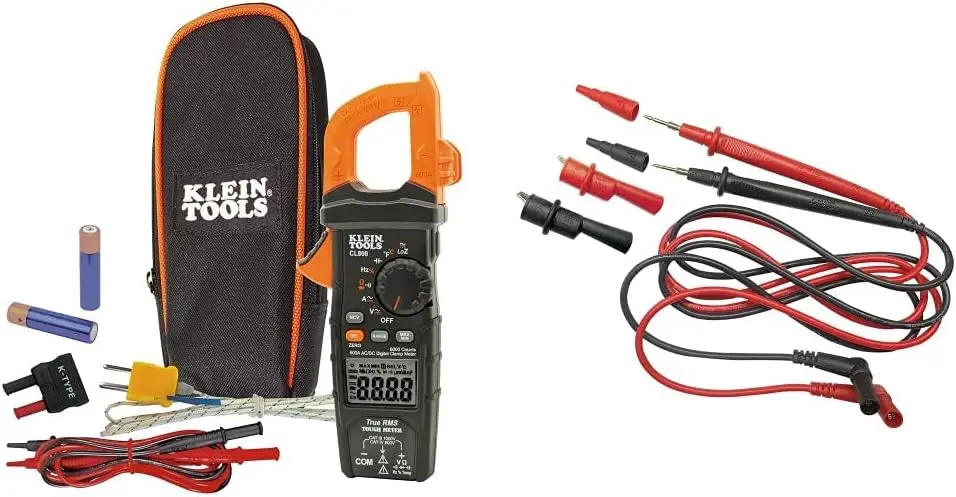
Klein Tools CL800 Digital Clamp Meter
Wide-jaw auto-ranging clamp meter with inrush capture for motor and compressor starting currents.
- Inrush current capture — see the starting surge that trips breakers, not just the running current.
- Wide jaw opening — accepts larger conductors and bundled cables that slim clamps cannot.
- Auto-ranging true-RMS measurement — fast readings you can trust on non-linear loads.
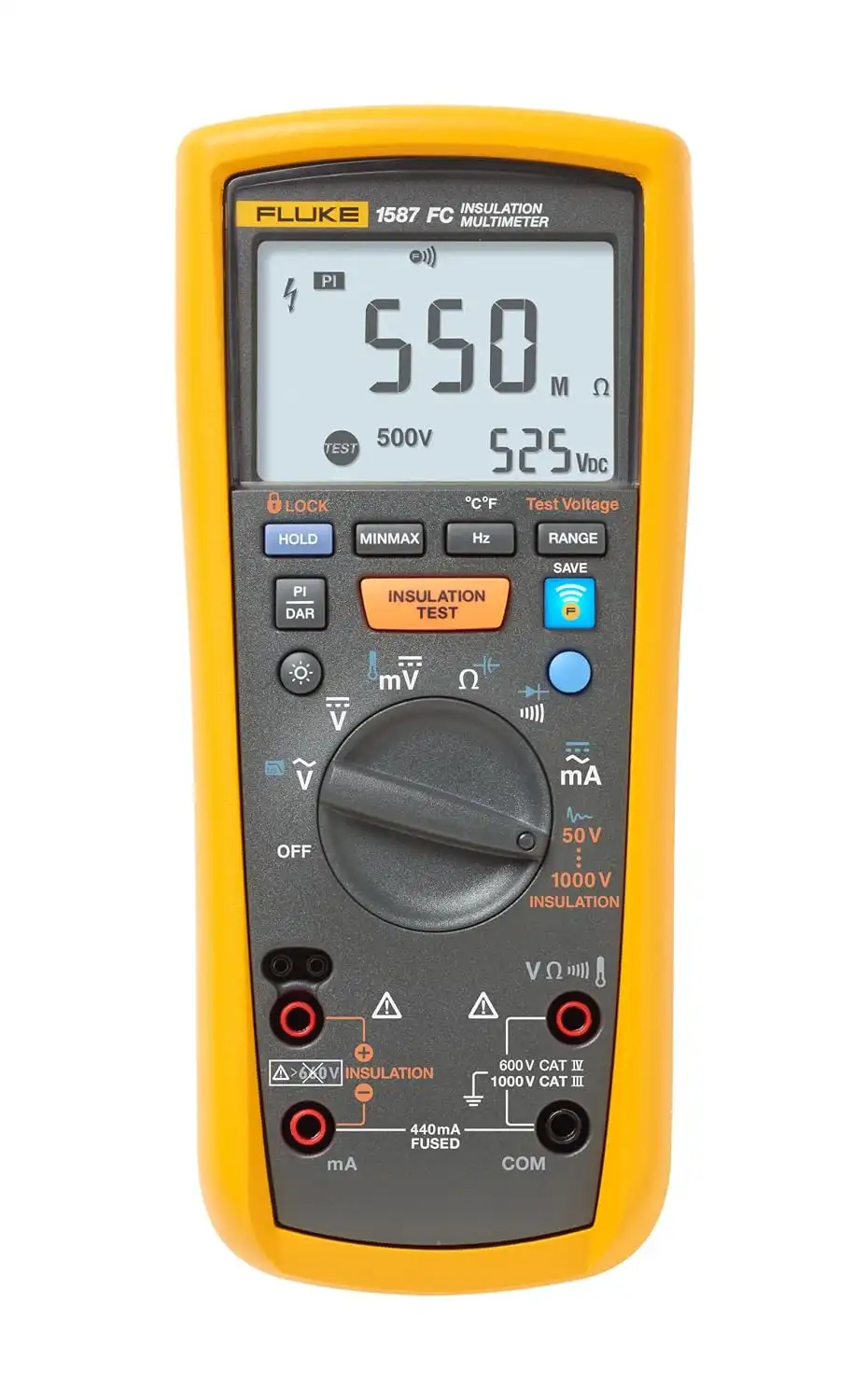
Fluke 1587 FC Insulation Multimeter
Insulation testing and full multimeter functions in one instrument, with selectable test voltages up to 1000 V.
- Insulation test voltages from 50 V to 1000 V — matches the test voltage to the equipment instead of using one fixed setting.
- Full true-RMS multimeter functions — voltage, current, resistance and continuity without a second instrument.
- Wireless result logging — builds a trend over time so you can see insulation degrading before it fails.