How to Choose an Inverter or UPS
Continuous, surge and what actually trips
Every inverter has two ratings that matter. The continuous rating is the power it can hold indefinitely at a stated temperature. The surge or peak rating is a short burst, usually a second or two.
Most household loads are not the problem. Motors, fridges and pumps are: they start at several times running current. So add up the running watts of everything you expect at once, then check that the surge rating covers the largest starting load plus everything already running.
The Inverter Size Calculator does that arithmetic with your own appliances, and the Electrical Load Calculator builds the running total.
Pure sine wave is the default
Pure sine wave output matches the mains closely enough that motors run cool and electronics do not care. Modified sine wave is a stepped approximation: motors run hotter and noisier, transformers buzz, some chargers and power supplies refuse it, and audio gear hums.
Price is the only argument for modified sine wave. If you cannot name exactly what will be plugged in, buy pure sine wave.
DC side: voltage, current and cable
The DC input is where most installations go wrong. A 2,000 W inverter at 12 V draws roughly 170 A before losses; the same inverter at 24 V draws about 85 A, and at 48 V about 43 A. Higher battery voltage means smaller cable, less volt drop and fewer tripped shutdowns.
Keep the DC run short, size the cable for the current rather than the connector, and fuse at the battery. A long thin cable gives you an inverter that trips under load while the battery is perfectly healthy.
UPS behaviour: transfer time
- Line-interactive UPS passes mains through and switches to the inverter within a few milliseconds on failure. Simple, efficient, right for most IT loads.
- Online / double-conversion UPS rectifies and re-inverts continuously, so there is no transfer at all. It costs efficiency and heat, and suits equipment that cannot tolerate any gap.
- Inverter plus transfer switch is the backup-power arrangement: an automatic switch changes the load over when mains is present or lost. Fine for lighting, tools and most appliances; too slow for a server.
Check the neutral and earthing arrangement of whatever you install, and never back-feed a socket without a proper changeover method.
Idle draw and efficiency
Efficiency is quoted at a load, often 50–80% of rating; at 10% load it is lower. The no-load draw matters more than people expect: a unit left on all week can cost more energy than the load it serves. Look for a real standby or search mode.
What to look for when buying
- Continuous rating at the temperature you will run it in, plus a stated surge rating.
- Pure sine wave output with a stated total harmonic distortion figure.
- DC input voltage matched to your bank, and a current rating you can cable for.
- Transfer time, if it is a UPS or a backup arrangement.
- A stated no-load draw.
- Over-temperature, overload, short-circuit and reverse-polarity protection.
VoltCalc provides educational information only and does not publish invented ratings or reviews.
Side-by-Side Worked Examples: North America (NEC) vs. International (IEC 60364 / BS 7671)
North American (NEC 2023/2026) Worked Example
Sizing an off-grid 120 V 60 Hz pure sine inverter feeding an 800 W steady load plus a 600 W well pump (3× starting surge = 1,800 W peak) from a 24 V battery bank (90% inverter efficiency).
- Continuous & surge check: Steady = 800 + 600 = 1,400 W -> select a 2,000 W continuous / 4,000 W surge pure sine unit (covers 800 + 1,800 = 2,600 W starting peak with margin).
- DC cable & fuse check (8 ft / 2.44 m run at 24 V): Max steady DC current = 2,000 ÷ (24 × 0.90) = 92.6 A -> size at 125% = 115.7 A -> 125 A DC breaker and 2 AWG Cu (voltage drop ΔV = 2 × 92.6 × [0.0175 × 2.44 ÷ 33.62] = 0.23 V = 0.98% — minimal DC sag so the low-voltage alarm never false-trips).
International (IEC 60364 / BS 7671) Worked Example
Sizing an online 230 V 50 Hz UPS for a 3,200 W (PF = 0.85) European server rack.
- kVA demand: S = 3,200 ÷ 0.85 = 3.76 kVA -> specify a 5 kVA (4.5 kW) online double-conversion UPS (~75% loading for redundancy and future growth).
- Input & output protection: Max UPS input current ≈ 24 A -> feed from a dedicated 32 A Type C MCB in 6 mm² XLPE cable (with Type A / Type B 30 mA RCD compatibility checked against UPS EMI earth leakage current per BS 7671 Section 543.7 high-integrity earthing rules).
Related Calculators
Inverter Size Calculator
Determine continuous and surge watt ratings for an off-grid or backup inverter.
Electrical Load Calculator
Calculate residential and commercial service demand loads and feeder current.
Battery Runtime Calculator
Estimate how long a lead-acid or LiFePO4 battery bank will run a DC or AC load.
Related Unit Converters
Watts to Amps Converter
Convert active power in watts (W) to current in amps (A) for DC and AC circuits.
Amps to Watts Converter
Convert current in amps (A) to active power in watts (W) for DC and AC systems.
AWG to mm² Converter (American Wire Gauge to Metric)
Convert American Wire Gauge (AWG) to metric mm² area, diameter, and resistance.
Frequently Asked Questions
Recommended Tools & Equipment for This Guide
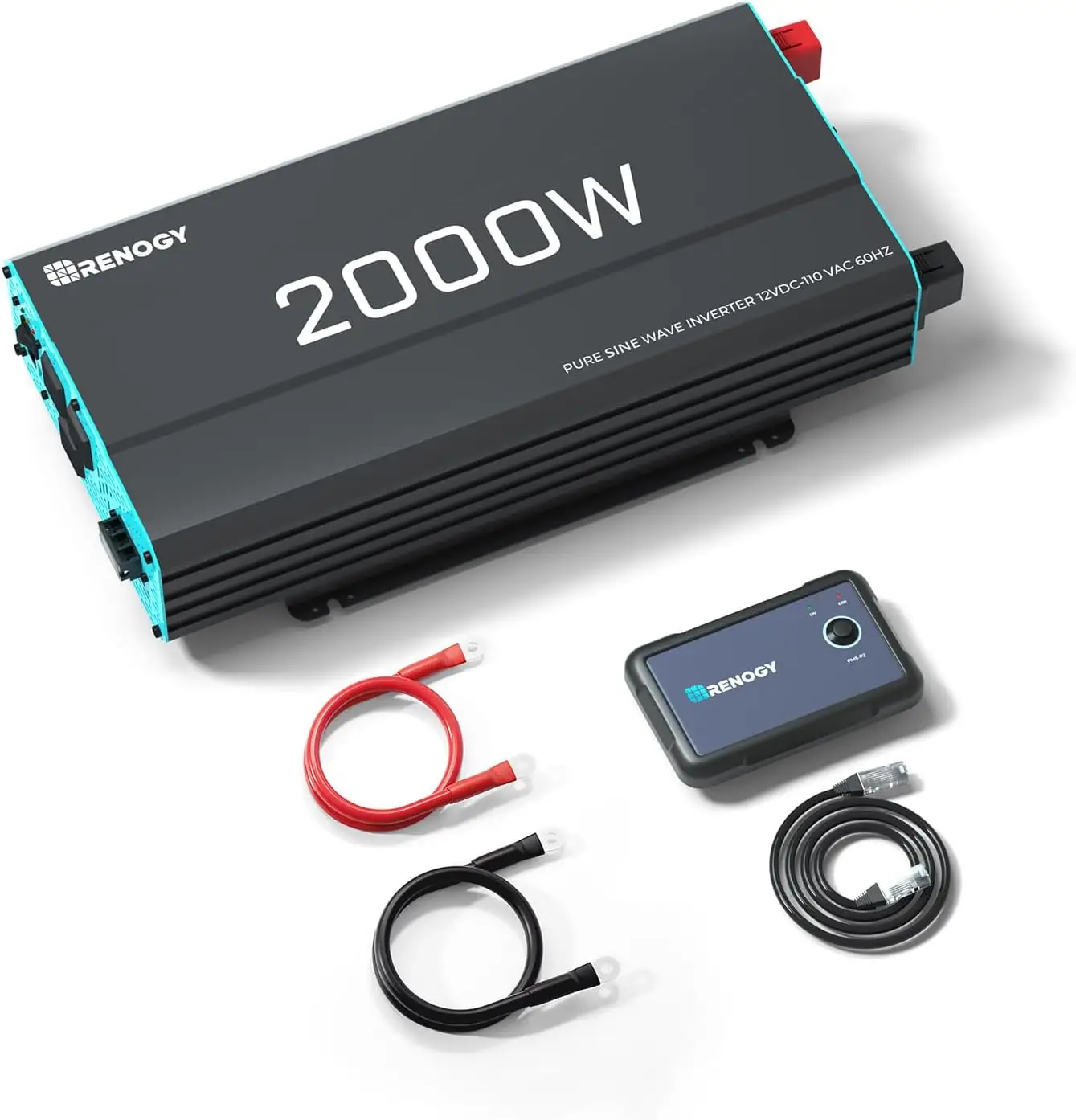
Renogy 2000 W Pure Sine Wave Inverter
Pure sine wave output at 2000 W continuous, with a higher surge rating for motor starting.
- Pure sine wave output — equipment runs as it would on mains, with no buzzing motors or misbehaving supplies.
- 2000 W continuous output — enough for fridges, power tools and a run of household electronics.
- Surge headroom for motor starting — covers the brief inrush a fridge compressor or pump draws on start-up.
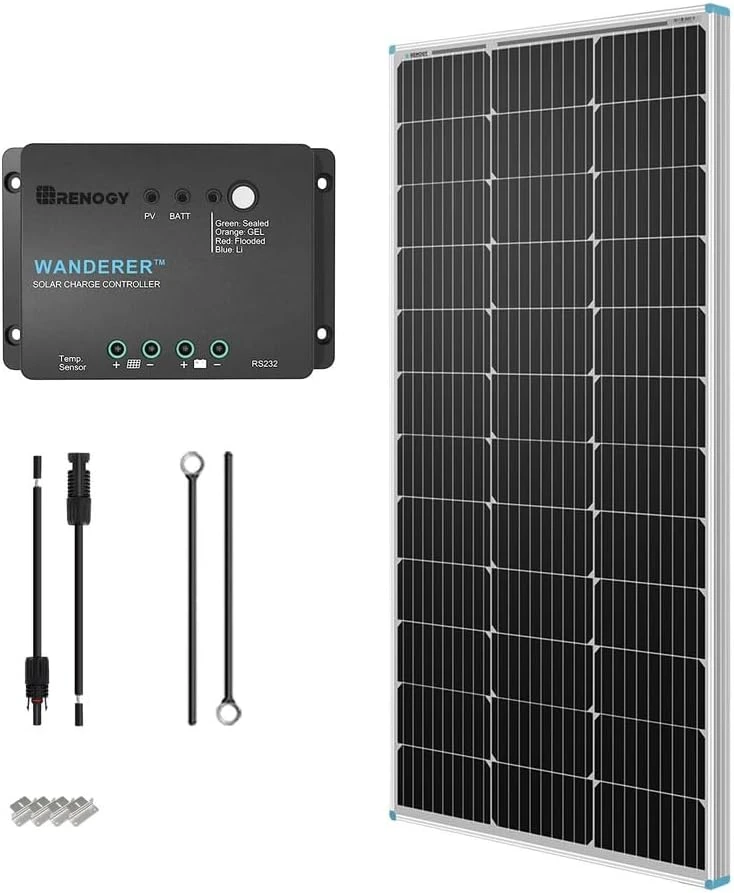
Renogy 100 W Solar Panel Starter Kit
A complete first solar kit — panel, charge controller and mounts — for off-grid and RV use.
- Everything matched in one box — panel, charge controller, mounts and cabling, so nothing is missing on install day.
- Monocrystalline panel — performs better than polycrystalline in low light and overcast conditions.
- Scales by adding identical panels — you can grow the array later without replacing the controller if it has headroom.
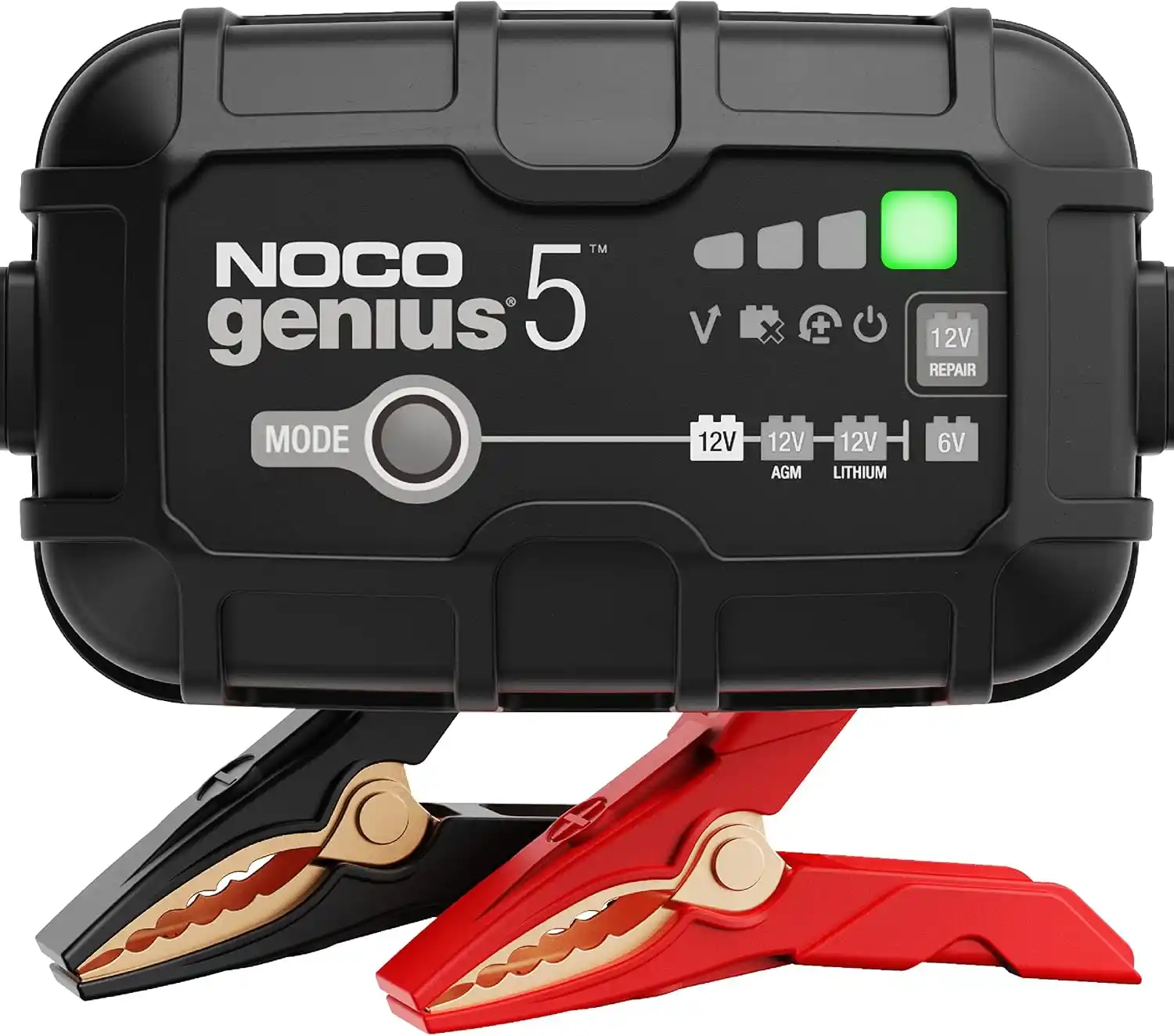
NOCO GENIUS5 Battery Charger
A 5 A automatic charger and maintainer that can stay connected long-term without overcharging.
- Safe long-term maintenance — leave it connected through winter without overcharging the battery.
- 6 V and 12 V support — covers cars, motorcycles, ride-on mowers and most small batteries.
- Multiple chemistry profiles — charges lead-acid and lithium correctly, with the right profile for each.
Related Engineering Guides
Solar System Sizing: Panels, Batteries and Controllers
Follow the four-step workflow to size solar PV arrays, batteries, and inverters.
Integrating Renewable Energy: Grid-Tied, Hybrid and Off-Grid Systems
Connect solar PV arrays, battery banks, and hybrid inverters to building panels.
How to Choose Solar & Portable Power
Size solar panels, LiFePO4 batteries, MPPT controllers, and pure sine inverters.