Renogy 2000 W Pure Sine Wave Inverter
A modified sine wave inverter will happily run a lamp and then quietly ruin a motor, a laser printer or anything with a switched-mode supply. The waveform is wrong, so devices overheat, buzz or simply refuse to start. A pure sine wave inverter produces output close enough to the mains that equipment behaves normally. That is the real difference here — not the wattage figure, but the shape of the power.
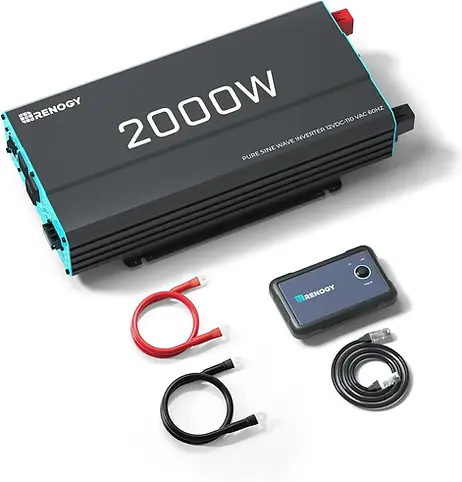
Pure sine wave output at 2000 W continuous, with a higher surge rating for motor starting.
The retailer sets the price and it changes often, so we link straight to the live listing rather than show a number that may be out of date.
- Continuous output
- 2000 W
- Output waveform
- Pure sine wave
- Protections
- Overload, over-temperature, low voltage
VoltCalc may earn a commission when you buy through links on this page, at no extra cost to you. Prices and availability are shown as a guide only and may change.
Key features and what they mean for you
- Pure sine wave output — equipment runs as it would on mains, with no buzzing motors or misbehaving supplies.
- 2000 W continuous output — enough for fridges, power tools and a run of household electronics.
- Surge headroom for motor starting — covers the brief inrush a fridge compressor or pump draws on start-up.
- Clean protective shutdowns — overload and over-temperature protection that trips rather than fails.
Real-world performance
With a suitably sized battery bank it starts fridges and pumps without complaint, which is where cheaper modified-sine inverters usually give up. Running electronics alongside motor loads produces no interference or buzzing, and the protections shut down cleanly and restart reliably once the load is reduced. The critical caveat is the battery: delivering 2000 W draws a very large current at 12 V, so the inverter is only as good as the bank feeding it.
Technical specifications
The specifications that matter when you compare the Renogy 2000 W Pure Sine Wave Inverter against the alternatives.
| Continuous output | 2000 W |
| Output waveform | Pure sine wave |
| Protections | Overload, over-temperature, low voltage |
Pros and cons
- Pure sine wave is safe for motors and sensitive electronics
- Surge headroom covers fridge and pump starting
- Protections shut down cleanly instead of failing
- Needs a substantial battery bank to deliver full output
Who should buy it
Off-grid and backup systems running motors and electronics.
Who should skip it
You only need to charge phones and laptops — a smaller inverter is cheaper.
How it compares
Size it with the inverter and battery calculators before you buy — the battery bank, not the inverter, is usually what limits the system.
Our verdict
If you are running motors or sensitive electronics off a battery, pure sine is not optional and this unit delivers it at a sensible price for its class. Buy it once your battery bank can genuinely supply the current. If you only charge phones and laptops, a smaller inverter is cheaper and draws less idle power.