Integrating Renewable Energy: Grid-Tied, Hybrid and Off-Grid Systems
Three architectures
Renewable energy systems are usually described by how they relate to the grid, and that single choice determines almost everything else: the inverter type, the battery, the protection, and the paperwork.
Grid-tied (grid-direct)
The array feeds an inverter that runs in parallel with the supply. There is no battery, so the system only produces when the sun is up, and any surplus is exported. It is the cheapest configuration per kilowatt and the most common in built-up areas — but it cannot run during a power cut unless it has a battery, because the inverter must shut down when the grid disappears.
Hybrid
A grid-tied system with a battery added. The battery can be charged from the array, from cheap off-peak grid power, or both, and can back up selected circuits during an outage. This is where most new residential and small commercial systems now land, because it delivers the energy bill savings of grid-tied plus a degree of resilience.
Off-grid
No grid connection at all. The array, battery and inverter must cover the entire load, including several consecutive cloudy days, and a generator or second source is often part of the design. Sizing is far more demanding because there is no network to absorb a bad week.
Inverters
The inverter is the heart of the system and the component that most often limits what you can do later.
- String inverter. Panels are wired in series strings into one central inverter. Simple, efficient, inexpensive, and the standard for unshaded roofs. A shaded panel drags down its whole string, though, so string design matters.
- Micro-inverter. One inverter per panel, mounted under it. Panel-level maximum power point tracking means shading and soiling only affect the affected panel, and monitoring is per panel. Higher cost, more devices on the roof.
- Hybrid inverter. A string inverter with a battery input and, usually, a backup output. This is the device that makes later battery addition straightforward.
- Battery inverter (AC-coupled). A separate inverter dedicated to the battery, letting you add storage to an existing non-hybrid system without replacing the original inverter.
Choose the architecture before the hardware, and buy an inverter with the growth you expect. Replacing an inverter in three years to add storage costs far more than specifying a hybrid unit from the start.
Grid interconnection
A grid-connected system is no longer just your equipment — it is part of the network, and it has to behave. Four requirements come up again and again:
- Anti-islanding. The inverter must detect loss of grid and shut down, so it can never energise a network that is being worked on.
- Voltage and frequency ride-through. The inverter must stay connected through ordinary dips and swells rather than tripping on every disturbance, and must disconnect within set limits outside them.
- Export limitation. Where the network cannot accept full export, an export-limiting device or inverter setting caps what is sent to the grid.
- Visible isolation. A lockable isolator, accessible to the network operator, so the installation can be positively isolated.
Your utility or network operator sets the exact settings and the approval process. Confirm both before ordering equipment, because an inverter that cannot be configured to the local profile may not be accepted.
Sizing, in the right order
Most sizing mistakes come from starting in the wrong place. Work through it in this sequence:
1. Energy first
Build a daily energy figure in watt-hours from the actual loads, not from a rule of thumb. For an off-grid or backup design, split it into what must run always, what can run when there is surplus, and what can be deferred.
2. Array size
Array output depends on peak sun hours and a derate factor for heat, wiring, soiling and conversion losses:
The Solar Panel Calculator does this with your own location and derate.
3. Battery size
The battery has to cover the period you want it to cover — one night, one evening peak, or several cloudy days:
Depth of discharge is where designs go wrong. Lithium typically allows 80–90%, lead-acid is often limited to 50%. Sizing a lead-acid bank as though it were lithium leaves you with half the energy you expected. Use the Solar Battery Calculator.
4. Inverter size
It must cover the continuous load plus losses, and its surge rating must cover motor starting — a fridge compressor or a pump can draw several times its running current for a fraction of a second. See the Inverter Size Calculator.
5. Charge controller (DC-coupled systems)
Controller current is the array power divided by the system voltage, plus margin. MPPT controllers extract more energy and tolerate a higher array voltage than the battery; PWM controllers are simpler but need the array voltage close to the battery voltage. The Solar Charge Controller Calculator gives you the figure.
Protection and earthing
DC is not more dangerous than AC by nature, but it is far less forgiving in one specific way: a DC arc does not self-extinguish as an AC arc does when the current crosses zero twice per cycle. That single fact drives most of the protection rules.
- Fuse or break the array at source. DC-rated devices, on both poles where required.
- DC isolator at the array and at the inverter, rated for DC and for the array's voltage.
- Battery protection. A fuse close to the battery terminal, sized for the cable, because a battery bank can deliver enormous fault current.
- RCD selection. Where the inverter introduces DC residual current, a Type A, F or B device may be needed — a Type AC device can be blinded.
- Earthing and bonding. Frame and array earthing, equipotential bonding of the DC and AC sides, and a single defined earth reference. Lightning and surge protection where exposure warrants it.
- Labelling. DC and AC sections, isolation points, and dual-supply warnings. Emergency responders need to know a building has a second source.
Monitoring and commissioning
Commissioning is where a good design becomes a working system, and it is worth insisting on proper records:
- Array open-circuit voltage and short-circuit current per string, compared with expected values.
- Insulation resistance on the DC side before energising.
- Inverter firmware and grid profile settings, photographed.
- Battery charge and discharge test, with the actual usable capacity noted.
- Monitoring configured and connected, so underperformance is visible within days rather than discovered at the next bill.
Monitoring earns its keep. A string that has been underperforming by 20% for a year is invisible on an electricity bill but obvious on a per-string chart.
Common pitfalls
- Sizing the battery without deciding what it must back up. "Whole house backup" and "the fridge and the internet" are very different budgets.
- Ignoring derate factors. A 5 kW array rarely produces 5 kW, and a design that assumes it will leaves a shortfall every winter.
- Underestimating shading. A chimney or a tree changes a string design completely; model it before committing.
- Buying a non-hybrid inverter, then wanting a battery. The most expensive mistake in the list.
- Forgetting the paperwork. Utility approval, inspection and sign-off take time; start early.
- DC devices rated for AC duty. A DC isolator is not an AC isolator. Check the rating plate.
- Assuming a grid-tied system provides backup. Without a battery and a backup output, it does not — it shuts down with the grid.
Next steps
Work the sequence in order and let each step feed the next: Solar Panel Calculator for the array, Solar Battery Calculator for storage, Inverter Size Calculator for the inverter, and Solar Charge Controller Calculator where the system is DC-coupled.
VoltCalc provides calculations and educational information only. Grid connection requirements, protection settings and installation must follow the rules that apply where you are and be carried out or verified by a competent person.
Side-by-Side Worked Examples: North America (NEC) vs. International (IEC 60364 / BS 7671)
North American (NEC 2023/2026) Worked Example
Grid-tied 7.6 kW (240 V single-phase) hybrid inverter backfed into a 200 A main panel.
- Inverter continuous AC output: I_cont = 7,600 ÷ 240 = 31.67 A.
- NEC 705.12 / 690.8 backfed breaker sizing: 31.67 × 1.25 = 39.58 A -> 40 A 2-pole breaker. Checking the 120% busbar rule on a 200 A bus with a 200 A main: (200 × 1.20) − 200 = 40 A max backfeed, so a 40 A breaker passes without derating the main breaker (or use NEC 2026 Sec. 120.7 PCS load control for larger ESS export limits).
International (IEC 60364-7-712 / BS 7671 / G98-G99) Worked Example
Connecting a 10 kW 3-phase (400 V) hybrid solar-plus-battery inverter in a TN-C-S commercial installation.
- Balanced per-phase AC current: I_b = 10,000 ÷ (√3 × 400) = 14.43 A -> 16 A or 20 A 4-pole RCBO (Type A + 6 mA DC or Type B RCD where inverter transformerless topology requires it) and 4 mm² XLPE cable.
- Isolate both DC and AC sides with lockable rotary switches, verify anti-islanding grid profile settings, and log DC string insulation resistance before commissioning.
Related Calculators
Solar Panel Calculator
Calculate solar PV array wattage and panel count from daily kWh and sun hours.
Solar Battery Calculator
Calculate solar battery capacity in Ah and kWh from daily load and autonomy.
Inverter Size Calculator
Determine continuous and surge watt ratings for an off-grid or backup inverter.
Solar Charge Controller Calculator
Calculate minimum MPPT or PWM charge controller amps from PV watts and voltage.
Related Unit Converters
Watts to Amps Converter
Convert active power in watts (W) to current in amps (A) for DC and AC circuits.
Amps to Watts Converter
Convert current in amps (A) to active power in watts (W) for DC and AC systems.
AWG to mm² Converter (American Wire Gauge to Metric)
Convert American Wire Gauge (AWG) to metric mm² area, diameter, and resistance.
Frequently Asked Questions
Recommended Tools & Equipment for This Guide
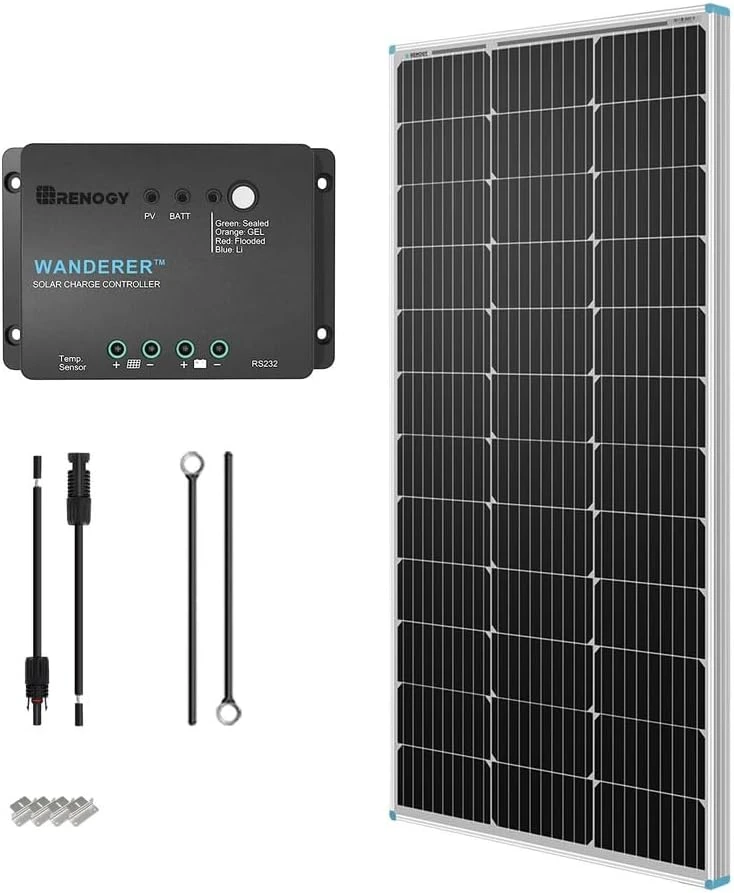
Renogy 100 W Solar Panel Starter Kit
A complete first solar kit — panel, charge controller and mounts — for off-grid and RV use.
- Everything matched in one box — panel, charge controller, mounts and cabling, so nothing is missing on install day.
- Monocrystalline panel — performs better than polycrystalline in low light and overcast conditions.
- Scales by adding identical panels — you can grow the array later without replacing the controller if it has headroom.
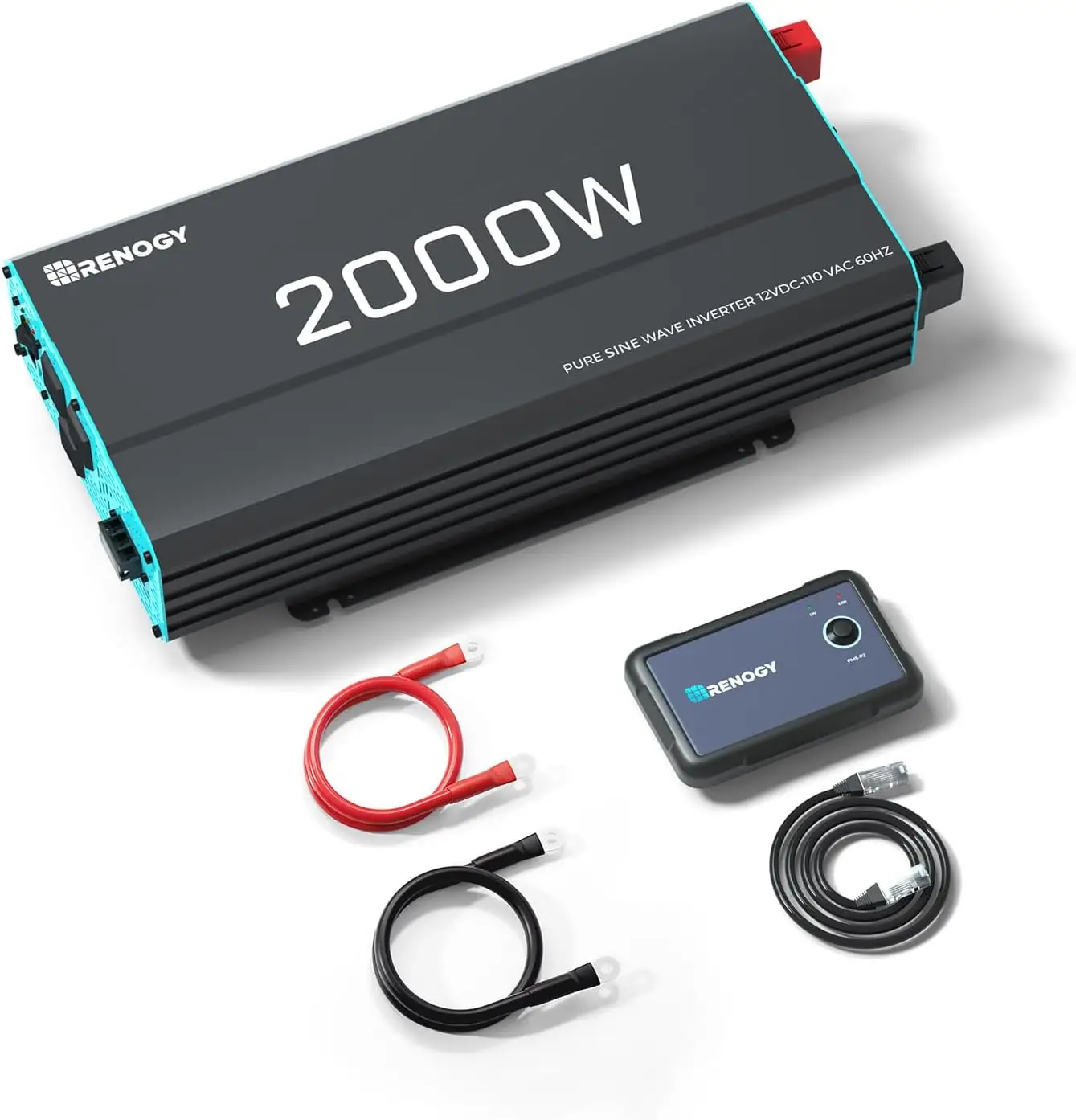
Renogy 2000 W Pure Sine Wave Inverter
Pure sine wave output at 2000 W continuous, with a higher surge rating for motor starting.
- Pure sine wave output — equipment runs as it would on mains, with no buzzing motors or misbehaving supplies.
- 2000 W continuous output — enough for fridges, power tools and a run of household electronics.
- Surge headroom for motor starting — covers the brief inrush a fridge compressor or pump draws on start-up.
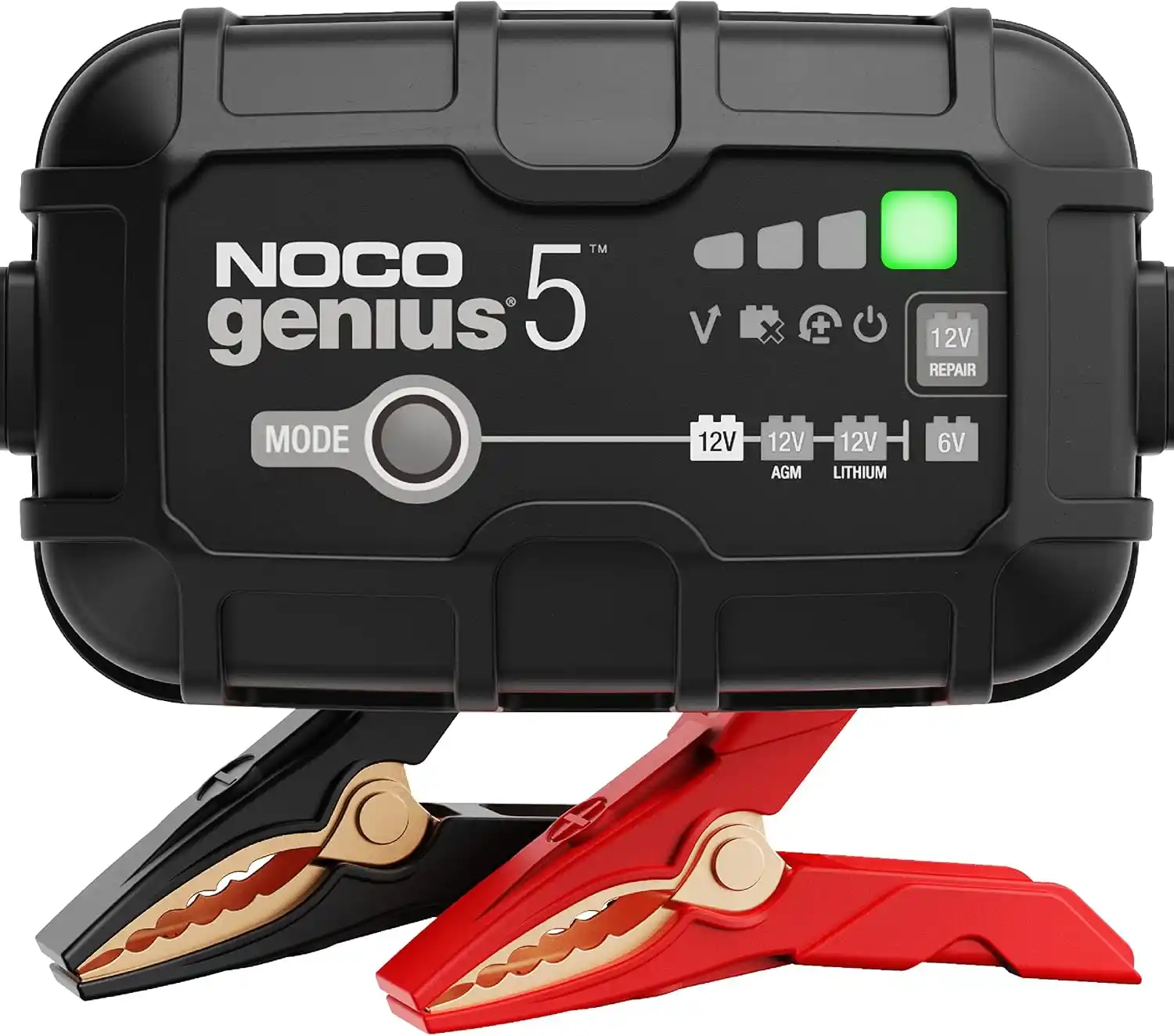
NOCO GENIUS5 Battery Charger
A 5 A automatic charger and maintainer that can stay connected long-term without overcharging.
- Safe long-term maintenance — leave it connected through winter without overcharging the battery.
- 6 V and 12 V support — covers cars, motorcycles, ride-on mowers and most small batteries.
- Multiple chemistry profiles — charges lead-acid and lithium correctly, with the right profile for each.
Related Engineering Guides
Solar System Sizing: Panels, Batteries and Controllers
Follow the four-step workflow to size solar PV arrays, batteries, and inverters.
How to Choose Solar & Portable Power
Size solar panels, LiFePO4 batteries, MPPT controllers, and pure sine inverters.
How to Choose an Inverter or UPS
Evaluate continuous vs. surge watts, pure sine output, DC cables, and transfer time.