Solar Charge Controller Calculator
Calculate the minimum charge controller current rating.
Step-by-step calculation
- Active Context: NFPA 70 (NEC 2026) | NEC 690.8 (1.56× Rule) | 24 V DC Bank
- MPPT Output Current (@ 24 V battery): I = (1200 W ÷ 24 V) × 1.25 = 62.50 A
Formula
Input definitions
| Symbol | Input | Unit | Meaning & code relevance |
|---|---|---|---|
| W_pv | Solar Array Wattage | W | Engineering input parameter for solar array wattage measured in W, evaluated in real-time by the solver. |
| V_bat | Battery Bank Voltage | V | Nominal RMS AC or steady-state DC system potential (e.g., 120V/240V/480V NEC or 230V/400V IEC 60038). |
| SF | NEC Cloud-Edge Safety Factor | × | Engineering input parameter for nec cloud-edge safety factor measured in ×, evaluated in real-time by the solver. |
| I_sc | PV String Short-Circuit Current I_sc (Optional NEC 1.56× / IEC 1.25× Check) | A | Steady-state operating load current in amperes; compare with NEC Table 310.16 or IEC 60364-5-52 conductor ampacity. |
Worked example
1200 W Array Charging a 24 V Bank
Select minimum MPPT charge controller amp rating.
- 1200 W ÷ 24 V = 50 A
- 50 A × 1.25 safety factor = 62.5 A → 80 A MPPT controller
Assumptions
- MPPT output current is calculated by dividing total PV array STC wattage by nominal battery bank voltage.
- A 1.25× safety multiplier is applied to account for continuous duty and cloud-edge irradiance spikes.
- The result rounds up to standard commercial MPPT controller ratings (20, 30, 40, 60, 80, 100 A).
Limitations
- Sizes the controller output current (Amps) only; you must also verify that the cold-weather open-circuit string voltage (Voc) never exceeds the controller’s max PV input voltage (e.g. 100V, 150V, or 250V).
- PWM controllers cannot step down high PV voltage into extra battery current and must be sized from panel short-circuit current (Isc × 1.56).
How it works
Computes maximum DC charging current entering the battery bank and multiplies by a 1.25× safety factor per NEC Article 690.
When to use it
- Sizing an MPPT or PWM solar charge controller’s minimum current rating (Amps) from total PV array wattage and DC battery bank voltage.
- Applying the NEC 690.8(A)(1) × 690.9(A) 1.56× (125% irradiance × 125% continuous) safety factor to short-circuit current (I_sc) and controller output.
- Comparing how upgrading a battery bank from 12 V to 24 V or 48 V cuts required MPPT controller amperage in half or a quarter.
Practical real-world applications
- MPPT Controller Selection: Determining that a 2,400 W solar array charging a 24 V battery bank requires at least a 100 A MPPT charge controller (or 50 A at 48 V).
- PV Combiner & Output Breaker Sizing: Calculating the 1.56 × I_sc maximum circuit current to select DC-rated circuit breakers and PV fuses.
- RV & Boat Dual-Panel Expansion: Checking whether an existing 30 A or 40 A controller can safely accept an additional 400 W rooftop solar module.
Original Editorial Review & Technical Evaluation
Calculates minimum MPPT or PWM solar charge controller output rating (A) with mandatory 125% solar irradiance safety headroom per NEC 690.8.
Off-grid solar installers, vanlife/marine electrical builders, and telecom DC power engineers.
- Sizes controller current via (Array Watts ÷ Nominal Battery Voltage) × 1.25 safety factor
- Compares MPPT high-voltage string step-down efficiency against PWM array-to-battery voltage matching
- Highlights cold-weather Voc headroom margins to protect controller semiconductor input stages
Accuracy & methodology: Derives maximum charge current at nominal battery voltage with a standard 25% cloud-edge / continuous irradiance safety multiplier (NEC 690.8). Real MPPT charging current fluctuates dynamically with actual battery absorption/float voltage and module cell temperature. Computational standards →
What to verify independently: Always verify cold-temperature array Voc stays strictly below the controller’s absolute maximum PV input voltage per NEC 690.7 / 690.8 or IEC 62548.
Put the numbers to work with the Solar Panel Calculator, Solar Battery Calculator and Battery Capacity Calculator. For the background behind the numbers, read Solar System Sizing: Panels, Batteries and Controllers and How to Choose Solar & Portable Power.
Common mistakes
- Dividing PV array watts by solar panel V_mp (e.g., 40 V) instead of battery bank nominal/charging voltage (e.g., 12 V or 24 V) when sizing an MPPT controller’s output current.
- Using a cheap PWM charge controller with high-voltage 60-cell or 72-cell residential panels on a 12 V battery, which clips voltage and wastes over 60% of the array’s power.
- Exceeding the charge controller’s maximum PV input Open-Circuit Voltage (V_oc) rating when wiring panels in series for cold winter temperatures.
Safety & code notice
Calculator results are planning estimates. Always verify electrical designs against applicable local codes, standards (NEC / IEC), and consult a qualified professional.
Frequently asked questions
Related Calculators
Solar Panel Calculator
Calculate solar PV array wattage and panel count from daily kWh and sun hours.
Solar Battery Calculator
Calculate solar battery capacity in Ah and kWh from daily load and autonomy.
Battery Capacity Calculator
Calculate required battery bank capacity in Ah and Wh for a target backup time.
Inverter Size Calculator
Determine continuous and surge watt ratings for an off-grid or backup inverter.
Related Unit Converters
Watts to Amps Converter
Convert active power in watts (W) to current in amps (A) for DC and AC circuits.
kW to Watts Converter (Kilowatts to Watts)
Convert kilowatts (kW) to watts (W), megawatts, and mechanical horsepower (HP).
Electrical Energy Converter (kWh, Wh, Joules, kJ, MJ, BTU)
Convert electrical and thermal energy between kWh, Wh, joules, kJ, and BTU.
Electrical & Thermal Power Converter (W, kW, MW, HP, BTU/hr)
Convert between watts, kilowatts, megawatts, horsepower, metric PS, and BTU/hr.
Related Engineering Guides
Recommended Solar PV, Inverter & Battery Commissioning Gear
Verify open-circuit PV string voltage and DC bus current with an AC/DC clamp meter, crimp low-resistance battery lugs, and match pure sine wave inverter surge ratings to your battery bank.
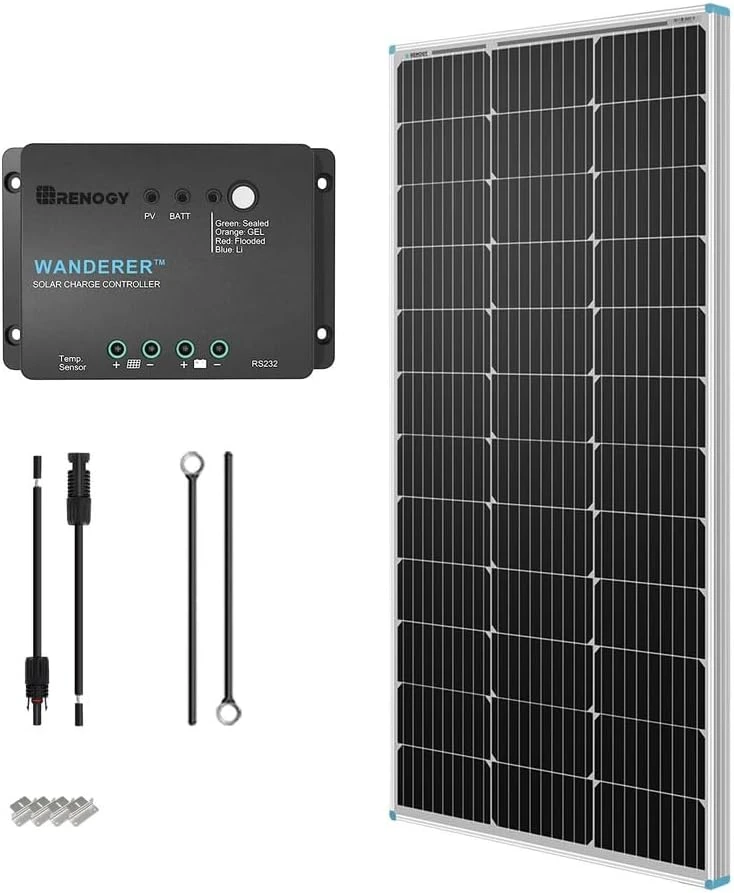
Renogy 100 W Solar Panel Starter Kit
A complete first solar kit — panel, charge controller and mounts — for off-grid and RV use.
- Everything matched in one box — panel, charge controller, mounts and cabling, so nothing is missing on install day.
- Monocrystalline panel — performs better than polycrystalline in low light and overcast conditions.
- Scales by adding identical panels — you can grow the array later without replacing the controller if it has headroom.
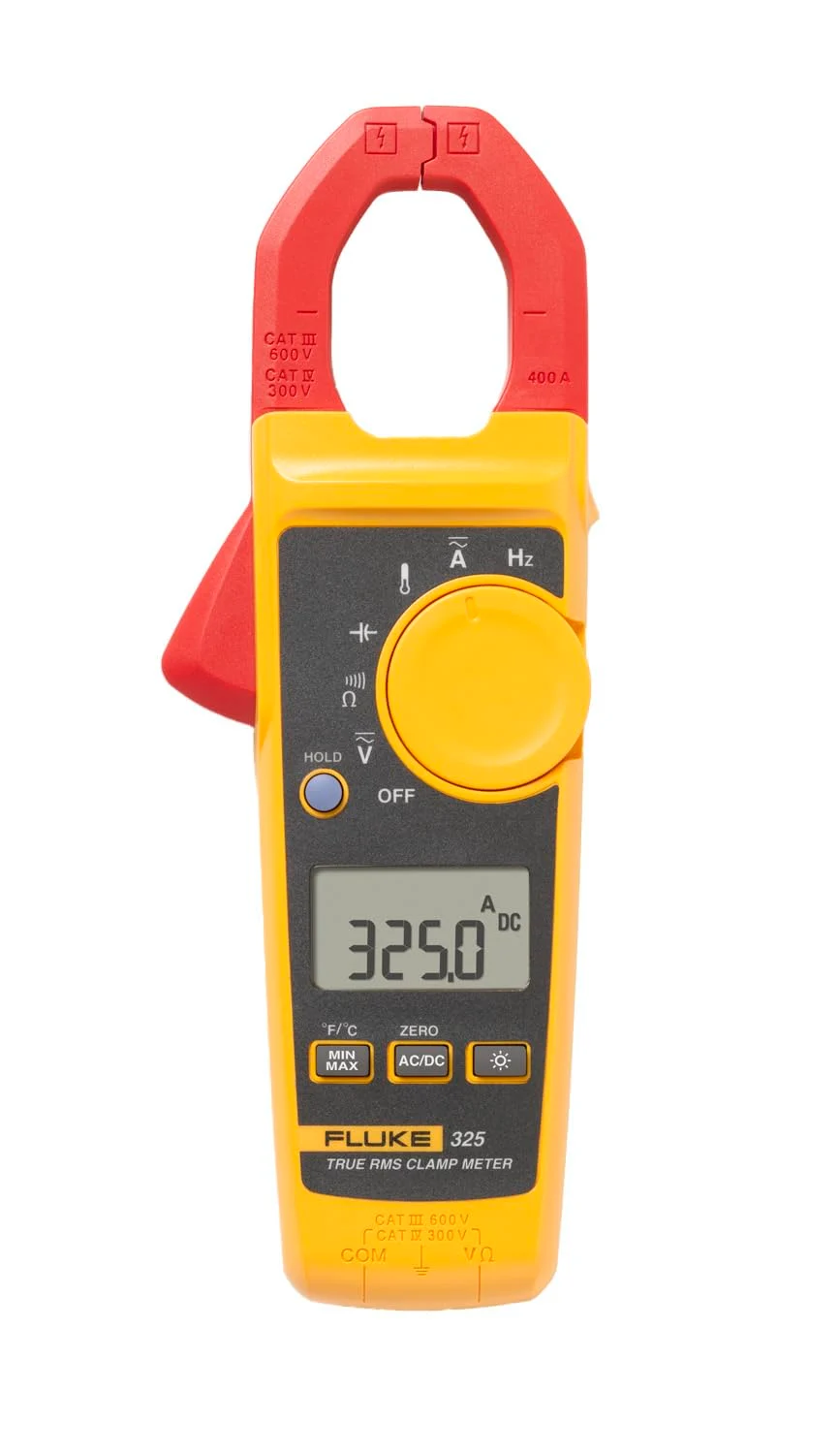
Fluke 325 True-RMS Clamp Meter
Clamp-on AC/DC current measurement in tight panels, with true-RMS accuracy and a CAT III 600 V rating.
- AC and DC current measurement — covers mains circuits, battery banks and solar strings with one tool.
- Clamp-on measurement — read current without disconnecting or disturbing the circuit.
- Slim jaw profile — slides into crowded panels where bulky clamps will not fit.

Klein Tools 3005CR Ratcheting Crimper
Ratcheting crimper that locks until the crimp is complete, so every termination is fully formed.
- Ratcheting mechanism — the tool stays locked until the crimp is fully formed, so a weak grip cannot produce a weak joint.
- 22–10 AWG range — covers the terminal sizes used in most panel and control wiring.
- Insulated and non-insulated terminals — one tool handles both, so you are not carrying two.

NOCO GENIUS5 Battery Charger
A 5 A automatic charger and maintainer that can stay connected long-term without overcharging.
- Safe long-term maintenance — leave it connected through winter without overcharging the battery.
- 6 V and 12 V support — covers cars, motorcycles, ride-on mowers and most small batteries.
- Multiple chemistry profiles — charges lead-acid and lithium correctly, with the right profile for each.