Electrical Energy Converter (kWh, Wh, Joules, kJ, MJ, BTU)
Convert electrical and thermal energy between kilowatt-hours (kWh), watt-hours (Wh), joules (J), kilojoules (kJ), megajoules (MJ), and British Thermal Units (BTU).
Step-by-step calculation
- Energy in Watt-Hours: 10000 Wh (10 kWh)
- Converted to MJ: 36 MJ
Formula & mathematical explanation
Input definitions
| Symbol | Parameter | Unit | Engineering meaning & standards relevance |
|---|---|---|---|
| E | Energy Value | Selection | Energy quantity to convert. |
| From | From Unit | Selection | Source energy unit. |
| To | To Unit | Selection | Target energy unit. |
Electrical Energy Conversion Table (kWh, Wh, Joules, MJ, BTU)
| kWh | Watt-Hours (Wh) | Joules (J) | Megajoules (MJ) | BTU |
|---|---|---|---|---|
| 0.001 kWh | 1 Wh | 3,600 J | 0.0036 MJ | 3.41 BTU |
| 0.1 kWh | 100 Wh | 360,000 J | 0.36 MJ | 341.2 BTU |
| 1.0 kWh | 1,000 Wh | 3,600,000 J | 3.60 MJ | 3,412 BTU |
| 5.0 kWh | 5,000 Wh | 18,000,000 J | 18.00 MJ | 17,061 BTU |
| 10.0 kWh | 10,000 Wh | 36,000,000 J | 36.00 MJ | 34,121 BTU |
| 75.0 kWh | 75,000 Wh | 270,000,000 J | 270.00 MJ | 255,911 BTU |
Worked example
Converting a 10 kWh Home Battery Bank into Megajoules and Wh
Express a 10 kWh LiFePO4 solar battery bank in watt-hours, megajoules, and BTU.
- Watt-hours: 10 kWh × 1,000 = 10,000 Wh.
- Megajoules: 10 kWh × 3.6 MJ/kWh = 36.0 MJ (36,000,000 J).
- Thermal Equivalent: 10 kWh × 3,412.14 = 34,121.4 BTU.
Assumptions
- 1 Wh ≡ 3,600 J exact; 1 kWh ≡ 3.6 MJ exact.
- BTU conversion uses the International Steam Table definition (1 Wh = 3.4121416 BTU).
Limitations
- Does not convert battery Amp-hours (Ah) to Wh without battery nominal voltage (Wh = Ah × V). Use the Battery Capacity Calculator for Ah ↔ Wh.
How it works
Since 1 watt equals 1 joule per second and 1 hour contains 3,600 seconds, 1 watt-hour (Wh) equals exactly 3,600 joules (3.6 kJ), and 1 kilowatt-hour (kWh) equals 3,600,000 joules (3.6 MJ).
When to use it
- Comparing capacitor bank or surge arrestor energy ratings (Joules) with battery storage (Wh / kWh).
- Converting utility kWh consumption into MJ or BTU for building energy audits.
Practical real-world applications
- Surge Protector vs. Battery Energy: Understanding why a 3,600-Joule surge strip absorbs the equivalent of just 1 Wh of energy.
- Water Heating Calculations: Computing kWh required to raise water temperature using specific heat in kJ/(kg·°C).
Original Editorial Review & Technical Evaluation
Converts seamlessly between utility billing units (kWh, Wh), physics/electronics units (J, kJ, MJ), and thermal energy (BTU).
Electrical engineers, energy auditors, battery system designers, and physics/engineering students.
- 6-unit bidirectional energy conversion.
- Instant breakdown into kWh, Wh, MJ, and BTU.
Accuracy & methodology: Exact SI time-integrated energy factors.
What to verify independently: Check capacitor energy E = ½CV² in our Capacitor Energy Calculator.
Common mistakes
- Confusing Joules (W·s) with Watt-hours (W·h) without dividing or multiplying by 3,600.
- Confusing energy capacity (kWh or MJ) with instantaneous power rate (kW or MW).
Safety & code notice
High-energy capacitor banks storing hundreds or thousands of Joules can deliver lethal arc-flash energy in milliseconds; always verify discharge before servicing.
Frequently asked questions
Related Unit Converters
Electrical & Thermal Power Converter (W, kW, MW, HP, BTU/hr)
Convert between watts, kilowatts, megawatts, horsepower, metric PS, and BTU/hr.
kW to Watts Converter (Kilowatts to Watts)
Convert kilowatts (kW) to watts (W), megawatts, and mechanical horsepower (HP).
Watts to kW Converter (W to Kilowatts)
Convert watts (W) to kilowatts (kW), horsepower, and BTU/hr for load sizing.
Related Calculators
Electrical Energy Calculator
Calculate electrical energy use in joules, Wh, and kWh from power and runtime.
kWh Calculator
Convert appliance wattage and daily hours into daily, monthly, and annual kWh.
Capacitor Energy Calculator
Calculate stored electrostatic energy in joules and charge from C and voltage.
Joule Heating Calculator
Calculate thermal heat energy in joules, calories, and BTU from I²R and time.
Related Engineering Guides
Recommended Tools & Instruments
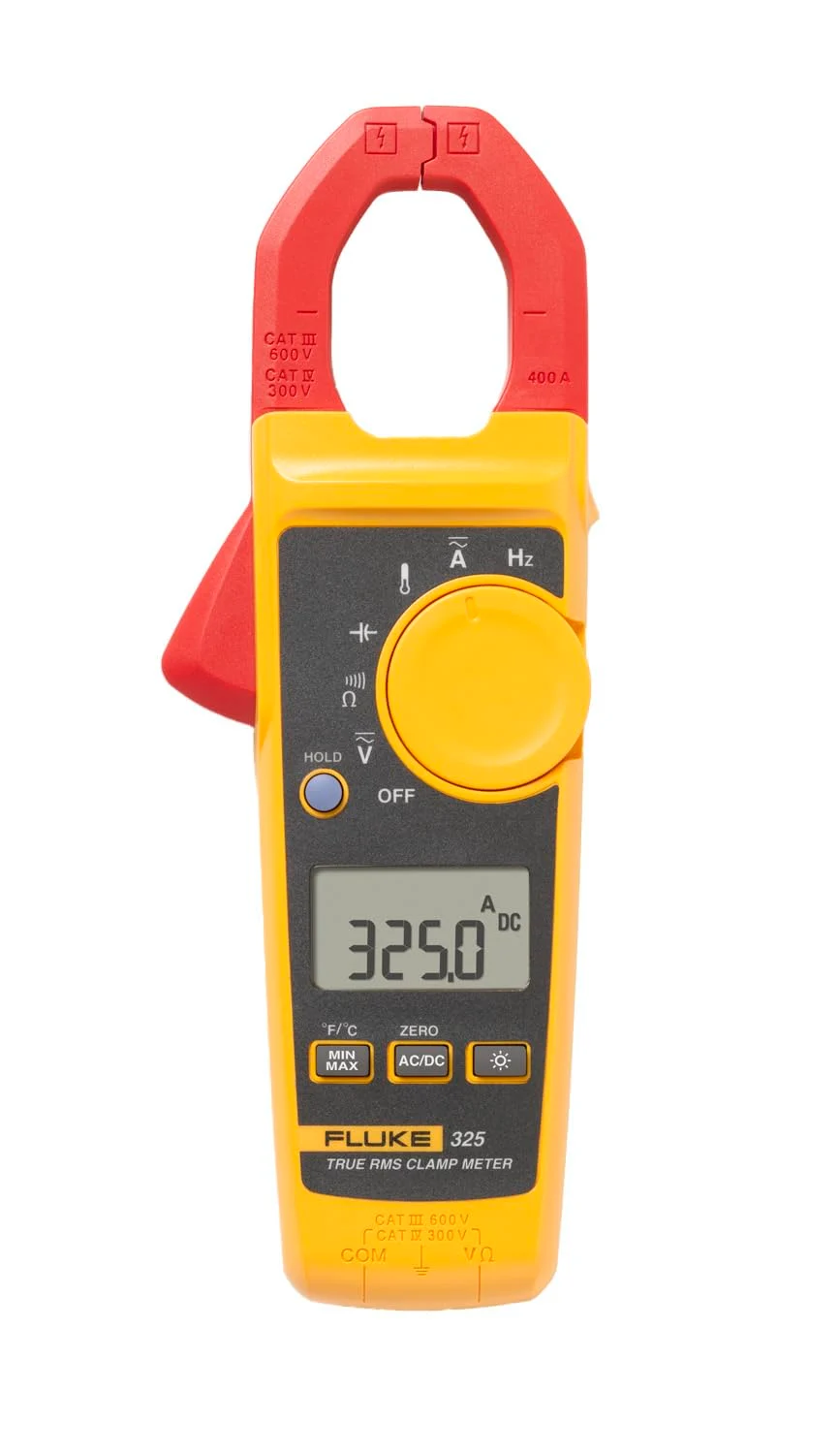
Fluke 325 True-RMS Clamp Meter
Clamp-on AC/DC current measurement in tight panels, with true-RMS accuracy and a CAT III 600 V rating.
- AC and DC current measurement — covers mains circuits, battery banks and solar strings with one tool.
- Clamp-on measurement — read current without disconnecting or disturbing the circuit.
- Slim jaw profile — slides into crowded panels where bulky clamps will not fit.
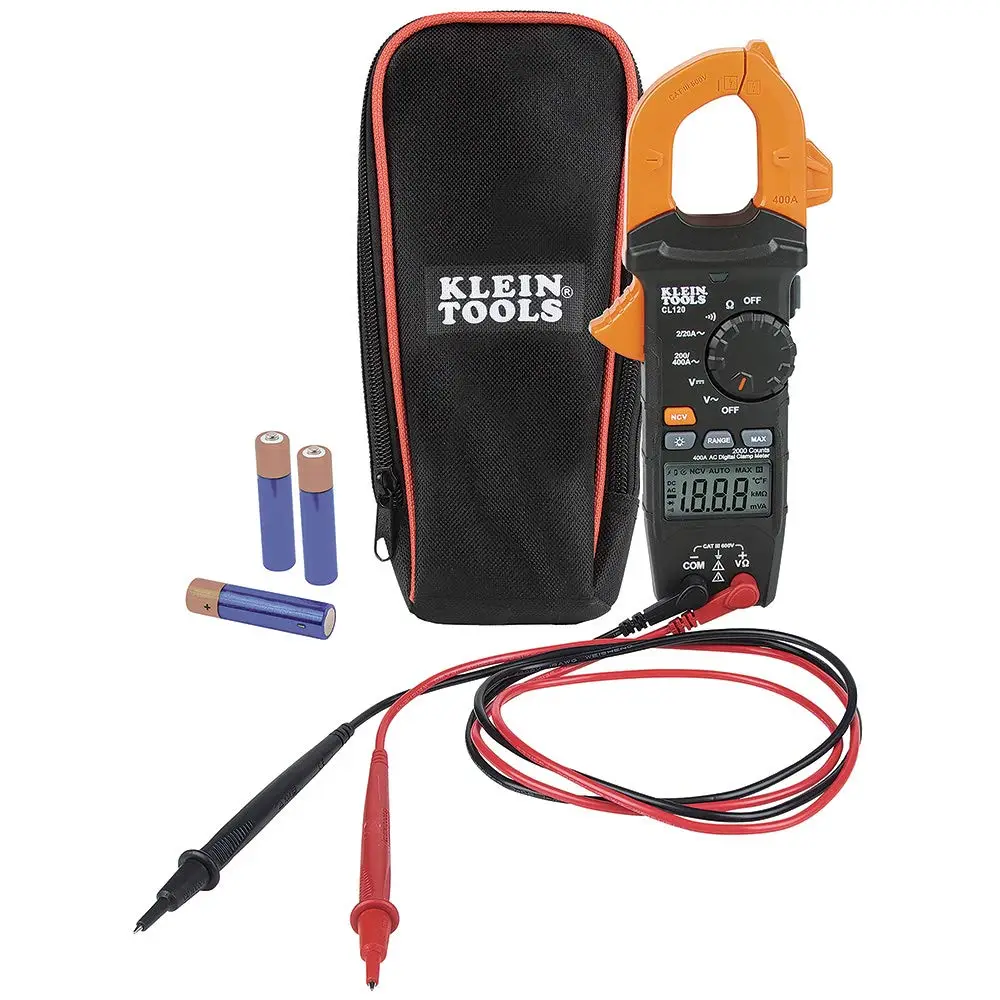
Klein Tools CL120 Auto-Ranging Clamp Meter
Auto-ranging 400 A AC clamp with NCV detection — choose the function and let the meter pick the range.
- Auto-ranging — select the measurement type and the meter picks the range, so no overload indications and no dial-fiddling at the top of a ladder.
- 400 A AC clamp — covers domestic and light commercial circuit current, measured without breaking the circuit.
- 2000-count display with backlight — resolution fine enough for small loads, and readable in a dark consumer unit.
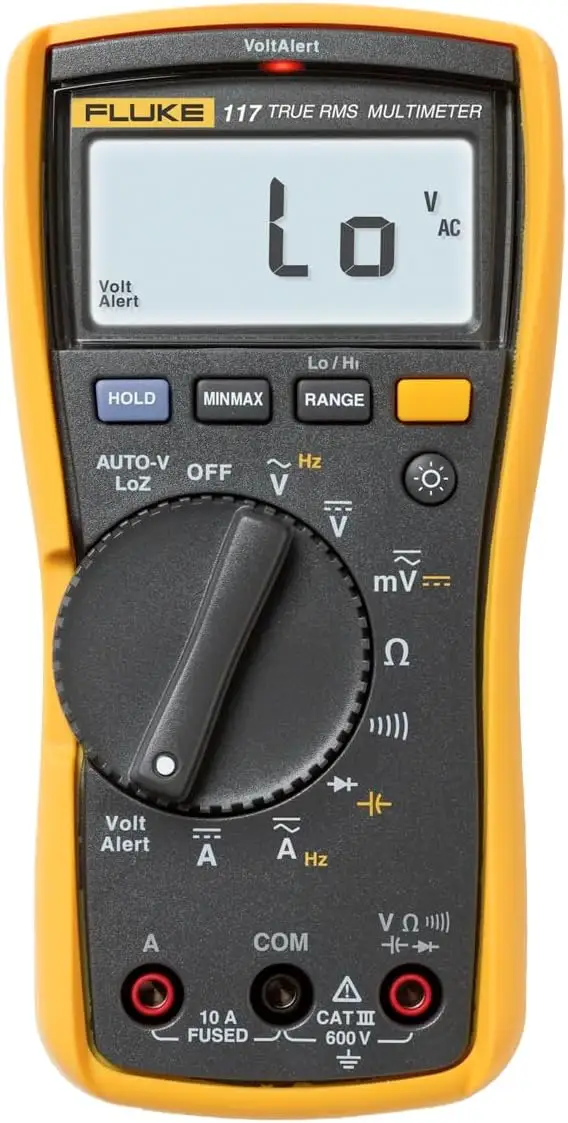
Fluke 117 True-RMS Multimeter
The everyday electrician's meter: true-RMS AC measurement, non-contact voltage detection and a CAT III 600 V rating in a compact body.
- True-RMS AC measurement — accurate readings on the electronic loads that fool cheaper average-sensing meters.
- Built-in non-contact voltage detection — confirm a circuit is live before you put a probe anywhere near it.
- CAT III 600 V safety rating — rated for the transient energy you meet in distribution panels and fixed wiring.

Klein Tools ET310 Circuit Breaker Finder Kit
Finds the breaker feeding a circuit without shutting the panel down — the transmitter plugs into the outlet, the receiver traces it back.
- Transmitter and receiver pair — plug the transmitter into the socket, then sweep the receiver across the panel to identify the matching breaker.
- Wiring status indicator on the transmitter — the same open ground, open neutral, open hot, reversed hot/neutral and reversed hot/ground checks as a standard outlet tester.
- GFCI test button — trips a GFCI device to confirm it is actually protecting the circuit, not just installed.