Electrical & Thermal Power Converter (W, kW, MW, HP, BTU/hr)
Convert between watts (W), kilowatts (kW), megawatts (MW), mechanical horsepower (HP), metric PS, and BTU/hr for electrical, HVAC, and motor sizing.
Step-by-step calculation
- Base Power in Watts: 5000 W (5 kW)
- Converted to W: 5000 W
- Mechanical HP (745.7 W): 6.705 HP | Metric PS (735.5 W): 6.798 PS
Formula & mathematical explanation
Input definitions
| Symbol | Parameter | Unit | Engineering meaning & standards relevance |
|---|---|---|---|
| P | Power Value | Selection | Power value to convert. |
| From | From Unit | Selection | Source power unit. |
| To | To Unit | Selection | Target power unit. |
Multi-Unit Power Conversion Table (kW, W, HP, BTU/hr)
| Kilowatts (kW) | Watts (W) | Mechanical HP | Thermal (BTU/hr) | Tons of Cooling (12k BTU/h) |
|---|---|---|---|---|
| 1.0 kW | 1,000 W | 1.341 HP | 3,412 BTU/hr | 0.28 Tons |
| 1.5 kW | 1,500 W | 2.012 HP | 5,118 BTU/hr | 0.43 Tons |
| 3.517 kW | 3,517 W | 4.716 HP | 12,000 BTU/hr | 1.00 Ton |
| 5.0 kW | 5,000 W | 6.705 HP | 17,061 BTU/hr | 1.42 Tons |
| 10.0 kW | 10,000 W | 13.410 HP | 34,121 BTU/hr | 2.84 Tons |
| 25.0 kW | 25,000 W | 33.526 HP | 85,304 BTU/hr | 7.11 Tons |
Worked example
Calculating Server Room Heat Dissipation in BTU/hr from a 5 kW IT Load
Find the air-conditioning thermal load in BTU/hr generated by 5 kW of continuous server rack power.
- Multiply 5 kW × 3,412.14 BTU/hr per kW = 17,060.7 BTU/hr (approx. 1.42 tons of cooling).
Assumptions
- Uses the International Steam Table BTU definition where 1 W = 3.4121416 BTU/hr.
- For electric resistance heating and IT enclosures, 100% of consumed electrical power is converted into thermal BTU/hr.
Limitations
- For heat pumps and air conditioners, thermal cooling/heating BTU/hr equals electrical input watts multiplied by the Coefficient of Performance (COP) or EER, not direct 3.412 conversion.
How it works
Normalizes any input power unit into base SI Watts (1 J/s) and converts across electrical (W, kW, MW), mechanical (HP), and thermal (BTU/hr) scales.
When to use it
- Sizing HVAC cooling for electrical switchgear rooms, transformer vaults, and server closets.
- Converting electric furnace and baseboard heater kW ratings into BTU/hr.
Practical real-world applications
- Switchgear Room Ventilation: Converting 8 kW of transformer and VFD heat loss into 27,297 BTU/hr to size exhaust fans or mini-split cooling.
- Electric Baseboard Heating: Sizing a 2,000 W baseboard heater as 6,824 BTU/hr.
Original Editorial Review & Technical Evaluation
Bridges electrical watts/kilowatts, mechanical horsepower, and HVAC thermal BTU/hr in a single tool.
MEP engineers, HVAC technicians, data center operators, and electricians.
- 5-unit bidirectional conversion (W, kW, MW, HP, BTU/hr).
- Shows all 4 key engineering equivalents simultaneously.
Accuracy & methodology: NIST SP 811 conversion factors.
What to verify independently: Check equipment heat-loss datasheets (W or BTU/hr) for switchgear and UPS cabinets.
Common mistakes
- Converting air-conditioner cooling capacity (e.g., 12,000 BTU/hr = 1 ton) directly at 3.412 BTU/W to find electrical power instead of dividing by the unit’s EER/SEER.
- Confusing mechanical horsepower (1 HP = 745.7 W) with metric horsepower (1 PS = 735.5 W) or boiler horsepower (9,810 W).
Safety & code notice
Enclosed VFD and transformer cabinets require adequate thermal dissipation to keep internal ambient below 40°C (104°F).
Frequently asked questions
Related Unit Converters
kW to Watts Converter (Kilowatts to Watts)
Convert kilowatts (kW) to watts (W), megawatts, and mechanical horsepower (HP).
Watts to kW Converter (W to Kilowatts)
Convert watts (W) to kilowatts (kW), horsepower, and BTU/hr for load sizing.
kW to HP Converter (Kilowatts to Horsepower)
Convert kilowatts (kW) to mechanical (HP) and metric horsepower for motor sizing.
HP to kW Converter (Horsepower to Kilowatts)
Convert mechanical horsepower (HP) and metric PS into kilowatts (kW) and watts.
Related Calculators
Power Calculator
Calculate active, apparent, and reactive power from voltage, current, or PF.
Joule Heating Calculator
Calculate thermal heat energy in joules, calories, and BTU from I²R and time.
Electrical Efficiency Calculator
Calculate equipment efficiency percentage, power loss, and input or output watts.
Motor Power Calculator
Calculate motor shaft output power in kW and HP, speed, and full-load torque.
Related Engineering Guides
Recommended Tools & Instruments
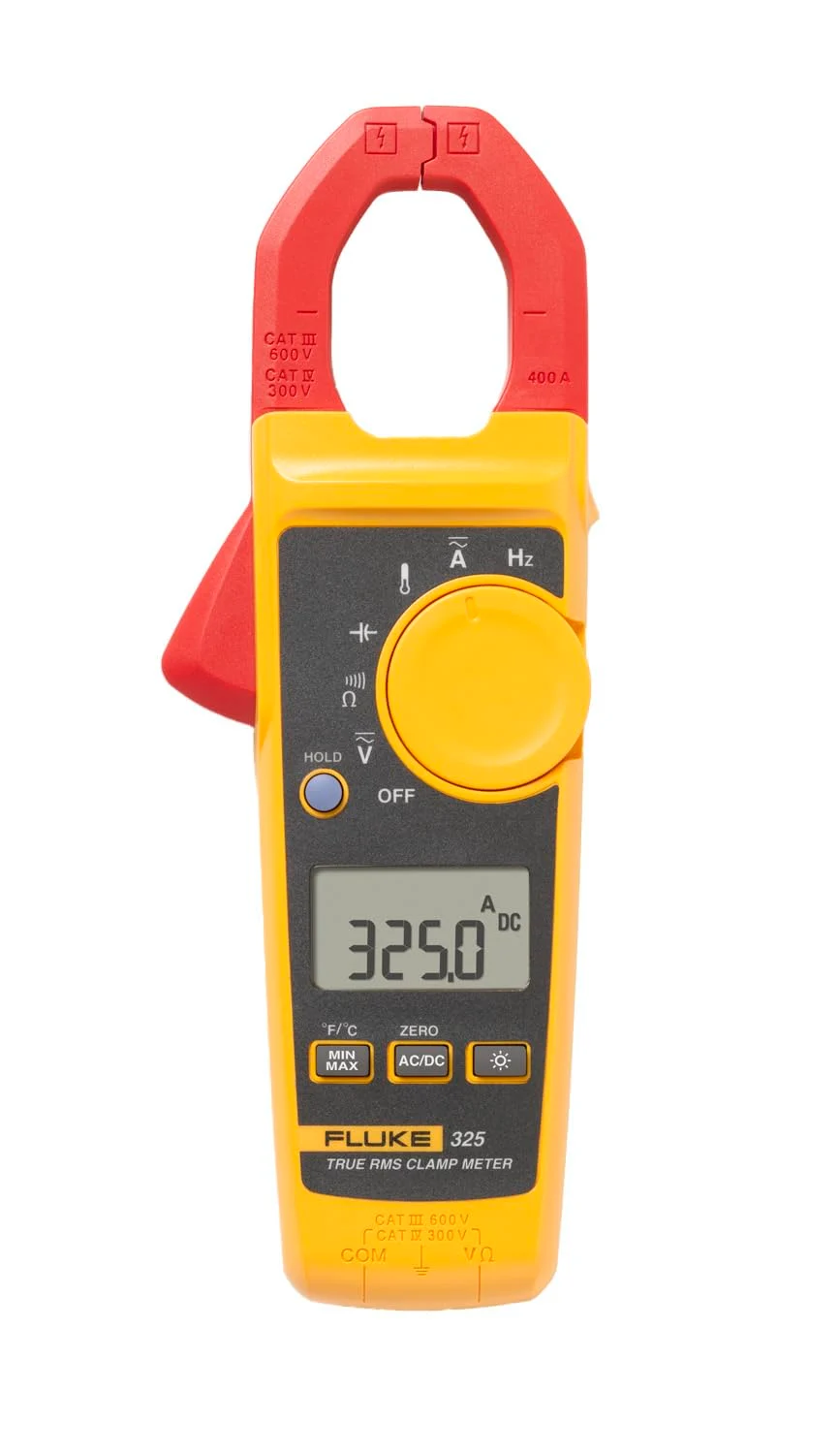
Fluke 325 True-RMS Clamp Meter
Clamp-on AC/DC current measurement in tight panels, with true-RMS accuracy and a CAT III 600 V rating.
- AC and DC current measurement — covers mains circuits, battery banks and solar strings with one tool.
- Clamp-on measurement — read current without disconnecting or disturbing the circuit.
- Slim jaw profile — slides into crowded panels where bulky clamps will not fit.
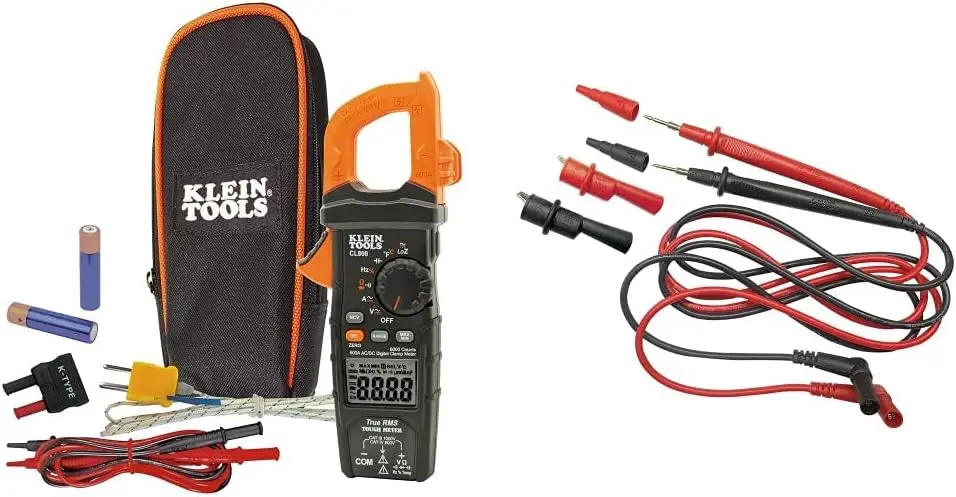
Klein Tools CL800 Digital Clamp Meter
Wide-jaw auto-ranging clamp meter with inrush capture for motor and compressor starting currents.
- Inrush current capture — see the starting surge that trips breakers, not just the running current.
- Wide jaw opening — accepts larger conductors and bundled cables that slim clamps cannot.
- Auto-ranging true-RMS measurement — fast readings you can trust on non-linear loads.
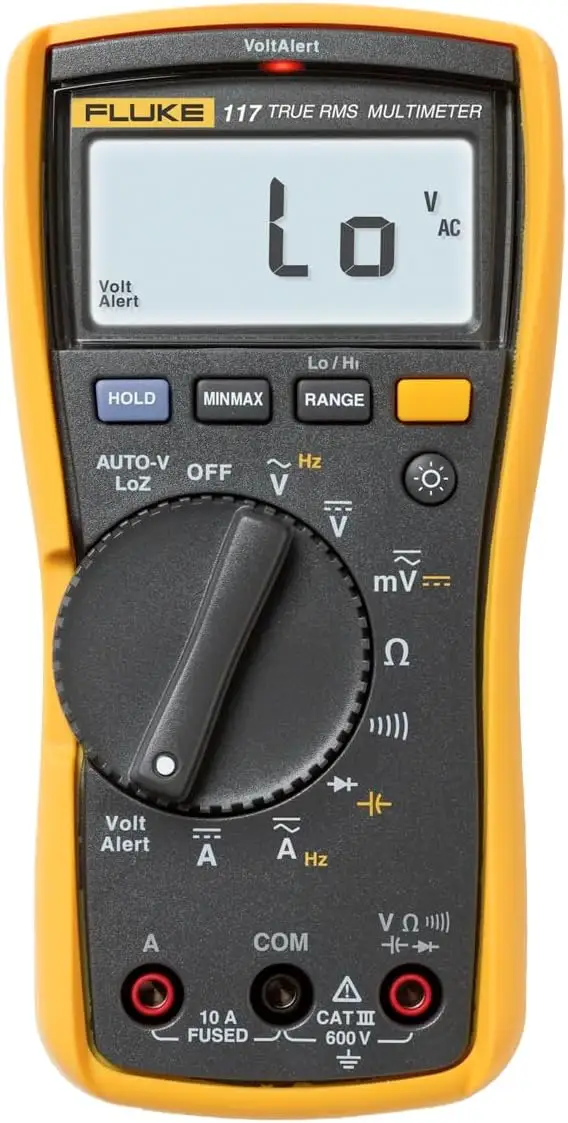
Fluke 117 True-RMS Multimeter
The everyday electrician's meter: true-RMS AC measurement, non-contact voltage detection and a CAT III 600 V rating in a compact body.
- True-RMS AC measurement — accurate readings on the electronic loads that fool cheaper average-sensing meters.
- Built-in non-contact voltage detection — confirm a circuit is live before you put a probe anywhere near it.
- CAT III 600 V safety rating — rated for the transient energy you meet in distribution panels and fixed wiring.
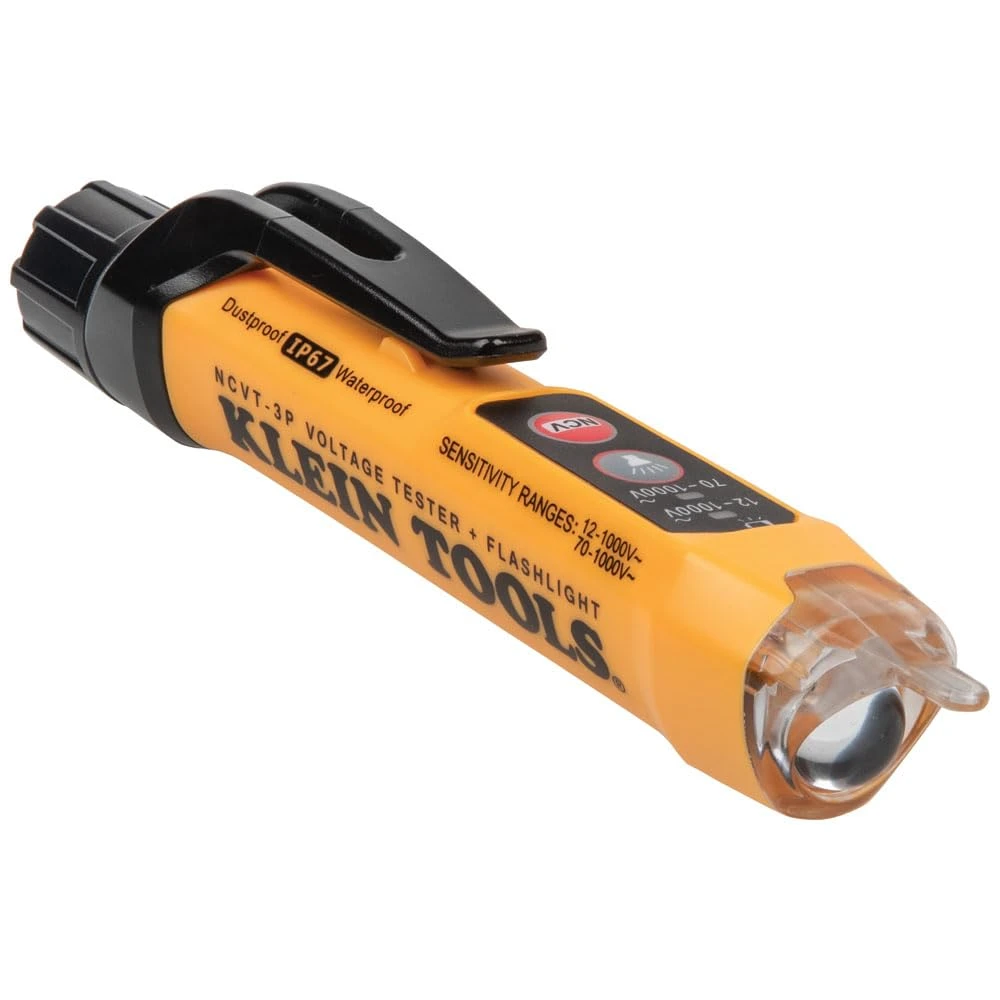
Klein Tools NCVT-3P Non-Contact Voltage Tester
Dual-range voltage tester with an integrated flashlight for working in dark panels.
- Built-in flashlight — no separate torch needed when you are working inside a dark enclosure.
- Dual sensitivity ranges — narrows detection so adjacent wiring causes fewer false positives.
- 12–1000 V AC detection — covers everything from control circuits up to mains voltage.