Fluke 1587 FC Insulation Multimeter
Insulation testing and full multimeter functions in one instrument, with selectable test voltages up to 1000 V.
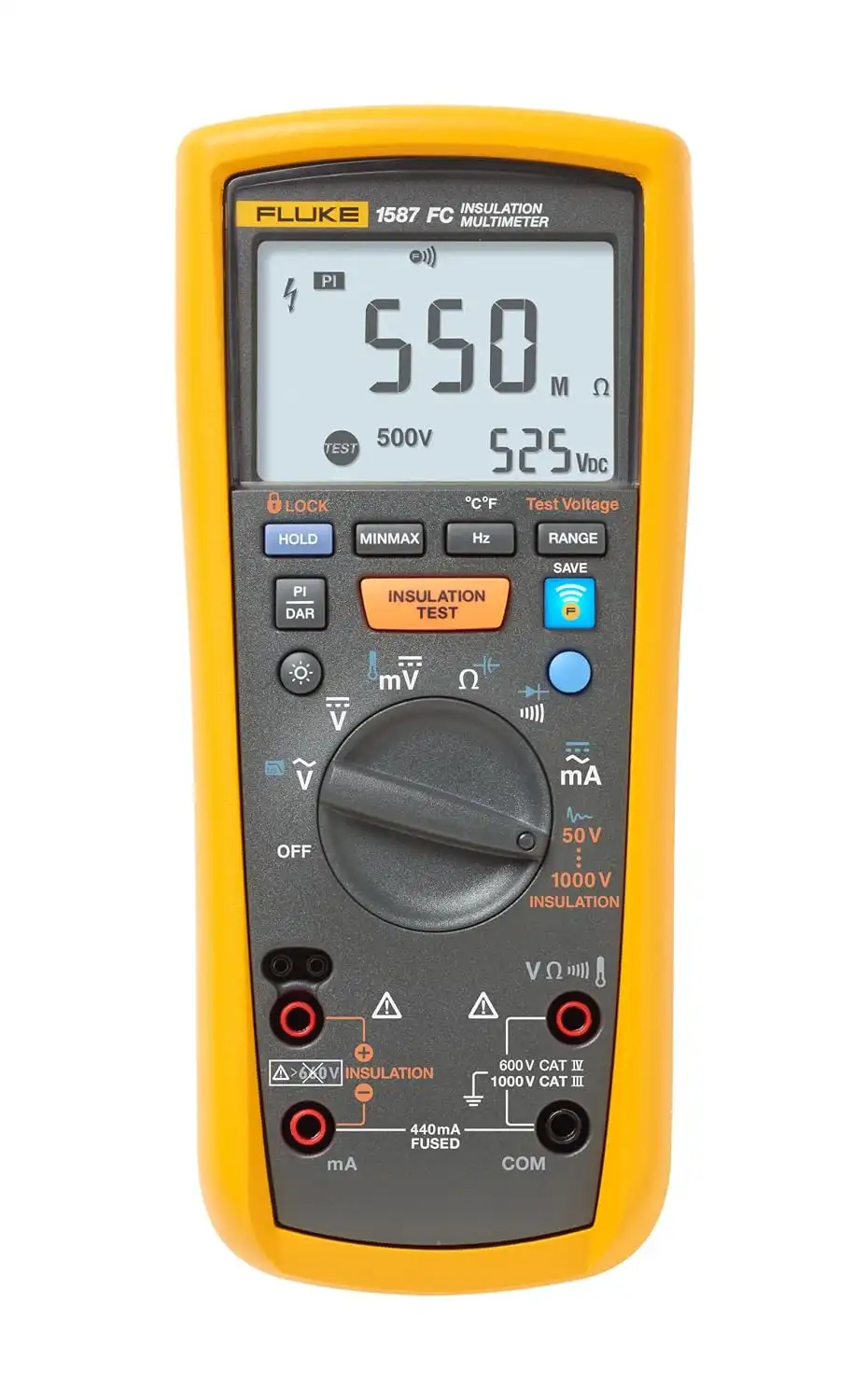
A combined insulation tester and true-RMS multimeter with multiple insulation test voltages, for motor, cable and switchgear testing.
- 50 V to 1000 V insulation test voltages
- Full True-RMS multimeter functions
- Fluke Connect wireless trend logging
Affiliate Disclosure: VoltCalc may earn a commission from qualifying purchases made through product links at no extra cost to you. Product specs and availability are for reference and may change.
Field Overview
Insulation degrades slowly and silently. A motor that runs perfectly today may be weeks from failing, and the only way to see it coming is to measure insulation resistance and compare it with last year's figure. The 1587 FC does that — and it also replaces the multimeter in your bag, so you are carrying one instrument instead of two and can move straight from a resistance check into an insulation test.
Detailed Feature Breakdown
- Insulation test voltages from 50 V to 1000 V — matches the test voltage to the equipment instead of using one fixed setting.
- Full true-RMS multimeter functions — voltage, current, resistance and continuity without a second instrument.
- Wireless result logging — builds a trend over time so you can see insulation degrading before it fails.
- Temperature measurement — useful for checking motor windings and bearings during a survey.
Performance & Practical Use
The value shows up over time rather than on day one. Being able to log insulation readings wirelessly means you build a real maintenance record, and a downward trend is what actually predicts failure — a single pass/fail result tells you far less. Combining the multimeter saves weight and bag space on every call. The honest caveat is cost: for occasional domestic work with no insulation testing requirement, this is a significant outlay.
How It Compares
Where the Fluke 117 is the everyday fault-finding meter, the 1587 FC is the condition-monitoring instrument — it is the one you buy when insulation records matter.
Pros
- Replaces two instruments with one
- Selectable test voltages suit a range of equipment
- Logging helps build a maintenance record over time
Cons
- A significant investment for occasional use
- Overkill if you have no insulation testing requirement
VoltCalc Verdict
If you test motors, cables and switchgear and need to demonstrate that insulation is holding up, this is the instrument that pays for itself by catching a failure before it happens. If your work is domestic wiring with no insulation testing requirement, you are paying for capability you will not use — buy the Fluke 117 instead.