Siemens Q220 20-Amp Double-Pole Circuit Breaker
A 20-amp two-pole breaker for 240 V loads such as a small air conditioner, well pump or baseboard heater.
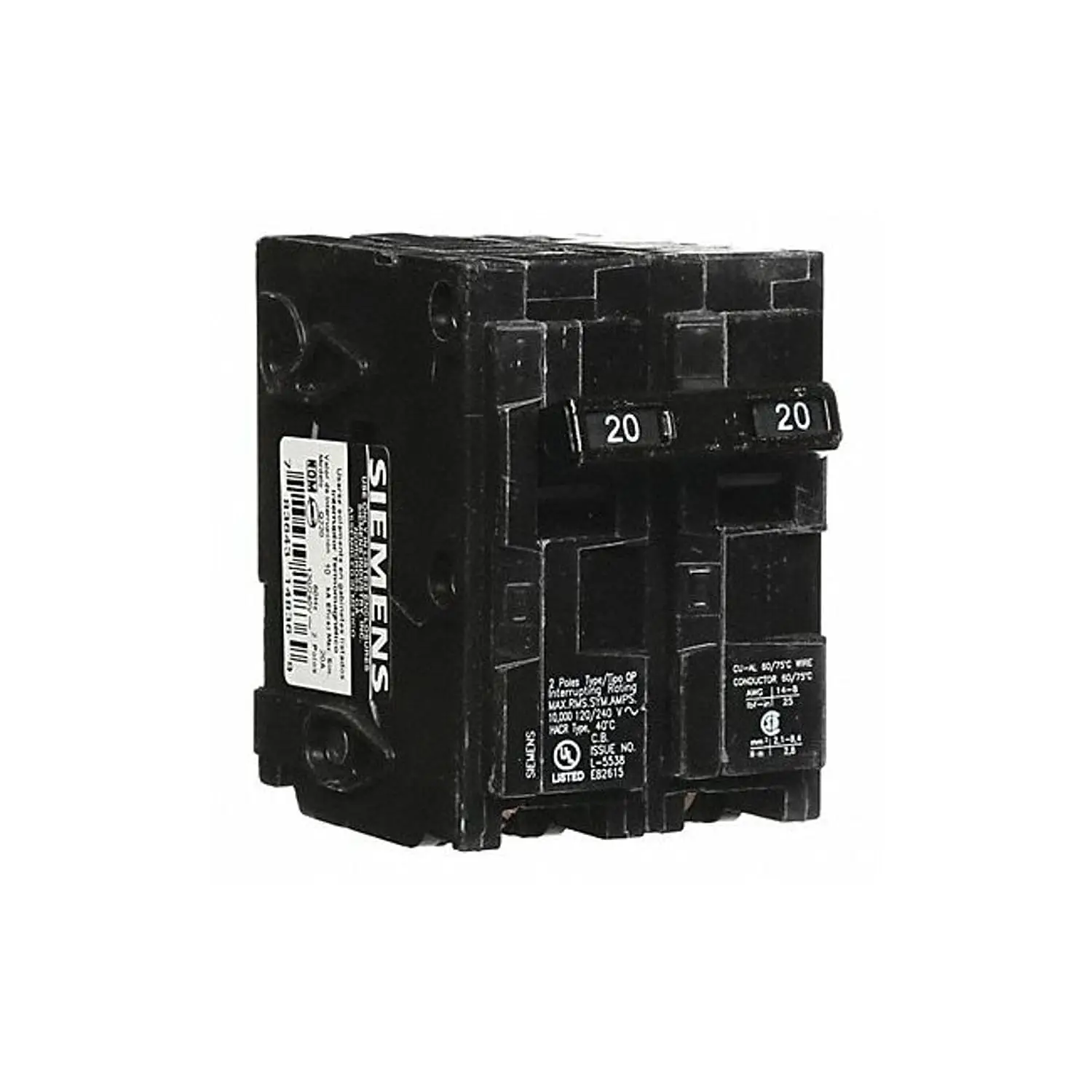
A 20-amp two-pole QP breaker for 240 V loads, with common trip and a 10 kA interrupting rating.
- 20 A 120/240 V common-trip 2-pole
- 10 kAIC interrupting capacity
- UL Listed HACR & SWD rated
Affiliate Disclosure: VoltCalc may earn a commission from qualifying purchases made through product links at no extra cost to you. Product specs and availability are for reference and may change.
Field Overview
A two-pole breaker looks like two single-pole breakers joined together, and functionally that is close to what it is — with one crucial difference. Both poles trip together. On a 240-volt circuit that matters, because if only one leg opened, the equipment would still be connected to the other live conductor. The Q220 gives you 20 amps on each leg at 240 volts, which is the right size for a small air conditioner, a well pump, a bathroom heater or a 240 V appliance that does not need a larger feed.
Detailed Feature Breakdown
- 20 amps per pole at 120/240 V — supplies a 240 V load with a common-trip action.
- Common trip — both poles open together, so a fault cannot leave one leg live.
- 10 kA interrupting rating — appropriate for typical residential service fault levels.
- HACR rated — approved for heating, air conditioning and refrigeration equipment.
- Two-pole QP footprint — occupies two one-inch spaces in a Siemens or Murray panel.
Performance & Practical Use
This is the breaker you fit when a load needs 240 volts but only a modest current. On an air conditioner or a well pump it does its job quietly for years. The two things that catch people out are the panel space — a two-pole breaker takes two slots, and you need to confirm you have two adjacent spaces on the same side of the busbar — and the wire size, which depends on the load and the manufacturer's instructions, not just on the 20-amp rating. A dedicated 240 V appliance circuit usually calls for 12 AWG copper minimum, and often larger once voltage drop is considered over a long run.
How It Compares
If you only need 120 volts, the single-pole Q120 does the same job in half the panel space. Choose the Q220 when the equipment genuinely requires two hot legs.
Pros
- Common trip protects both legs together
- HACR rated for air conditioning and refrigeration
- 10 kA interrupting rating
- Standard two-pole QP footprint
Cons
- Takes two panel spaces — check you have them adjacent
- Not needed if the load is 120 V only
VoltCalc Verdict
A sensible, low-cost breaker for a 240 V circuit in the 20-amp range. Buy it for a small AC unit, a pump or a modest heater circuit. Just confirm first that the load really needs 240 volts and that the wiring is sized for it — installing a two-pole breaker on a circuit that only needed 120 volts wastes panel space, and under-sizing the conductors is a genuine hazard.