Electrical Length Converter (Meters, Feet, Inches, Yards, km, Miles)
Convert cable run lengths between meters (m), feet (ft), inches (in), millimeters (mm), centimeters (cm), yards (yd), kilometers (km), and miles (mi).
Step-by-step calculation
- Convert input to base meters: 100 m = 100 m
- Convert to target unit (ft): 100 m ÷ 0.3048 = 328.084 ft
- Round-trip (2 × one-way) circuit path = 656.17 ft
Formula & mathematical explanation
Input definitions
| Symbol | Parameter | Unit | Engineering meaning & standards relevance |
|---|---|---|---|
| L | Length Value | Selection | One-way conduit or cable run length to convert. |
| From | From Unit | Selection | Source length unit. |
| To | To Unit | Selection | Target length unit. |
Cable Run Length Conversion Table (Meters ↔ Feet)
| Meters (m) | Feet (ft) | Yards (yd) | 2× Loop Length (m / ft) |
|---|---|---|---|
| 10 m | 32.81 ft | 10.94 yd | 20 m / 65.62 ft |
| 15 m | 49.21 ft | 16.40 yd | 30 m / 98.43 ft |
| 25 m | 82.02 ft | 27.34 yd | 50 m / 164.04 ft |
| 30.48 m | 100.00 ft | 33.33 yd | 60.96 m / 200.00 ft |
| 50 m | 164.04 ft | 54.68 yd | 100 m / 328.08 ft |
| 75 m | 246.06 ft | 82.02 yd | 150 m / 492.13 ft |
| 100 m | 328.08 ft | 109.36 yd | 200 m / 656.17 ft |
| 304.8 m | 1,000.00 ft | 333.33 yd | 609.6 m / 2,000.00 ft |
Worked example
Converting a 50-Meter Feeder Run into Feet
Convert a 50 m underground subpanel feeder into feet and find the total 2-wire loop length.
- Multiply 50 m ÷ 0.3048 m/ft = 164.042 ft one-way.
- Total out-and-back conductor loop length = 2 × 164.042 ft = 328.084 ft (100 m).
Assumptions
- Uses the exact 1959 International Yard and Pound agreement: 1 yard = 0.9144 m, 1 foot = 0.3048 m, 1 inch = 25.4 mm.
- Round-trip loop length is 2 × L for 2-wire DC and single-phase circuits.
- Does not include vertical riser drops or termination slack unless added to the input value.
Limitations
- Physical cable pulled through conduit requires 5%–10% extra length for bends, pull boxes, and panel make-up loops.
- NEC Chapter 9 Table 8 resistance values are specified per 1,000 ft, while IEC 60228 resistance values are specified per km (1,000 m).
How it works
Converts any of the 8 supported metric and imperial length units through the exact international foot definition (1 ft ≡ 0.3048 m; 1 in ≡ 25.4 mm), and automatically calculates the 2× round-trip conductor path used in single-phase and DC voltage-drop calculations.
When to use it
- Converting architectural site drawings in feet into meters for metric voltage-drop and wire-size calculators.
- Converting cable reel lengths (typically sold in 100 m, 250 ft, 500 ft, or 1,000 ft spools).
Practical real-world applications
- Feeder Voltage Drop: Converting a 150 ft subpanel run to 45.72 m for metric voltage-drop verification.
- Conduit & Trench Estimating: Converting trench distances between yards, feet, and meters.
Original Editorial Review & Technical Evaluation
Bidirectional 8-unit length converter tailored for electrical conduit, trench, and voltage-drop calculations.
Electricians, electrical estimators, solar installers, and civil/site engineers.
- Converts between mm, cm, m, km, in, ft, yd, and miles in any combination.
- Automatically computes the 2×L out-and-back circuit loop length.
- Quick reference table for standard 10 m–1,000 ft feeder distances.
Accuracy & methodology: Exact international definitions (1 ft ≡ 0.3048 m).
What to verify independently: Measure actual installed conduit path using a calibrated measuring tape or laser distance meter.
Common mistakes
- Entering the doubled out-and-back wire length into a voltage-drop calculator that already multiplies one-way length by 2.
- Forgetting to add vertical panelboard riser heights at both ends of a horizontal conduit run.
Safety & code notice
When calculating voltage drop and short-circuit fault current, always include the actual routed path of the conduit (including vertical rises), not just the straight-line plan distance.
Frequently asked questions
Related Unit Converters
AWG to mm² Converter (American Wire Gauge to Metric)
Convert American Wire Gauge (AWG) to metric mm² area, diameter, and resistance.
mm² to AWG Converter (Metric Cable to American Wire Gauge)
Convert metric conductor area in mm² to the nearest AWG size and DC resistance.
Conductor Area Converter (mm², cmil, kcmil, sq in, sq ft, m²)
Convert conductor areas between mm², circular mils, kcmil, sq inches, and cm².
Related Calculators
Voltage Drop Calculator
Calculate AC and DC voltage drop across AWG or metric mm² copper and aluminum runs.
Wire Size Calculator (Dual-Criteria Solver)
Size copper and aluminum conductors in AWG or mm² for ampacity and voltage drop.
EV Charger Circuit Calculator
Size EV charger branch-circuit breakers, phase wires, and protective earthing.
Related Engineering Guides
Recommended Tools & Instruments
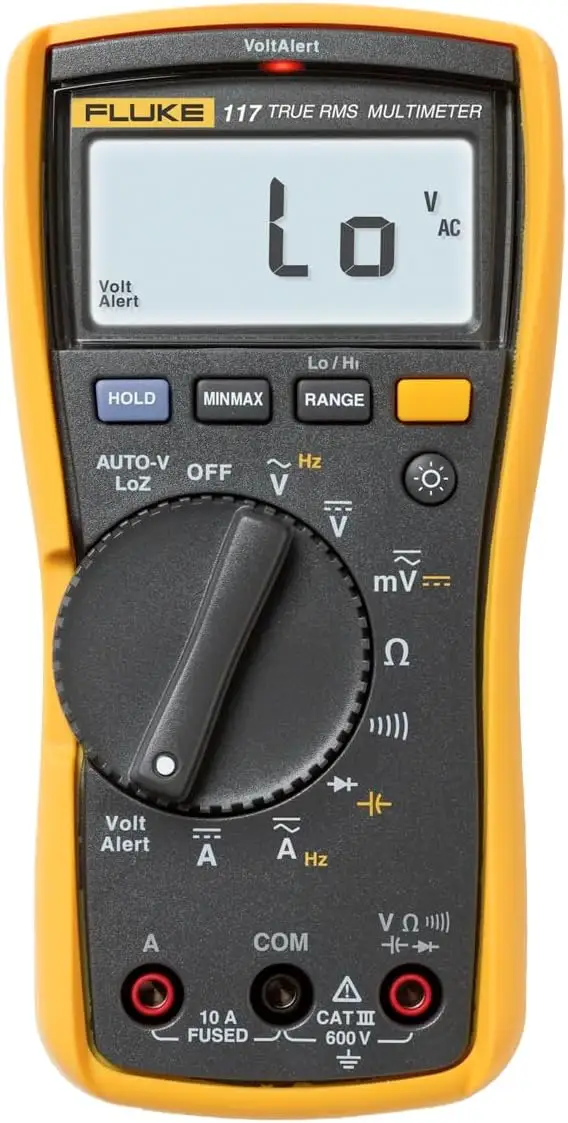
Fluke 117 True-RMS Multimeter
The everyday electrician's meter: true-RMS AC measurement, non-contact voltage detection and a CAT III 600 V rating in a compact body.
- True-RMS AC measurement — accurate readings on the electronic loads that fool cheaper average-sensing meters.
- Built-in non-contact voltage detection — confirm a circuit is live before you put a probe anywhere near it.
- CAT III 600 V safety rating — rated for the transient energy you meet in distribution panels and fixed wiring.
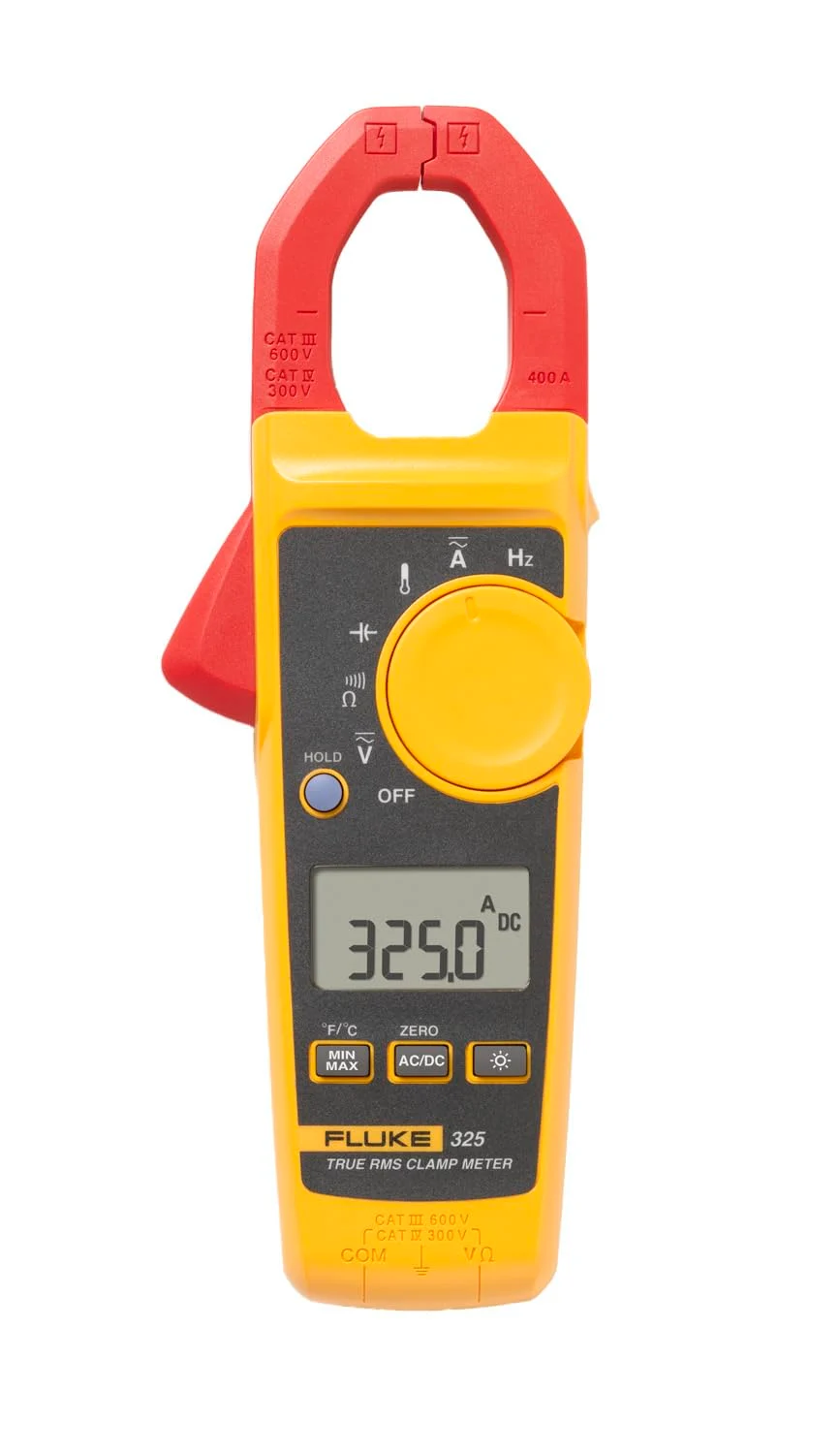
Fluke 325 True-RMS Clamp Meter
Clamp-on AC/DC current measurement in tight panels, with true-RMS accuracy and a CAT III 600 V rating.
- AC and DC current measurement — covers mains circuits, battery banks and solar strings with one tool.
- Clamp-on measurement — read current without disconnecting or disturbing the circuit.
- Slim jaw profile — slides into crowded panels where bulky clamps will not fit.
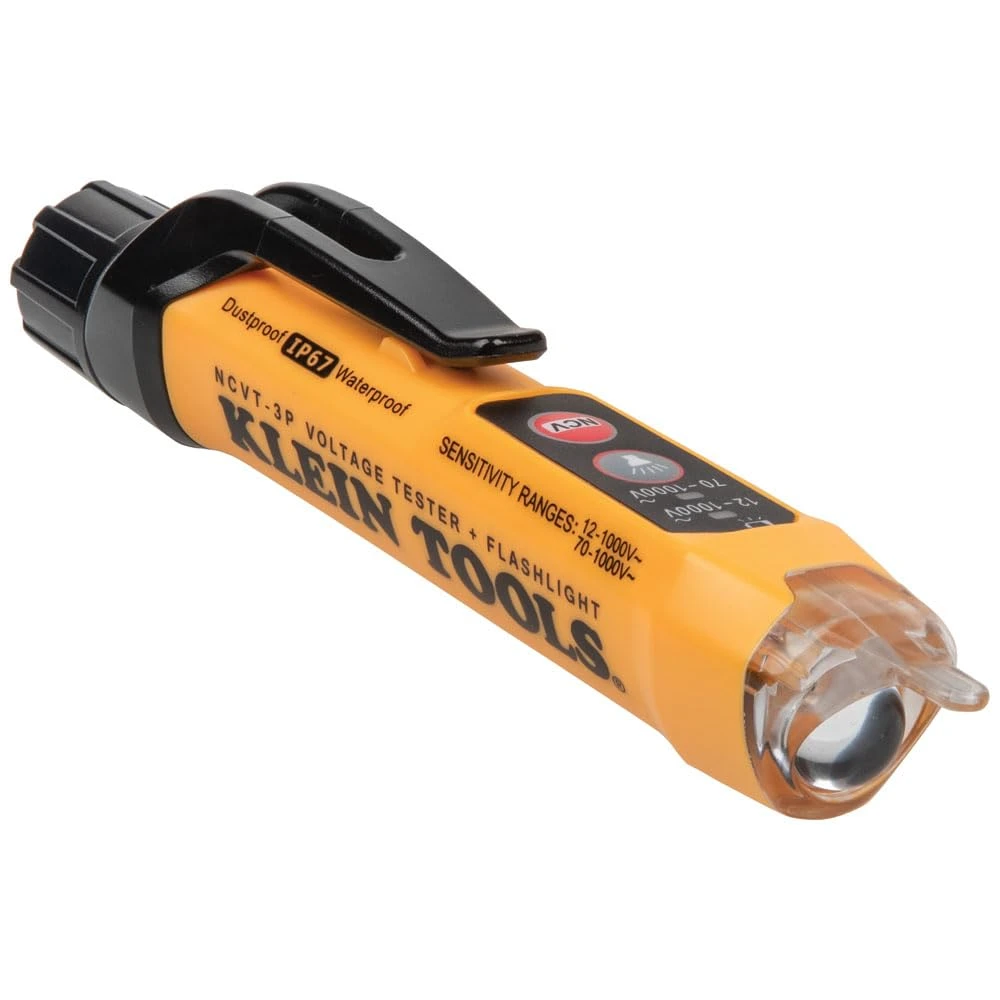
Klein Tools NCVT-3P Non-Contact Voltage Tester
Dual-range voltage tester with an integrated flashlight for working in dark panels.
- Built-in flashlight — no separate torch needed when you are working inside a dark enclosure.
- Dual sensitivity ranges — narrows detection so adjacent wiring causes fewer false positives.
- 12–1000 V AC detection — covers everything from control circuits up to mains voltage.
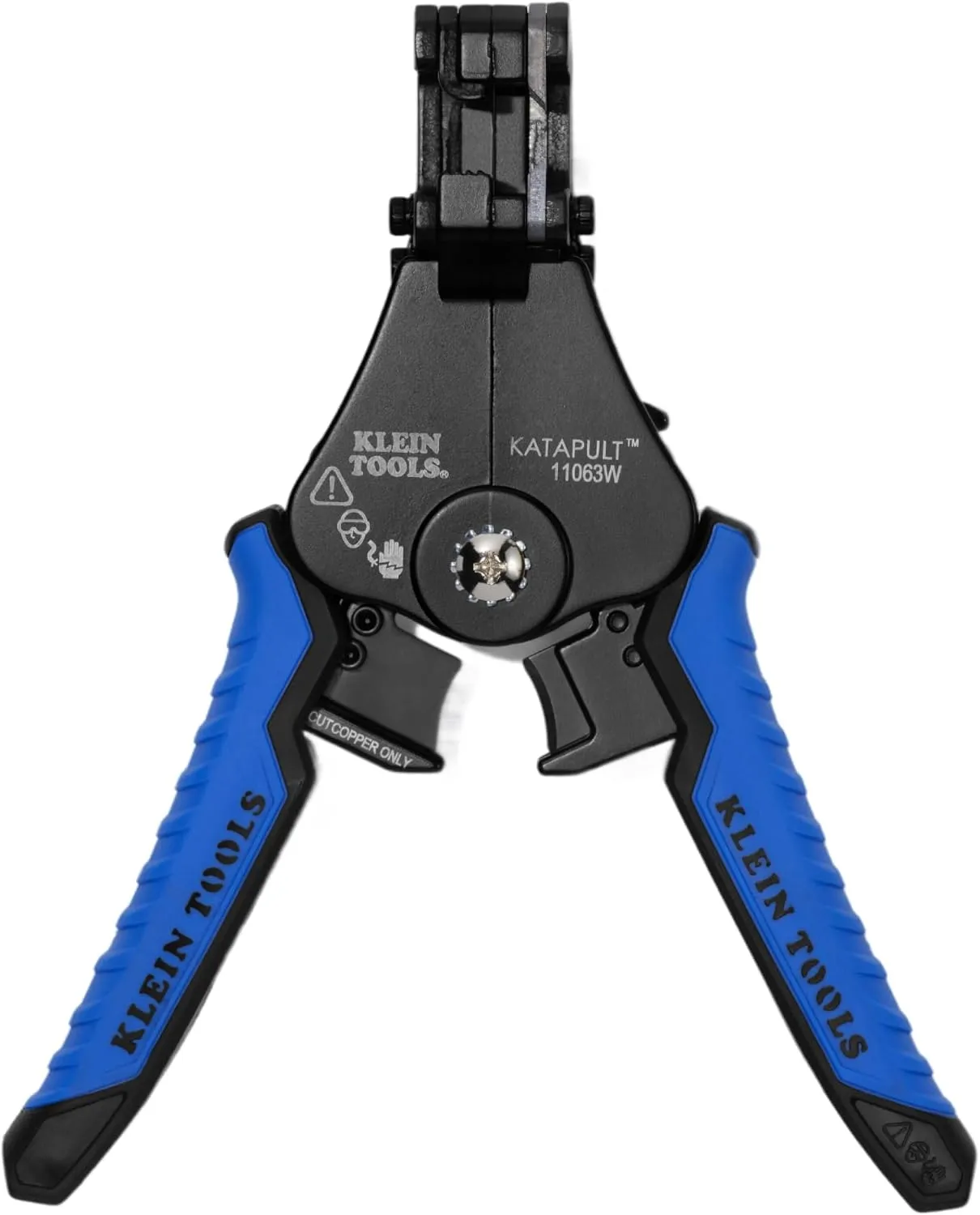
Klein Tools 11063W Wire Stripper and Cutter
Self-adjusting stripper that grips, strips and cuts common building wire in one motion.
- Self-adjusting action — squeeze once and the tool sets itself to the conductor size, so strips are repeatable.
- Clean strip without nicking — protects the copper, which is what keeps a termination reliable long term.
- Built-in cutter and plier nose — you can cut, strip and twist without swapping tools.