mm² to AWG Converter (Metric Cable to American Wire Gauge)
Convert metric conductor cross-sectional area in mm² to the nearest and next larger American Wire Gauge (AWG/kcmil) size, equivalent diameter (mm & in), kcmil, and 20 °C DC resistance.
Step-by-step calculation
- Input Area A = 4 mm² (7.894 kcmil / 7894 cmil)
- Equivalent Solid Bare Diameter d = √(4 × 4 ÷ π) = 2.257 mm (0.0888 in)
- Closest Standard Size = 12 AWG (3.31 mm²) | Next Larger Safe AWG/kcmil (≥ 4 mm²) = 10 AWG (5.26 mm²)
- Reference 20 °C Copper DC Resistance: 4.61 Ω/km (1.4051 Ω/1000 ft)
- Mechanical Lug & Ferrule Non-Interchangeability Notice: North American AWG/kcmil and IEC 60228 metric (mm²) conductors are geometrically distinct. Never force an approximate cross-standard equivalent into a mechanical lug, compression barrel, or ferrule unless the terminal is explicitly dual-listed for both standards.
Formula & mathematical explanation
Input definitions
| Symbol | Parameter | Unit | Engineering meaning & standards relevance |
|---|---|---|---|
| A | Conductor Area | mm² | Cross-sectional area of the conductor in square millimeters (mm²). |
Standard IEC 60228 Metric (mm²) to AWG Cross-Reference Table
| IEC Nominal Area (mm²) | Closest AWG Size (Area) | Safe Upsized AWG (≥ Area) | Solid Diameter (mm) |
|---|---|---|---|
| 0.75 mm² | 18 AWG (0.82 mm²) | 18 AWG (0.82 mm²) | 0.977 mm |
| 1.0 mm² | 18 AWG (0.82 mm²) | 16 AWG (1.31 mm²) | 1.128 mm |
| 1.5 mm² | 16 AWG (1.31 mm²) | 14 AWG (2.08 mm²) | 1.382 mm |
| 2.5 mm² | 14 AWG (2.08 mm²) | 12 AWG (3.31 mm²) | 1.784 mm |
| 4.0 mm² | 12 AWG (3.31 mm²) | 10 AWG (5.26 mm²) | 2.257 mm |
| 6.0 mm² | 10 AWG (5.26 mm²) | 8 AWG (8.37 mm²) | 2.764 mm |
| 10 mm² | 8 AWG (8.37 mm²) | 6 AWG (13.30 mm²) | 3.568 mm |
| 16 mm² | 6 AWG (13.30 mm²) | 4 AWG (21.15 mm²) | 4.514 mm |
| 25 mm² | 4 AWG (21.15 mm²) | 2 AWG (33.63 mm²) | 5.642 mm |
| 35 mm² | 2 AWG (33.63 mm²) | 1 AWG (42.41 mm²) | 6.676 mm |
| 50 mm² | 1/0 AWG (53.48 mm²) | 1/0 AWG (53.48 mm²) | 7.979 mm |
| 70 mm² | 2/0 AWG (67.43 mm²) | 3/0 AWG (85.03 mm²) | 9.441 mm |
| 95 mm² | 3/0 AWG (85.03 mm²) | 4/0 AWG (107.2 mm²) | 10.998 mm |
Worked example
Converting 4 mm² and 6 mm² IEC Cable to AWG
Find the nearest AWG size and safe upsized AWG equivalent for 4 mm² and 6 mm² metric solar/power cables.
- For 4.0 mm²: d = 2.257 mm → exact AWG = 11.18 (12 AWG is 3.31 mm²; 10 AWG is 5.26 mm²).
- For 6.0 mm²: d = 2.764 mm → exact AWG = 9.43 (10 AWG is 5.26 mm²; 8 AWG is 8.37 mm²).
Assumptions
- Cross-sectional area is the effective metallic conducting area in mm².
- Shows both the mathematically nearest AWG and the next larger AWG/kcmil so designers never accidentally undersize a replacement wire.
- 1 mm² = 1,973.525 circular mils (cmil) = 1.973525 kcmil.
Limitations
- Standard IEC metric sizes fall between standard AWG steps (e.g., 2.5 mm² sits between 14 AWG at 2.08 mm² and 12 AWG at 3.31 mm²).
- For cables larger than 107.2 mm² (4/0 AWG), North American practice specifies conductor size in kcmil (MCM) such as 250 kcmil (126.7 mm²).
How it works
Computes the equivalent solid conductor diameter d = √(4A/π) from the entered mm² area, then applies the inverse ASTM B258 logarithmic formula to identify both the closest AWG gauge and the next larger (upsized) AWG/kcmil gauge.
When to use it
- Selecting North American AWG wire and crimps when installing European or Asian machinery specified in mm².
- Checking whether a nearest AWG gauge or the next larger AWG gauge is required to meet design current.
Practical real-world applications
- Machine Tool Installation: Translating a 16 mm² supply requirement on a German CNC machine to 4 AWG copper (21.15 mm²) for NEC compliance.
- Terminal Crimp Selection: Matching 2.5 mm² and 4 mm² ferrules to AWG crimping tool dies.
Original Editorial Review & Technical Evaluation
Converts metric mm² cable sizes to both the nearest AWG and the safe upsized AWG/kcmil equivalent, with diameter, kcmil, and 20°C resistance outputs.
Electrical engineers, panel shops, industrial electricians, and solar/EV installers.
- Displays both Nearest AWG and Upsized Safe AWG/kcmil (≥ metric area) to prevent undersizing.
- Calculates equivalent solid diameter (mm & in), kcmil/cmil, and 20°C copper DC resistance (Ω/km & Ω/1000 ft).
- Includes mandatory mechanical lug/ferrule non-interchangeability notice.
Accuracy & methodology: Inverse ASTM B258 logarithmic calculation.
What to verify independently: Verify final ampacity against NEC Table 310.16 or IEC 60364-5-52.
Common mistakes
- Picking the closest AWG when its area is smaller than the metric requirement (e.g., using 14 AWG [2.08 mm²] where 2.5 mm² is required for voltage drop).
- Confusing kcmil with mm² on large feeder cables.
Safety & code notice
Mechanical Lug & Ferrule Non-Interchangeability Notice: North American AWG/kcmil and IEC 60228 metric (mm²) conductors are geometrically distinct. Never force an approximate cross-standard equivalent into a mechanical lug, compression barrel, or ferrule unless the terminal is explicitly dual-listed for both standards.
Frequently asked questions
Related Unit Converters
AWG to mm² Converter (American Wire Gauge to Metric)
Convert American Wire Gauge (AWG) to metric mm² area, diameter, and resistance.
Conductor Area Converter (mm², cmil, kcmil, sq in, sq ft, m²)
Convert conductor areas between mm², circular mils, kcmil, sq inches, and cm².
Electrical Length Converter (Meters, Feet, Inches, Yards, km, Miles)
Convert cable lengths between meters, feet, inches, millimeters, yards, and miles.
Related Calculators
Wire Size Calculator (Dual-Criteria Solver)
Size copper and aluminum conductors in AWG or mm² for ampacity and voltage drop.
Voltage Drop Calculator
Calculate AC and DC voltage drop across AWG or metric mm² copper and aluminum runs.
Circuit Breaker Size Calculator
Select circuit breaker and MCB ratings for continuous loads and cable ampacity.
Related Engineering Guides
How to Choose Cables & Wire
Select conductor sizes, insulation ratings, and cables for ampacity and drop limits.
100 Amp Wire Size: What Gauge You Actually Need
Select copper and aluminum conductor sizes in AWG and mm² for 100 A subpanel runs.
200 Amp Wire Size: Gauge, Cable and Breaker
Size copper and aluminum service and feeder cables in AWG and mm² for 200 A panels.
Recommended Tools & Instruments
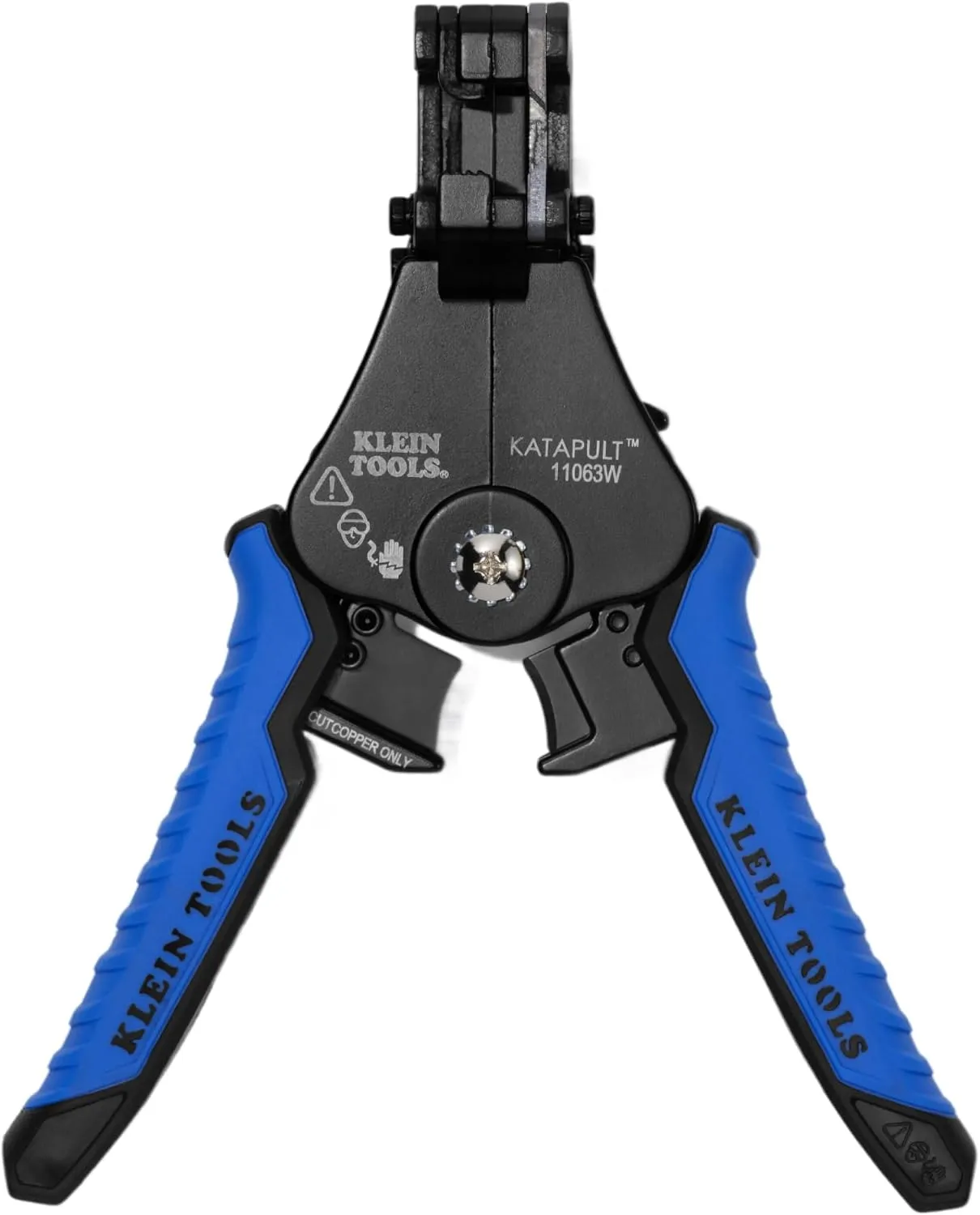
Klein Tools 11063W Wire Stripper and Cutter
Self-adjusting stripper that grips, strips and cuts common building wire in one motion.
- Self-adjusting action — squeeze once and the tool sets itself to the conductor size, so strips are repeatable.
- Clean strip without nicking — protects the copper, which is what keeps a termination reliable long term.
- Built-in cutter and plier nose — you can cut, strip and twist without swapping tools.
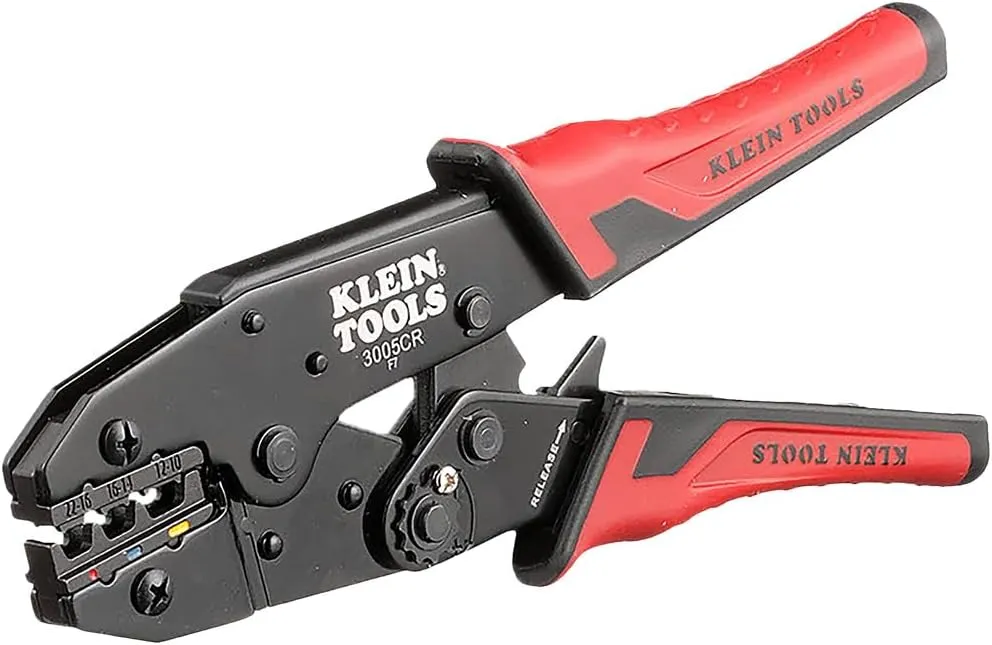
Klein Tools 3005CR Ratcheting Crimper
Ratcheting crimper that locks until the crimp is complete, so every termination is fully formed.
- Ratcheting mechanism — the tool stays locked until the crimp is fully formed, so a weak grip cannot produce a weak joint.
- 22–10 AWG range — covers the terminal sizes used in most panel and control wiring.
- Insulated and non-insulated terminals — one tool handles both, so you are not carrying two.
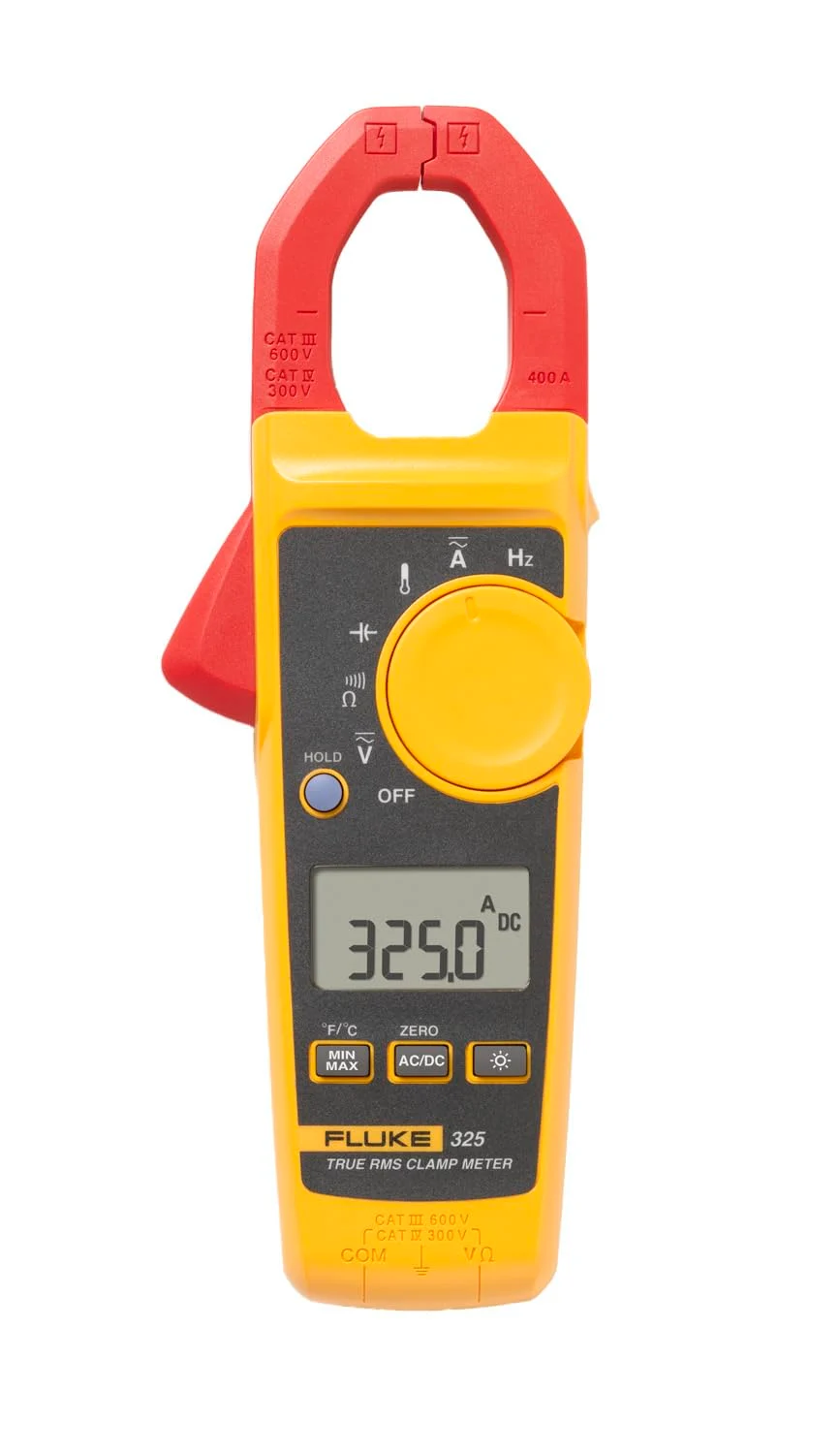
Fluke 325 True-RMS Clamp Meter
Clamp-on AC/DC current measurement in tight panels, with true-RMS accuracy and a CAT III 600 V rating.
- AC and DC current measurement — covers mains circuits, battery banks and solar strings with one tool.
- Clamp-on measurement — read current without disconnecting or disturbing the circuit.
- Slim jaw profile — slides into crowded panels where bulky clamps will not fit.
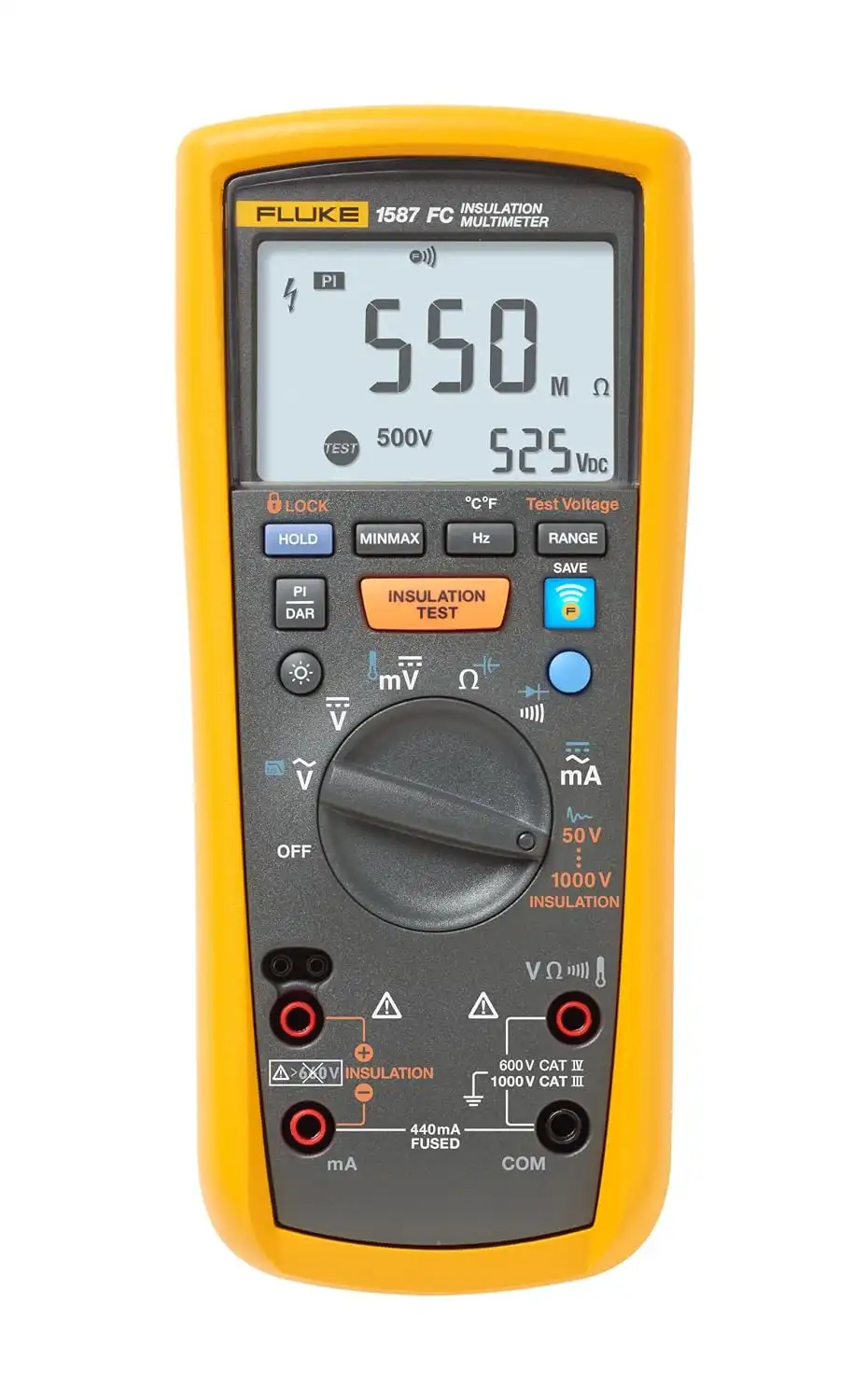
Fluke 1587 FC Insulation Multimeter
Insulation testing and full multimeter functions in one instrument, with selectable test voltages up to 1000 V.
- Insulation test voltages from 50 V to 1000 V — matches the test voltage to the equipment instead of using one fixed setting.
- Full true-RMS multimeter functions — voltage, current, resistance and continuity without a second instrument.
- Wireless result logging — builds a trend over time so you can see insulation degrading before it fails.