EV Charging Cost Calculator
Calculate the cost of charging an electric vehicle, metered wall energy with charger efficiency η, and cost per mile or kilometer across multiple currencies.
Step-by-step calculation
- Net energy added to battery = 75 kWh × (80% − 20%) = 45.00 kWh
- Metered utility energy (at η = 90%) = 45.00 kWh ÷ 0.90 = 50.00 kWh
- Total session cost = 50.00 kWh × $0.16/kWh = $8.00
- Range added at 3.5 mi/kWh = 157.5 mi ($0.051/mi)
Formula
Input definitions
| Symbol | Input | Unit | Meaning & code relevance |
|---|---|---|---|
| kWh | Battery Capacity | kWh | Nominal energy storage rating in amp-hours (Ah) or kilowatt-hours (kWh) before applying Depth of Discharge (DoD). |
| Cur | Currency Symbol | — | Engineering input parameter for currency symbol, evaluated in real-time by the solver. |
| Rate | Electricity Tariff per kWh | /kWh | Utility billing energy rate per kilowatt-hour (kWh) used to project operating electricity expenditure. |
| SoC₀ | Start SoC | % | Engineering input parameter for start soc measured in %, evaluated in real-time by the solver. |
| SoC₁ | Target SoC | % | Engineering input parameter for target soc measured in %, evaluated in real-time by the solver. |
| η | Wall-to-Battery Charging Efficiency | % | Ratio of useful output power to total input power expressed as a percentage (η = P_out / P_in × 100). |
| Unit | Vehicle Efficiency Unit | — | Ratio of useful output power to total input power expressed as a percentage (η = P_out / P_in × 100). |
| Eff | Vehicle Efficiency Value | — | Ratio of useful output power to total input power expressed as a percentage (η = P_out / P_in × 100). |
Worked example
45 kWh Net Pack Session at $0.16/kWh (90% Charger Efficiency)
Calculate total metered session cost and cost per mile/100 miles.
- Net battery energy added = 75 kWh × (80% − 20%) = 45.0 kWh.
- Metered wall energy at 90% charging efficiency = 45.0 ÷ 0.90 = 50.0 kWh.
- Session Cost = 50.0 kWh × $0.16 = $8.00 ($7.20 before conversion losses); Range added = 157.5 mi.
Assumptions
- Energy added is calculated from usable battery capacity multiplied by the change in State of Charge (Target% − Start%).
- Wall-to-battery charging efficiency η accounts for AC-to-DC conversion and battery thermal conditioning losses.
- Driving range added is computed using your selected efficiency unit (mi/kWh, Wh/mi, km/kWh, or kWh/100km).
Limitations
- Public DC fast-charging idle fees, session connection fees, and peak Time-of-Use tariff jumps are not included.
- Extreme cold or heat can increase battery thermal conditioning energy during charging.
How it works
Determines net energy delivered to the battery pack, divides by wall-to-battery charging efficiency η to find metered utility kWh, and computes total cost plus cost per mile or kilometer across mi/kWh, Wh/mi, km/kWh, or kWh/100km.
When to use it
- Calculating the exact cost of a home or public EV charging session from battery kWh added, charger efficiency, and electricity rate ($/kWh).
- Comparing fuel cost per mile/km and annual savings between an electric vehicle and a gasoline/diesel vehicle.
- Accounting for the 10%–14% wall-to-battery charging loss so utility meter kWh matches your monthly electric bill.
Practical real-world applications
- Time-of-Use (TOU) Tariff Optimization: Comparing a 50 kWh charge session during off-peak night rates ($0.11/kWh = ~$6.11) vs. peak evening rates ($0.38/kWh = ~$21.11).
- Home Level 2 vs. Public DC Fast Charger Budgeting: Contrasting residential charging cost per mile against $0.45–$0.60/kWh public fast-charging network pricing.
- Fleet & Commuter Reimbursement Accounting: Calculating accurate monthly metered wall kWh to reimburse employees charging company EVs at home.
Original Editorial Review & Technical Evaluation
Calculates exact EV home or public charging session cost and cost-per-mile/km from battery energy added, charging losses, and electricity tariff rate.
Prospective EV buyers comparing fuel savings vs. gasoline, rideshare/fleet operators tracking per-mile cost, and homeowners evaluating off-peak EV tariffs.
- Calculates grid energy billed [(kWh × ΔSoC) ÷ Charging Efficiency] rather than battery-only kWh
- Outputs total session cost alongside estimated cost per 100 miles / 100 km when range efficiency is entered
- Supports off-peak vs. peak Time-of-Use (TOU) tariff comparison
Accuracy & methodology: Bills total wall-drawn energy including typical 8%–12% AC-to-DC onboard rectifier and thermal-management overhead at a flat $/kWh rate. Public DC fast-charging session connection fees, per-minute idle penalties, and demand charges are excluded. Computational standards →
What to verify independently: Confirm your utility’s EV Time-of-Use off-peak kWh rate (including transmission/delivery riders) and check smart-EVSE metered kWh logs.
Put the numbers to work with the EV Charging Time Calculator, EV Range Calculator and EV Charger Circuit Calculator. For the background behind the numbers, read Best EV Chargers of 2026: Home & Field Guide and How to Size a Circuit Breaker Correctly.
Common mistakes
- Calculating utility bill cost from battery pack kWh alone without dividing by ~0.90 charger efficiency (underestimating metered kWh by ~11%).
- Mixing up Wh/mi (e.g., 285 Wh/mi) with kWh/100km (e.g., 17.7 kWh/100km).
- Using winter cabin-preconditioning energy without including the wall power drawn while the vehicle is plugged in before departure.
Safety & code notice
Calculator results are planning estimates. Always verify electrical designs against applicable local codes, standards (NEC / IEC), and consult a qualified professional.
Frequently asked questions
Related Calculators
EV Charging Time Calculator
Estimate EV charging duration and range added per hour from battery kWh and power.
EV Range Calculator
Estimate electric vehicle driving range in miles and km from usable battery kWh.
EV Charger Circuit Calculator
Size EV charger branch-circuit breakers, phase wires, and protective earthing.
kWh Calculator
Convert appliance wattage and daily hours into daily, monthly, and annual kWh.
Related Unit Converters
kW to Watts Converter (Kilowatts to Watts)
Convert kilowatts (kW) to watts (W), megawatts, and mechanical horsepower (HP).
Watts to Amps Converter
Convert active power in watts (W) to current in amps (A) for DC and AC circuits.
Electrical Energy Converter (kWh, Wh, Joules, kJ, MJ, BTU)
Convert electrical and thermal energy between kWh, Wh, joules, kJ, and BTU.
Electrical Length Converter (Meters, Feet, Inches, Yards, km, Miles)
Convert cable lengths between meters, feet, inches, millimeters, yards, and miles.
Related Engineering Guides
Recommended Level 2 EV Chargers, Adapters & Feeder Protection
Size continuous EVSE branch circuits at 125% of charger output, protect receptacle circuits with Class A GFCI breakers where required, and torque terminal lugs to nameplate specifications.
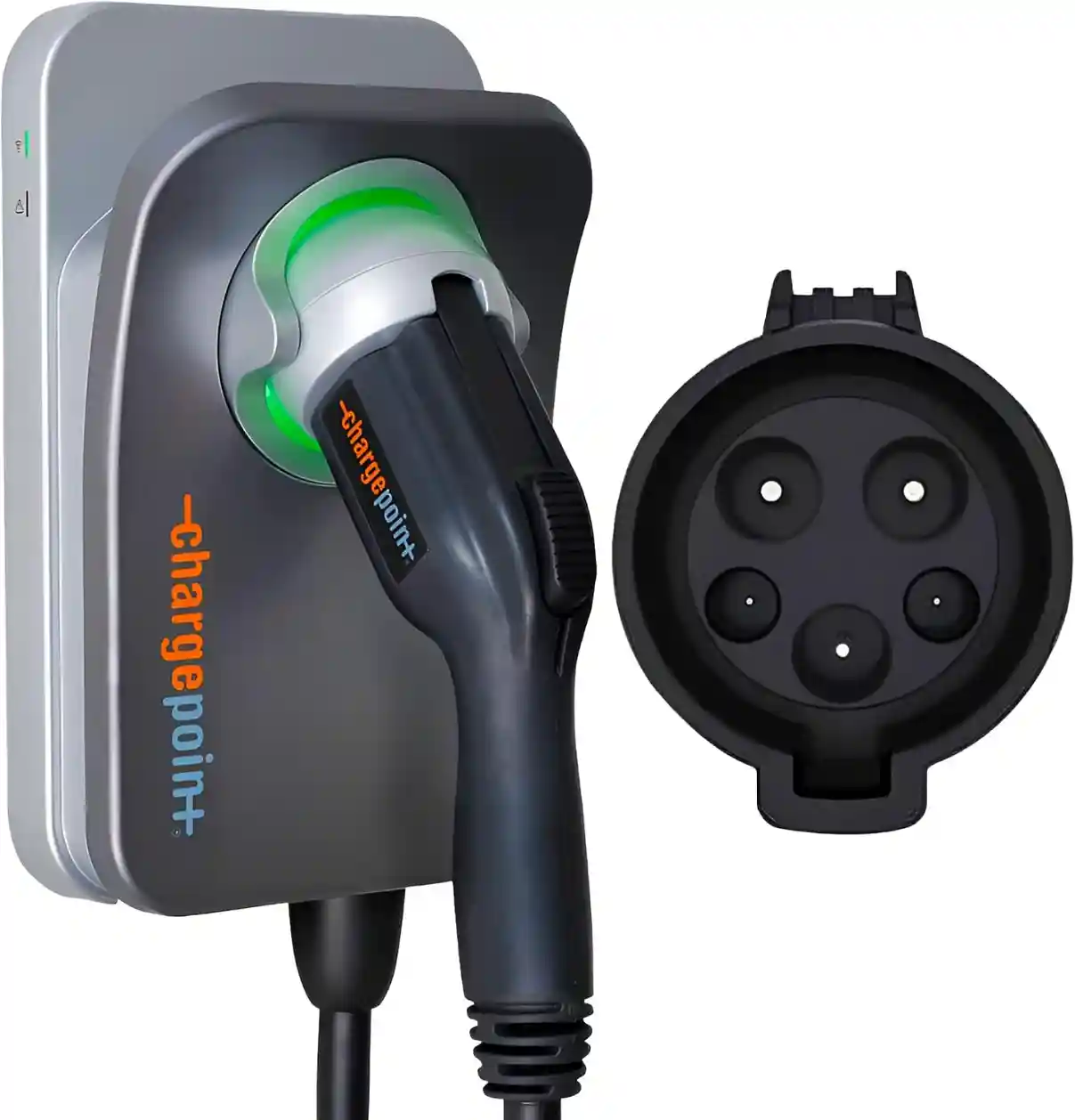
ChargePoint Home Flex Level 2 EV Charger (J1772)
Hardwired 240 V charging up to 50 A — as fast as most EVs can accept at home, with adjustable current and app scheduling.
- Up to 50 A on a hardwired 240 V circuit — around 12 kW, which adds roughly 30 to 37 miles of range per hour on an efficient EV, so an overnight charge covers the next day several times over.
- Adjustable current from 16 A to 50 A in 1 A steps — set it to match the capacity of the circuit you have, which makes an existing 240 V feed usable instead of requiring a service upgrade.
- J1772 connector — plugs directly into every non-Tesla EV; Tesla drivers use the J1772 adapter that came with the car.

EV charger adapter J1772 to Tesla
Unlocks Tesla destination chargers for non-Tesla EVs, rated up to 48 A.
- Tesla to J1772 connection — lets a non-Tesla EV use Tesla destination and home connectors.
- Rated up to 48 A — handles the full current of most destination chargers, so charging is not slowed.
- Compact and portable — small enough to keep in the car so it is there when you find a charger.
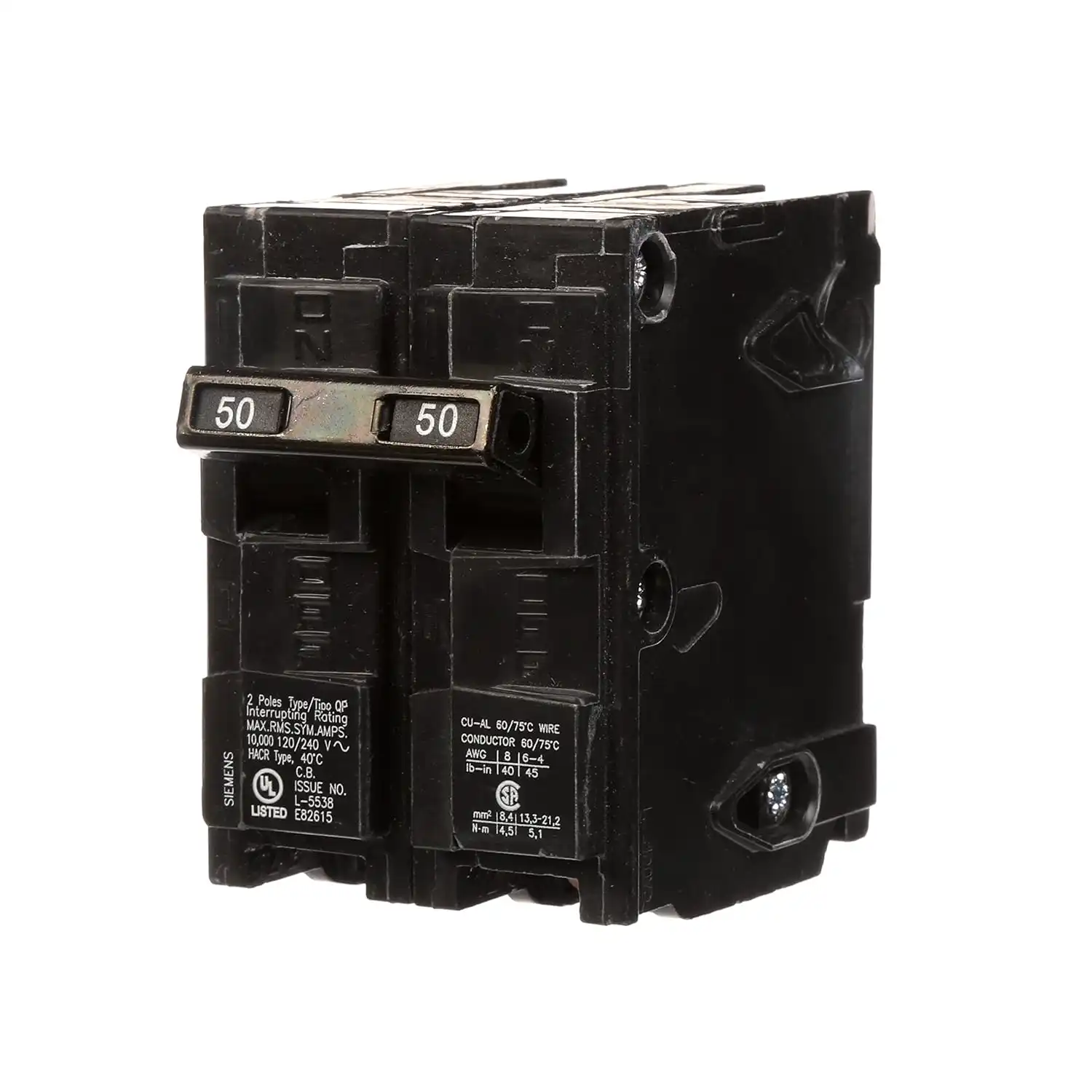
Siemens Q250 50-Amp Double-Pole Circuit Breaker
A 50-amp two-pole breaker for ranges, spa feeds, subpanels and 40-amp EV charging.
- 50 amps per pole at 120/240 V — ranges, spa circuits, subpanel feeds and 40 A EV charging.
- Common trip — both poles open together on overload or fault.
- 10 kA interrupting rating and HACR listing.
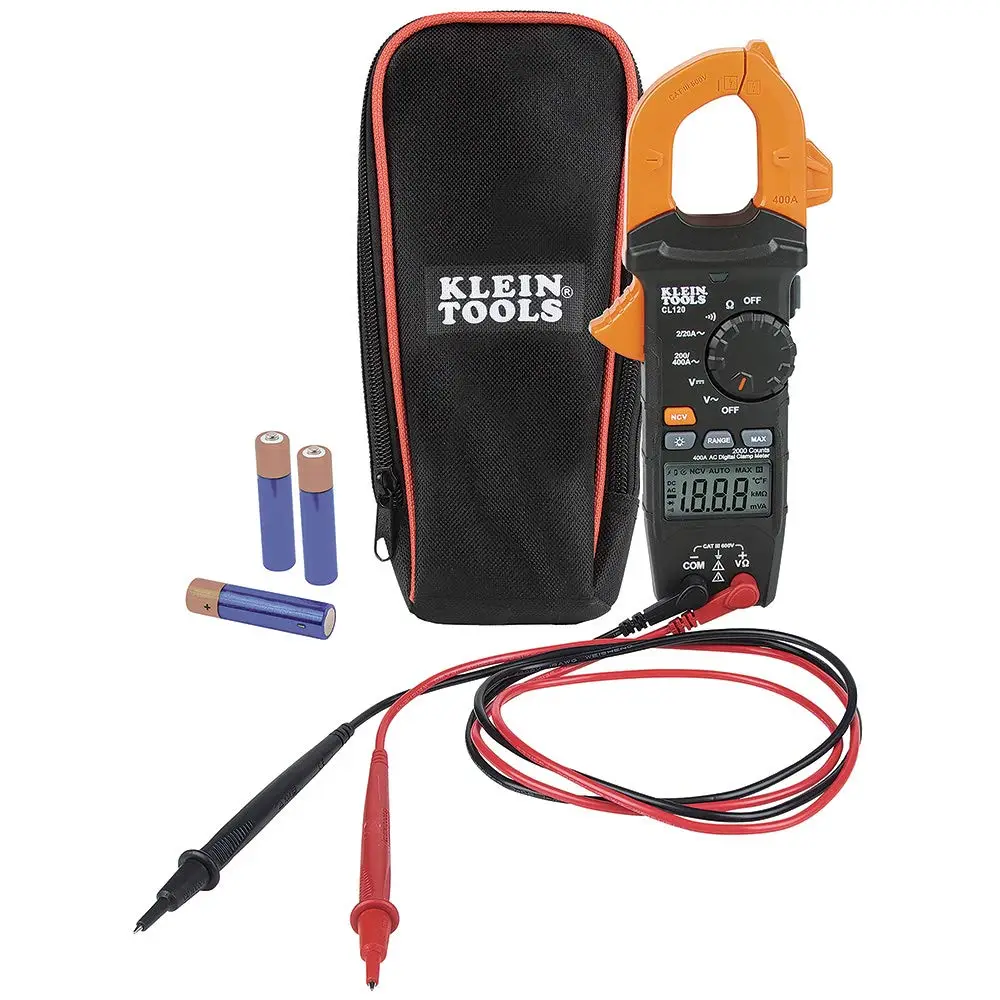
Klein Tools CL120 Auto-Ranging Clamp Meter
Auto-ranging 400 A AC clamp with NCV detection — choose the function and let the meter pick the range.
- Auto-ranging — select the measurement type and the meter picks the range, so no overload indications and no dial-fiddling at the top of a ladder.
- 400 A AC clamp — covers domestic and light commercial circuit current, measured without breaking the circuit.
- 2000-count display with backlight — resolution fine enough for small loads, and readable in a dark consumer unit.