Wire Resistance Calculator
Compute exact one-way, round-trip loop, Ω/km, and Ω/1000 ft DC resistance of copper or aluminum conductors at 20 °C and any operating temperature (T_op).
How it works
Conductor resistance follows Pouillet’s law with linear temperature correction: R(T) = R₂₀ × [1 + α₂₀ × (T − 20)]. You can select between 100% IACS pure annealed copper (ρ₂₀ = 0.017241 Ω·mm²/m), commercial planning copper (ρ₂₀ = 0.0175 Ω·mm²/m), or tabulated IEC 60228 / NEC Chapter 9 Table 8 reference values.
When to use it
Use it when calculating cable loop resistance (R1 + R2), checking prospective fault loop impedance (Zs), estimating I²R power loss, or verifying continuity test readings during commissioning.
Common mistakes
Using one-way route length when round-trip (2-wire out-and-back) loop resistance is required, or forgetting that conductor resistance at 75 °C full-load operating temperature is ~21.6% higher than at 20 °C ambient.
Always de-energize circuits and discharge capacitors before measuring resistance or continuity with a digital multimeter. Measuring resistance on a live circuit can damage the meter and produce false readings.
Related Calculators
Voltage Drop Calculator
Calculate AC and DC voltage drop across AWG or metric mm² copper and aluminum runs.
Wire Size Calculator (Dual-Criteria Solver)
Size copper and aluminum conductors in AWG or mm² for ampacity and voltage drop.
Ohm's Law Calculator
Calculate voltage, current, resistance, and power in DC or resistive AC circuits.
Joule Heating Calculator
Calculate thermal heat energy in joules, calories, and BTU from I²R and time.
Related Unit Converters
AWG to mm² Converter (American Wire Gauge to Metric)
Convert American Wire Gauge (AWG) to metric mm² area, diameter, and resistance.
mm² to AWG Converter (Metric Cable to American Wire Gauge)
Convert metric conductor area in mm² to the nearest AWG size and DC resistance.
Electrical Resistance Converter (mΩ, Ω, kΩ, MΩ, GΩ)
Convert resistance between milliohms, ohms, kilohms, megohms, gigohms, and S.
Electrical Length Converter (Meters, Feet, Inches, Yards, km, Miles)
Convert cable lengths between meters, feet, inches, millimeters, yards, and miles.
Related Engineering Guides
How to Calculate Voltage Drop in a Cable Run
Calculate 1-phase and 3-phase cable voltage drop and size wires within code limits.
How to Choose Cables & Wire
Select conductor sizes, insulation ratings, and cables for ampacity and drop limits.
100 Amp Wire Size: What Gauge You Actually Need
Select copper and aluminum conductor sizes in AWG and mm² for 100 A subpanel runs.
Frequently Asked Questions
Recommended Testing & Bench Equipment
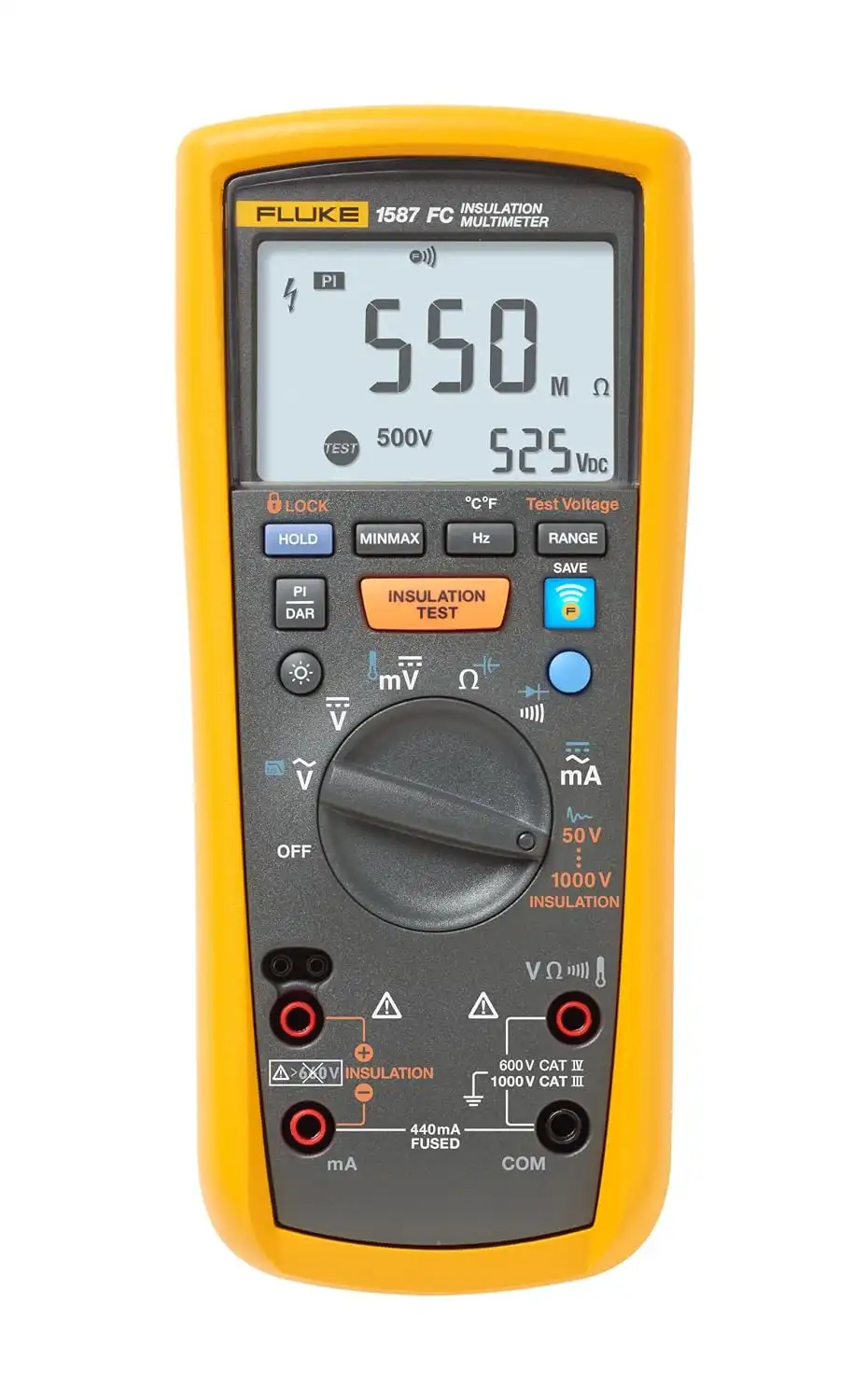
Fluke 1587 FC Insulation Multimeter
Insulation testing and full multimeter functions in one instrument, with selectable test voltages up to 1000 V.
- Insulation test voltages from 50 V to 1000 V — matches the test voltage to the equipment instead of using one fixed setting.
- Full true-RMS multimeter functions — voltage, current, resistance and continuity without a second instrument.
- Wireless result logging — builds a trend over time so you can see insulation degrading before it fails.
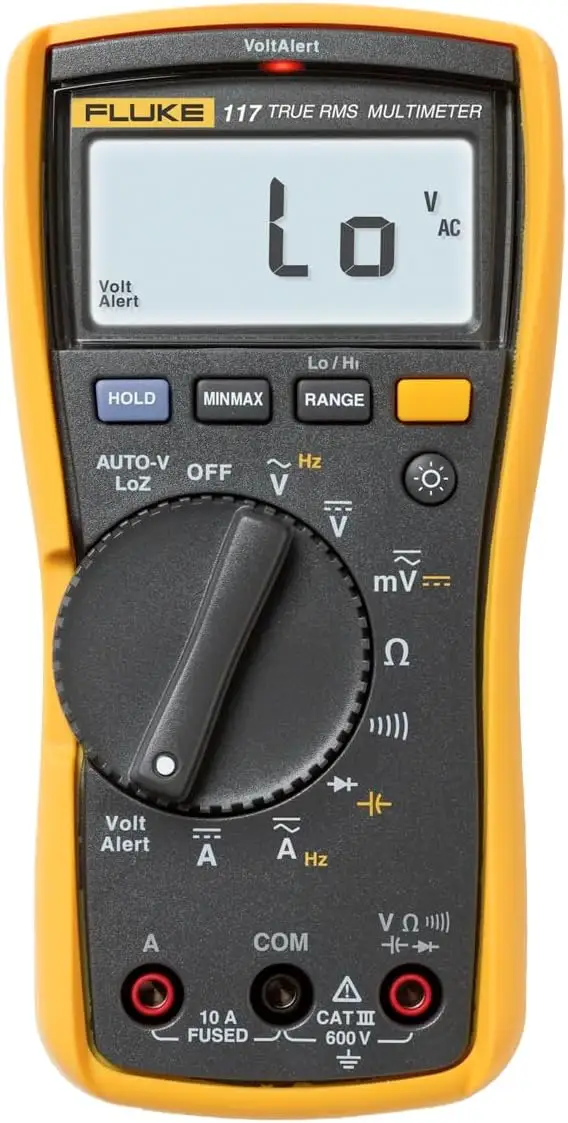
Fluke 117 True-RMS Multimeter
The everyday electrician's meter: true-RMS AC measurement, non-contact voltage detection and a CAT III 600 V rating in a compact body.
- True-RMS AC measurement — accurate readings on the electronic loads that fool cheaper average-sensing meters.
- Built-in non-contact voltage detection — confirm a circuit is live before you put a probe anywhere near it.
- CAT III 600 V safety rating — rated for the transient energy you meet in distribution panels and fixed wiring.
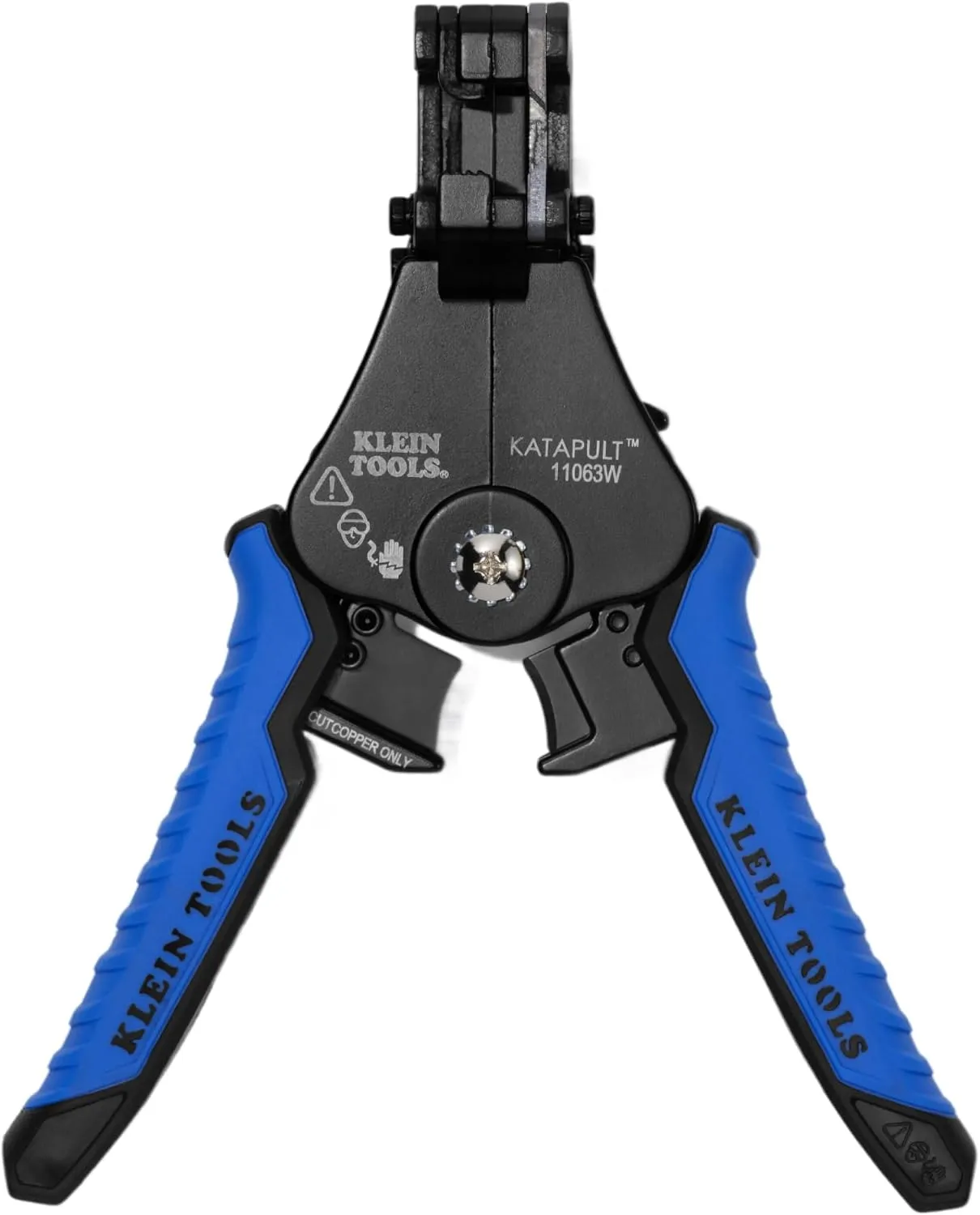
Klein Tools 11063W Wire Stripper and Cutter
Self-adjusting stripper that grips, strips and cuts common building wire in one motion.
- Self-adjusting action — squeeze once and the tool sets itself to the conductor size, so strips are repeatable.
- Clean strip without nicking — protects the copper, which is what keeps a termination reliable long term.
- Built-in cutter and plier nose — you can cut, strip and twist without swapping tools.