VA to Watts Converter (Volt-Amperes to Real Watts)
Convert apparent power in volt-amperes (VA) to real power in watts (W) and kilowatts (kW) using Power Factor (cos φ).
Step-by-step calculation
- Apparent Power S = 1500 VA, Power Factor cos φ = 0.8
- Real Power P = 1500 VA × 0.8 = 1200 W (1.2 kW)
- Reactive Power Q = √(S² − P²) = 900 VAR
Formula & mathematical explanation
Input definitions
| Symbol | Parameter | Unit | Engineering meaning & standards relevance |
|---|---|---|---|
| Phase | System Type | Selection | Input parameter for system type. |
| S | Apparent Power (VA) | VA | Input parameter for apparent power (va). |
| cos φ | Power Factor (cos φ) | Selection | Input parameter for power factor (cos φ). |
Worked example
1,500 VA UPS Rated at 0.8 Power Factor
Find the maximum real watt load a 1,500 VA UPS can support.
- Multiply 1,500 VA × 0.8 = 1,200 W.
Assumptions
- Sinusoidal AC voltage and current waveforms.
Limitations
- Non-linear switch-mode loads introduce harmonic distortion Power Factor.
How it works
Multiplies apparent power (VA) by the AC power factor (cos φ) to determine real active power in watts (W).
When to use it
- Determining the maximum real Watt load a VA-rated UPS battery backup, inverter, or isolation transformer can safely deliver.
- Converting apparent power measurements (VA) into real heat dissipation (W) for server rack and enclosure cooling.
Practical real-world applications
- Server Rack UPS Sizing: Verifying that a 1,500 VA line-interactive UPS rated at 0.80 PF can support at most 1,200 W of active server power.
- Control Transformer Loading: Checking how many real watts a 500 VA industrial control transformer supplies at 0.75 lagging power factor (375 W).
Original Editorial Review & Technical Evaluation
Converts apparent power in volt-amperes (VA) into real active power in watts (W) and reactive power (VAR) using load power factor.
IT infrastructure engineers, panel builders, and commercial electricians.
- Computes real power (W and kW), reactive power (VAR), and mechanical HP simultaneously.
- Supports DC, 1-phase AC, and 3-phase AC system topologies.
Accuracy & methodology: Uses exact power-triangle relationships (P = S × cos φ and Q = √(S² − P²)).
What to verify independently: Check the both VA and W ratings printed on the UPS or transformer nameplate.
Common mistakes
- Assuming a 1,500 VA UPS can supply 1,500 W of real power when its output stage is rated for PF = 0.70 or 0.80 (900 W–1,200 W max).
- Dividing VA by Power Factor instead of multiplying (W = VA × PF, so real Watts are never greater than apparent VA).
Safety & code notice
Never exceed EITHER the Watt rating or the VA rating of a UPS, inverter, or transformer; overloading either limit causes thermal shutdown or winding damage.
Related Unit Converters
Watts to Amps Converter
Convert active power in watts (W) to current in amps (A) for DC and AC circuits.
Amps to Watts Converter
Convert current in amps (A) to active power in watts (W) for DC and AC systems.
Electrical & Thermal Power Converter (W, kW, MW, HP, BTU/hr)
Convert between watts, kilowatts, megawatts, horsepower, metric PS, and BTU/hr.
Related Calculators
Related Engineering Guides
Recommended Tools & Instruments
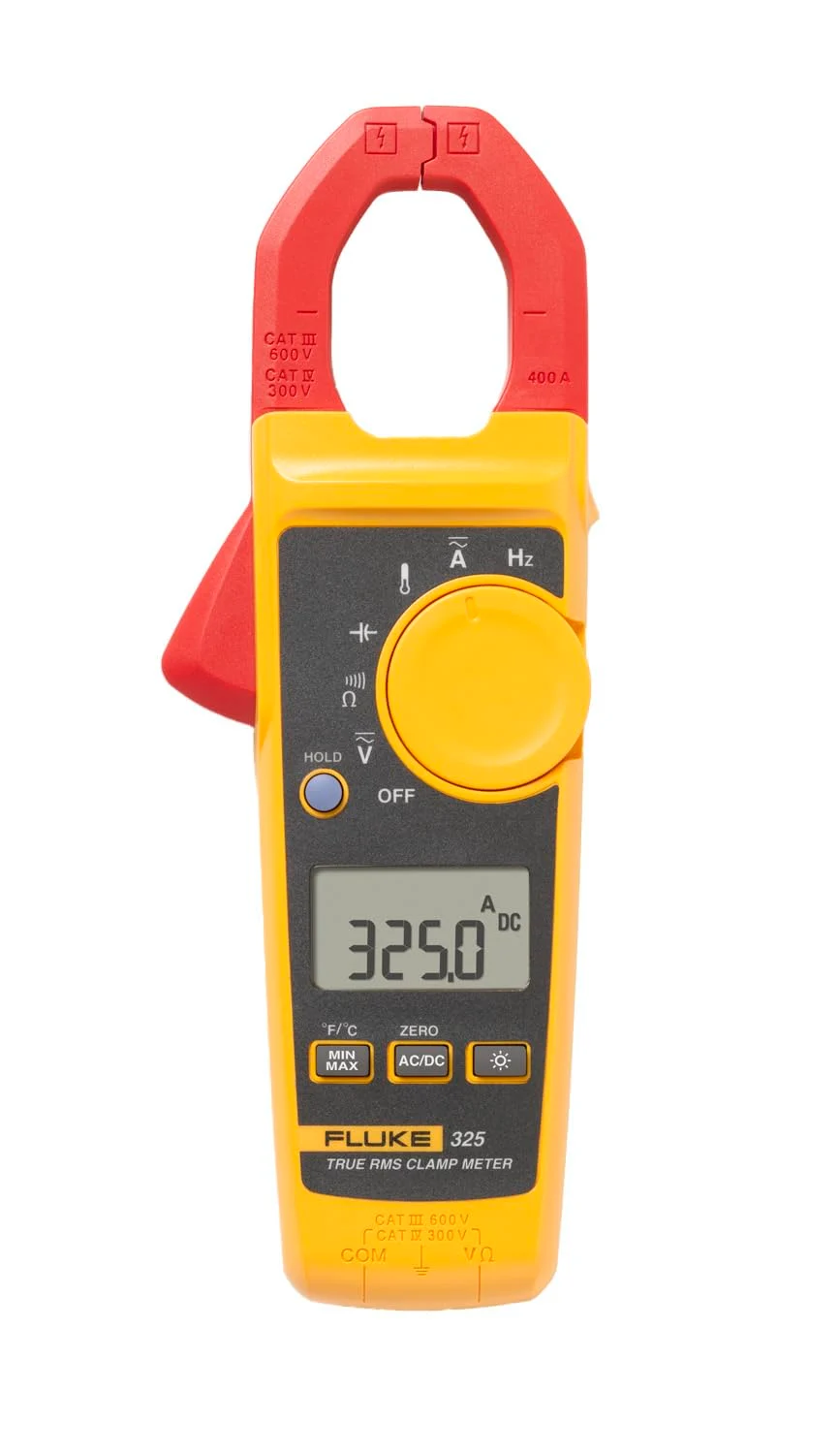
Fluke 325 True-RMS Clamp Meter
Clamp-on AC/DC current measurement in tight panels, with true-RMS accuracy and a CAT III 600 V rating.
- AC and DC current measurement — covers mains circuits, battery banks and solar strings with one tool.
- Clamp-on measurement — read current without disconnecting or disturbing the circuit.
- Slim jaw profile — slides into crowded panels where bulky clamps will not fit.

Klein Tools CL800 Digital Clamp Meter
Wide-jaw auto-ranging clamp meter with inrush capture for motor and compressor starting currents.
- Inrush current capture — see the starting surge that trips breakers, not just the running current.
- Wide jaw opening — accepts larger conductors and bundled cables that slim clamps cannot.
- Auto-ranging true-RMS measurement — fast readings you can trust on non-linear loads.
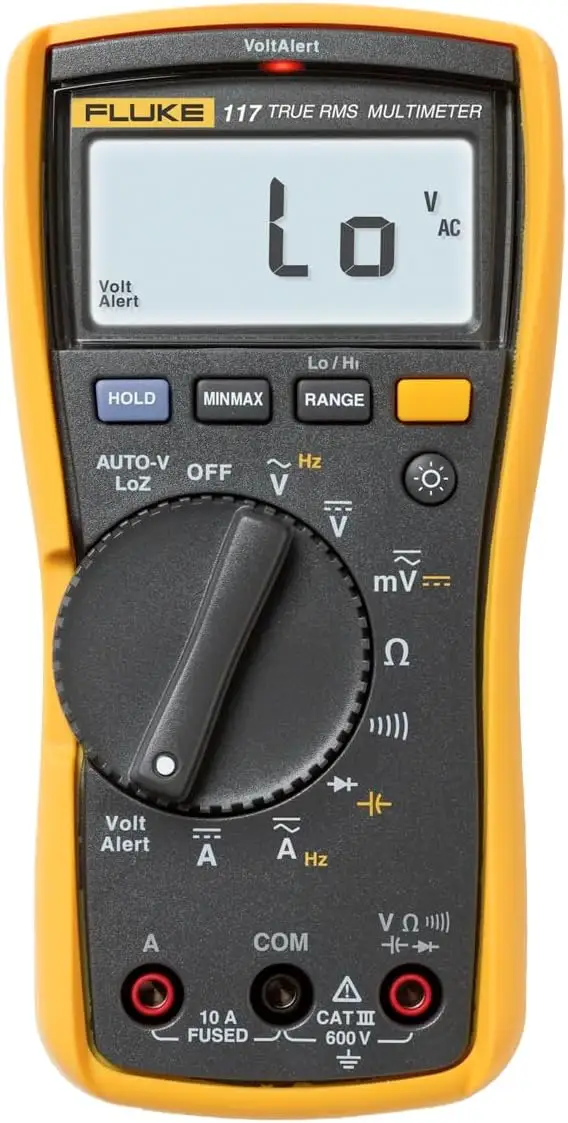
Fluke 117 True-RMS Multimeter
The everyday electrician's meter: true-RMS AC measurement, non-contact voltage detection and a CAT III 600 V rating in a compact body.
- True-RMS AC measurement — accurate readings on the electronic loads that fool cheaper average-sensing meters.
- Built-in non-contact voltage detection — confirm a circuit is live before you put a probe anywhere near it.
- CAT III 600 V safety rating — rated for the transient energy you meet in distribution panels and fixed wiring.
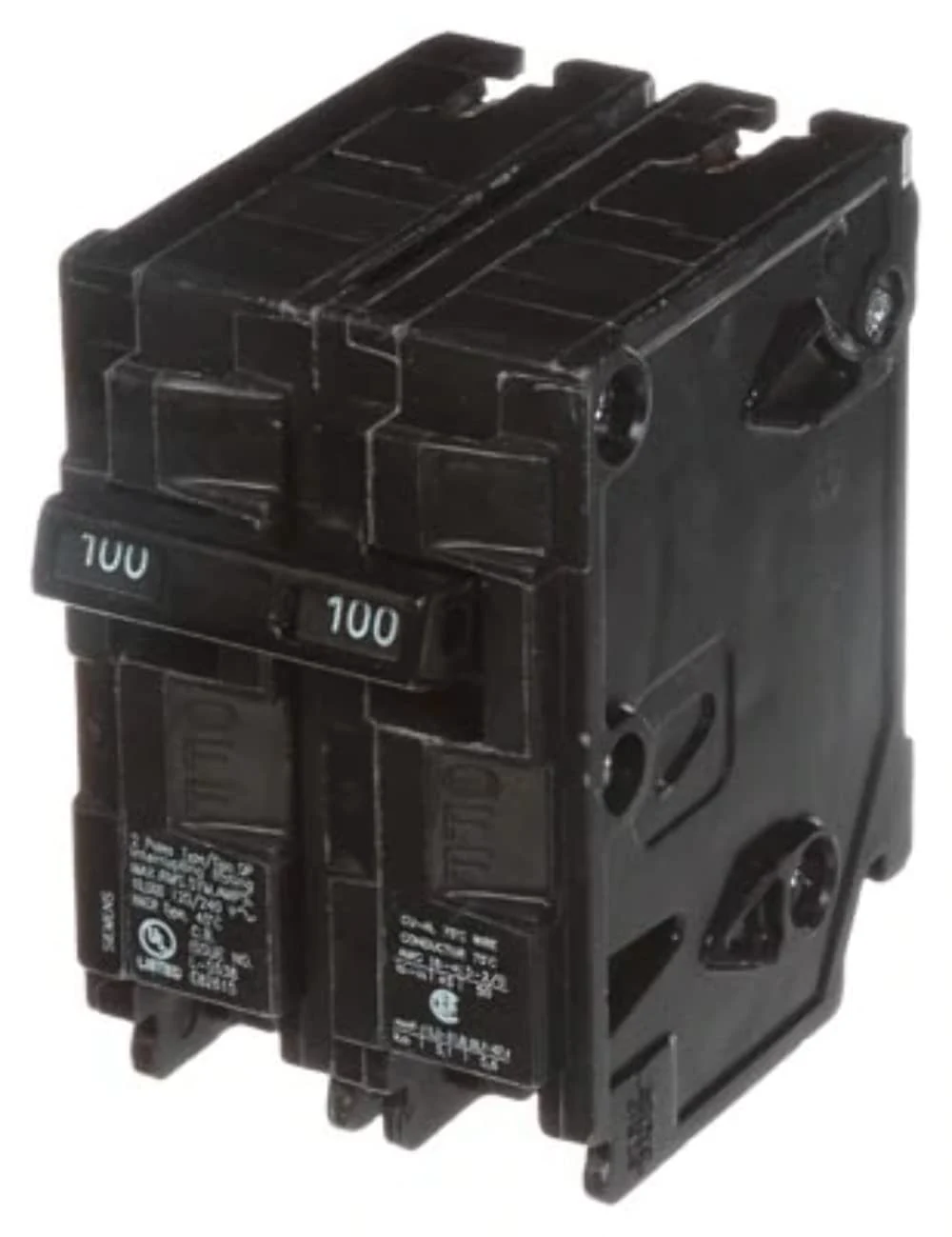
Siemens Q2100 100-Amp Double-Pole Circuit Breaker
A 100-amp two-pole breaker for feeding a subpanel or a very large 240 V load.
- 100 amps per pole at 120/240 V — sized for subpanel feeders and very large 240 V loads.
- Common trip — both poles open together, as a feeder protection device must.
- Accepts 1 AWG through 4/0 conductors, torqued to 35 or 50 lb-in depending on the conductor size.