RMS & Peak Voltage Calculator
Convert between RMS, peak, and peak-to-peak voltage for sine waves.
Step-by-step calculation
- V_peak = 120 V × 1.4142
- V_peak = 169.7056274847714 V
- V_pp = 339.4112549695428 V
Formula
Input definitions
| Symbol | Input | Unit | Meaning & code relevance |
|---|---|---|---|
| V | Input Voltage | V | Nominal RMS AC or steady-state DC system potential (e.g., 120V/240V/480V NEC or 230V/400V IEC 60038). |
Worked example
120 V RMS Residential Sine Wave
Find peak and peak-to-peak amplitude of standard 120V AC mains.
- V_peak = 120 × 1.4142 = 169.71 V
- V_pp = 2 × 169.71 = 339.41 V
Assumptions
- The AC waveform is a pure, undistorted sinusoid with a crest factor of √2 (≈ 1.4142).
- The waveform is symmetrical around zero volts with no DC offset.
- Peak-to-peak voltage is taken as exactly twice the single-sided peak amplitude (2 × V_peak).
Limitations
- Does not apply to square waves (where V_RMS = V_peak), triangle waves (V_RMS = V_peak ÷ √3), or PWM/modified-sine inverter outputs.
- Harmonic distortion on non-linear power supplies alters the ratio between true-RMS and peak voltage.
How it works
For sinusoidal AC waveforms, RMS equals Peak divided by √2 (≈ 0.7071). Peak-to-peak is twice the peak amplitude.
When to use it
- Converting oscilloscope peak-to-peak (V_pp) or zero-to-peak (V_pk) waveform measurements into equivalent True-RMS voltage.
- Determining the peak voltage crest (V_pk = V_rms × √2) of an AC mains supply to select capacitor voltage ratings and MOV surge arrestors.
- Estimating unloaded DC bus voltage and average rectified output (V_avg) after a full-wave bridge rectifier on an AC transformer secondary.
Practical real-world applications
- Sizing electrolytic filter capacitors on a rectified 230 V AC mains supply where the peak DC bus reaches 230 × √2 = 325.3 V (requiring 400 V or 450 V WVDC capacitors).
- Cross-checking a 339.4 V peak-to-peak sine wave captured on an oscilloscope probe against a 120 V RMS digital multimeter reading.
- Verifying dielectric insulation withstand margins on inverter output stages, audio amplifiers, and high-voltage test fixtures.
Original Editorial Review & Technical Evaluation
Converts between AC RMS (V_rms), peak amplitude (V_pk), peak-to-peak swing (V_pp), and full-wave rectified average voltage (V_avg) for pure sinusoidal waveforms.
Power-electronics designers sizing component breakdown ratings, oscilloscope users interpreting waveform captures, and insulation-testing engineers.
- Four-way bidirectional conversion across RMS, Peak, Peak-to-Peak, and Average sinusoidal magnitudes
- Applies exact analytical factors (√2, 2√2, and 2/π) to quantify dielectric and semiconductor voltage stress
- Supports low-voltage signal levels (mV) through medium-voltage distribution peaks (kV)
Accuracy & methodology: Uses exact closed-form sinusoidal relationships with a form factor of π/(2√2) ≈ 1.1107 and crest factor of √2 ≈ 1.4142. Non-sinusoidal PWM drives, square waves, and clipped inverter outputs require True-RMS harmonic integration rather than √2 scaling. Computational standards →
What to verify independently: Confirm waveform Total Harmonic Distortion (THD) on VFD and UPS outputs with a True-RMS oscilloscope or power quality analyzer before relying on √2 peak margins.
Put the numbers to work with the Ohm's Law Calculator, Voltage Calculator and Reactance Calculator. For the background behind the numbers, read How to Choose a Multimeter and How to Choose Test & Measurement Equipment.
Common mistakes
- Confusing Peak-to-Peak voltage (V_pp = 2 × V_pk) with zero-to-Peak voltage (V_pk), which doubles or halves the calculated RMS value.
- Applying the sinusoidal √2 (1.4142) crest factor to non-sinusoidal square waves, PWM motor drives, or modified-sine inverters.
- Selecting a capacitor voltage rating equal to V_rms instead of V_pk plus a 20%–25% high-line safety margin.
Safety & code notice
Calculator results are planning estimates. Always verify electrical designs against applicable local codes, standards (NEC / IEC), and consult a qualified professional.
Frequently asked questions
Related Calculators
Ohm's Law Calculator
Calculate voltage, current, resistance, and power in DC or resistive AC circuits.
Voltage Calculator
Calculate electrical potential in volts from current, resistance, or circuit power.
Reactance Calculator
Calculate inductive (XL) and capacitive (XC) reactance from frequency, L, or C.
Impedance Calculator
Calculate total AC impedance (Z) and phase angle from resistance and reactance.
Related Unit Converters
Watts to Amps Converter
Convert active power in watts (W) to current in amps (A) for DC and AC circuits.
Amps to Watts Converter
Convert current in amps (A) to active power in watts (W) for DC and AC systems.
Volts to Watts Converter
Convert voltage (V) and current (A) into real power in watts for DC and AC loads.
Related Engineering Guides
Recommended Clamp Meters & Voltage Testers for This Task
Verify live load current with a CAT III/IV True-RMS clamp meter, prove de-energized status with a non-contact voltage detector, and compare source vs. load terminal voltage under full operating current.
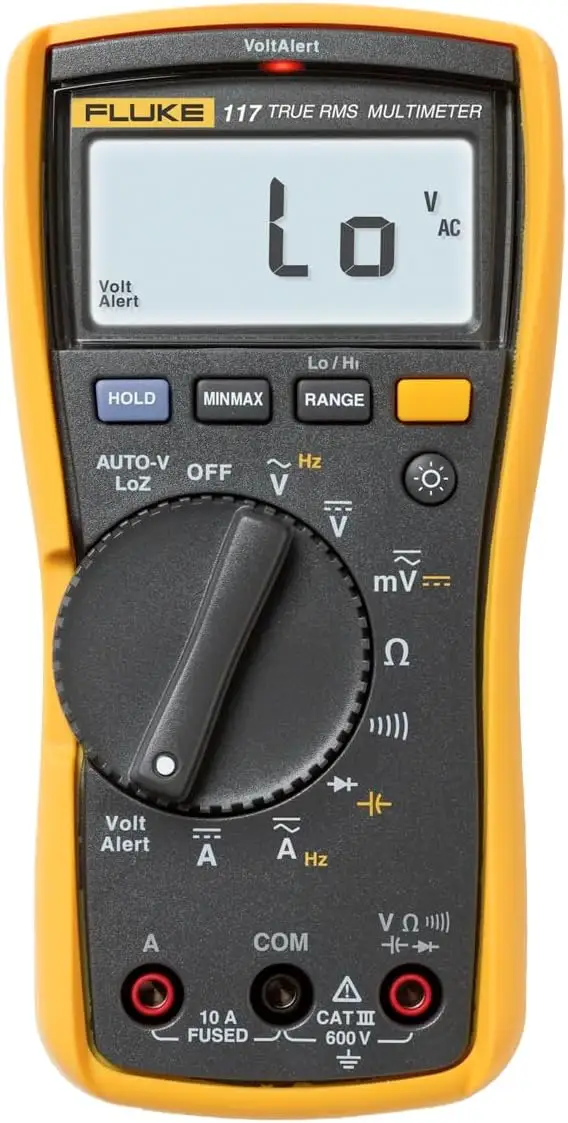
Fluke 117 True-RMS Multimeter
The everyday electrician's meter: true-RMS AC measurement, non-contact voltage detection and a CAT III 600 V rating in a compact body.
- True-RMS AC measurement — accurate readings on the electronic loads that fool cheaper average-sensing meters.
- Built-in non-contact voltage detection — confirm a circuit is live before you put a probe anywhere near it.
- CAT III 600 V safety rating — rated for the transient energy you meet in distribution panels and fixed wiring.
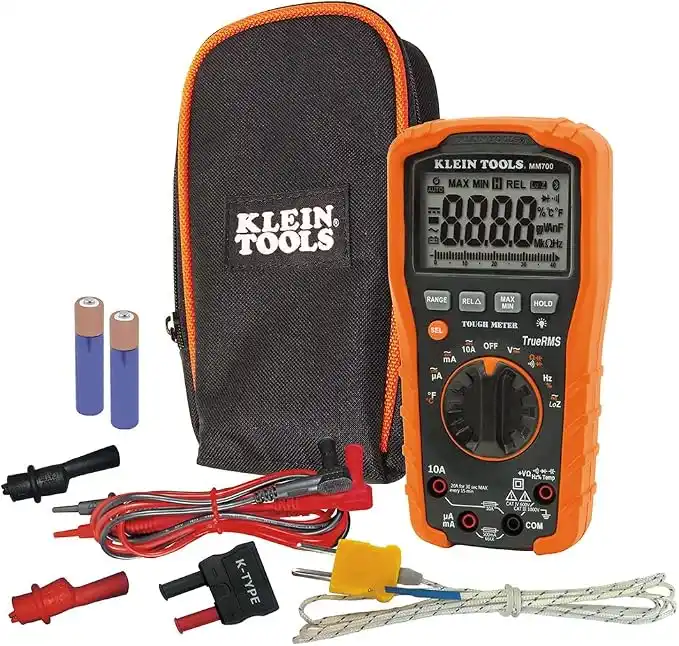
Klein Tools MM700 Auto-Ranging Multimeter
Auto-ranging true-RMS meter with a CAT IV 600 V rating and a tough, drop-tested housing.
- Auto-ranging — connect the probes and read the value, with no range dial to set first.
- True-RMS AC measurement — trustworthy numbers on drives, supplies and electronic lighting.
- CAT IV 600 V rating — the highest common safety category, covering outdoor and service-entrance work.
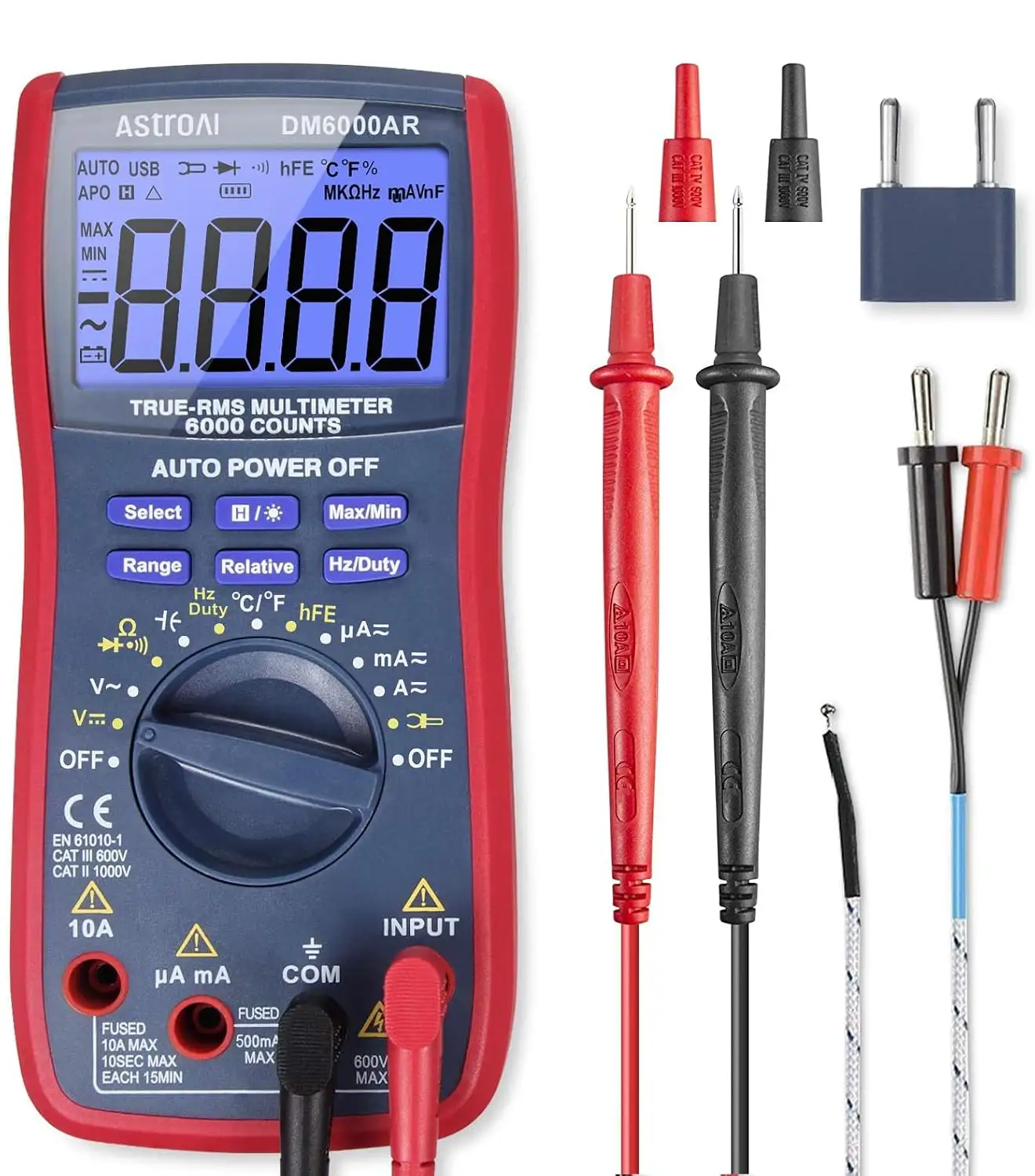
AstroAI DM6000AR True-RMS Digital Multimeter
A true-RMS 6000-count meter with temperature, capacitance and a CAT III 600 V rating — the budget option for DIY, hobby and student work.
- True-RMS AC measurement — accurate readings on the distorted, non-sinusoidal waveforms that switch-mode supplies, dimmers and inverters produce, which is where average-sensing meters quietly mislead.
- 6000-count display with 0.1 mV and 0.1 µA resolution — more resolution on low-voltage and low-current work than a typical 2000-count budget meter, so small changes are visible rather than rounded away.
- CAT III 600 V and CAT II 1000 V safety rating — rated for the transient energy of distribution panels and fixed wiring, not just bench work.
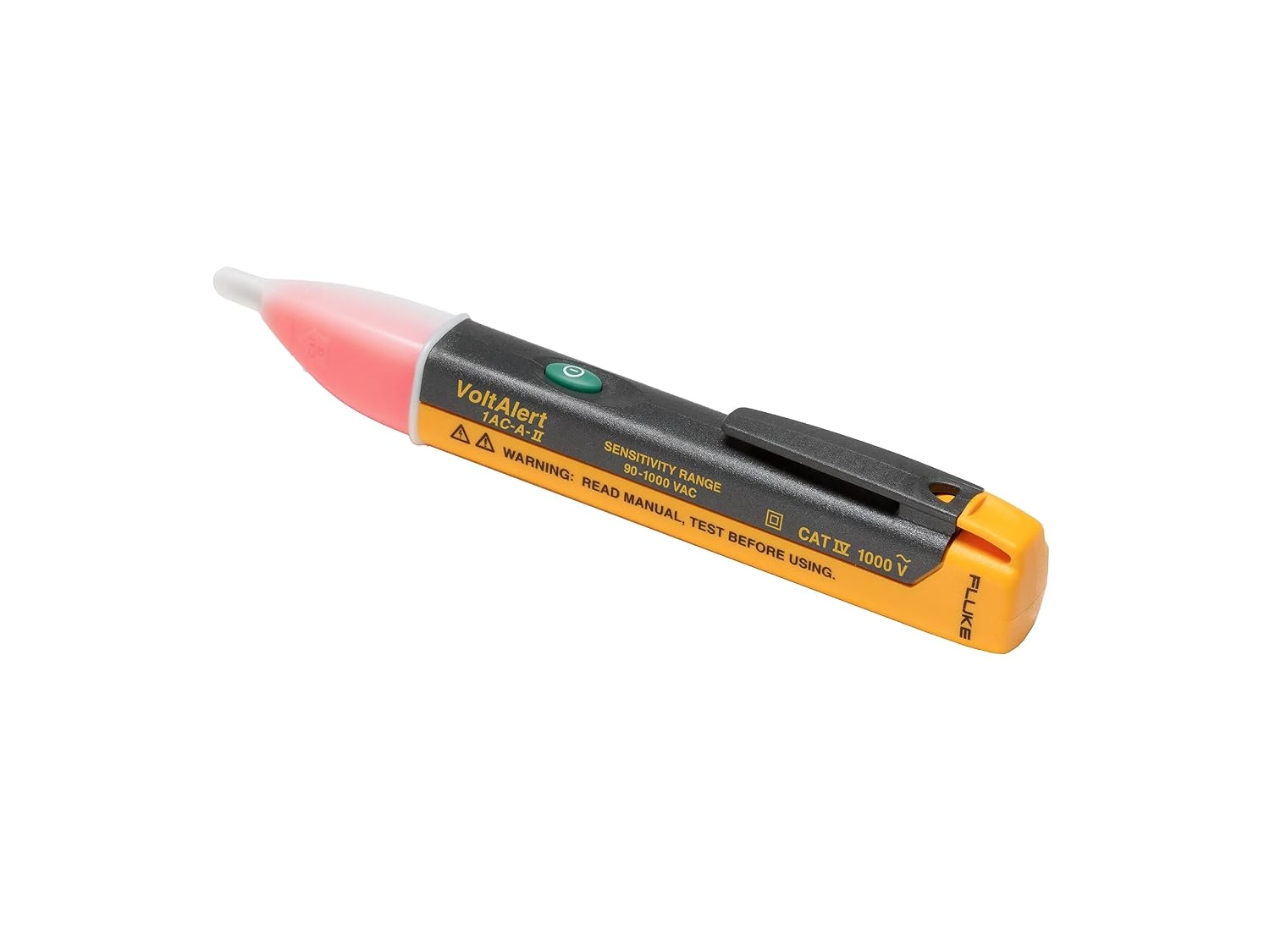
Fluke 1AC-II VoltAlert Non-Contact Voltage Tester
A quick live-wire check you can keep in a shirt pocket — CAT IV 1000 V rated.
- Non-contact detection — confirms voltage is present without any contact or exposed metal.
- Audible and visual indication — clear beep and bright glow, so you can confirm while looking elsewhere.
- CAT IV 1000 V rating — safety category suited to service entrances and outdoor conductors.