AstroAI DM6000AR True-RMS Digital Multimeter
A true-RMS 6000-count meter with temperature, capacitance and a CAT III 600 V rating — the budget option for DIY, hobby and student work.
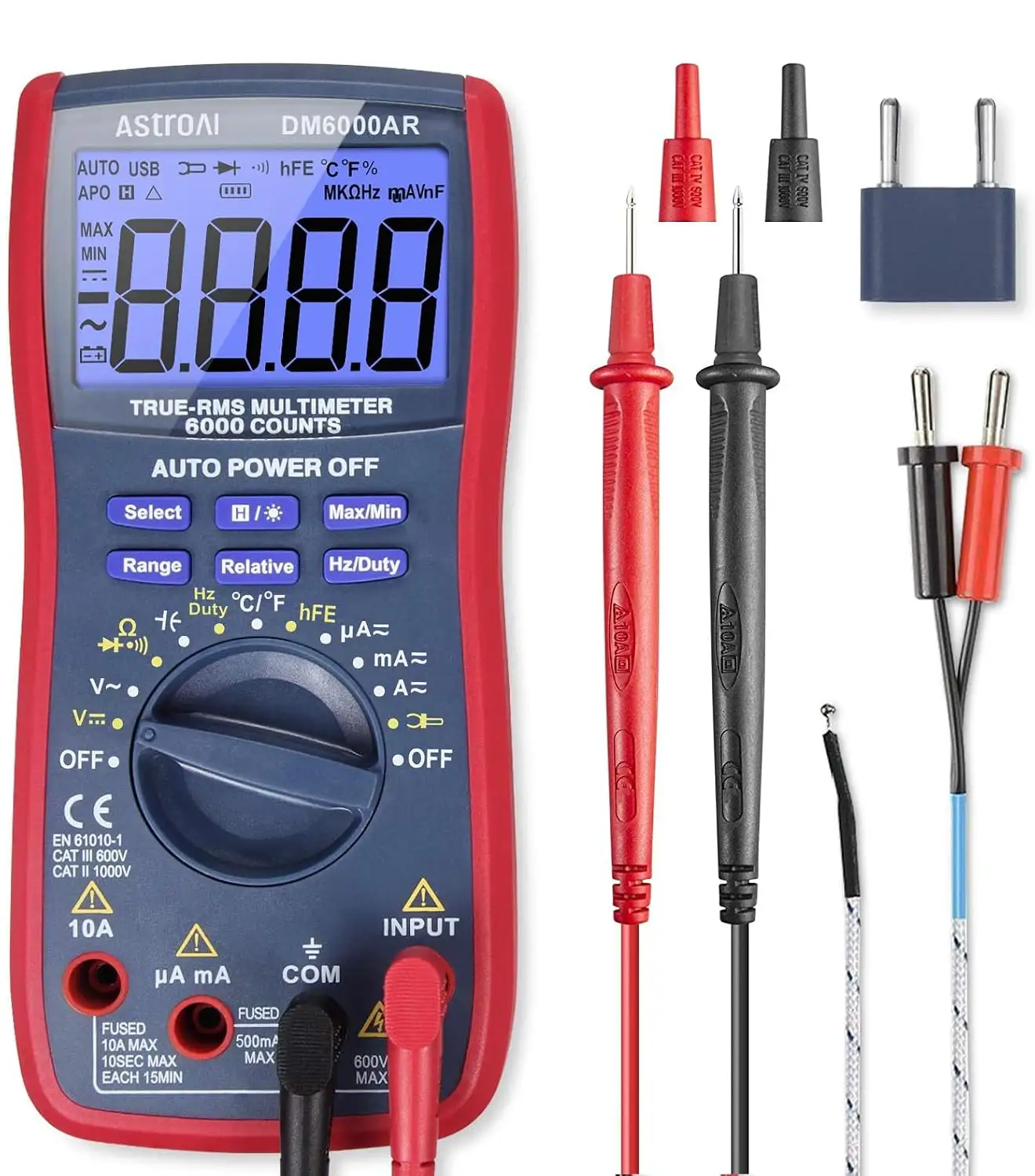
A true-RMS 6000-count digital multimeter with a CAT III 600 V rating, temperature and capacitance measurement, transistor testing and a backlit display.
- True-RMS 6000-count backlit display
- Measures voltage, current, capacitance & temp
- CAT III 600 V / CAT II 1000 V rated
Affiliate Disclosure: VoltCalc may earn a commission from qualifying purchases made through product links at no extra cost to you. Product specs and availability are for reference and may change.
Field Overview
Most cheap multimeters share the same quiet flaw: they average the waveform instead of measuring it properly, so a reading taken on a modern load is not the number you think it is. That matters the moment you test anything electronic — a switch-mode supply, a dimmer, an inverter, a variable-speed tool. The AstroAI DM6000AR is one of the few meters at its price that measures true-RMS, which is the measurement a digital multimeter is supposed to make. On top of that it counts 6000 digits rather than the usual 2000, so low-voltage and low-current readings hold useful resolution instead of jumping in crude steps. For a beginner, a student, or anyone fault-finding around the house, this is the specification that decides whether the tool is worth owning — not the badge on the front.
Detailed Feature Breakdown
- True-RMS AC measurement — accurate readings on the distorted, non-sinusoidal waveforms that switch-mode supplies, dimmers and inverters produce, which is where average-sensing meters quietly mislead.
- 6000-count display with 0.1 mV and 0.1 µA resolution — more resolution on low-voltage and low-current work than a typical 2000-count budget meter, so small changes are visible rather than rounded away.
- CAT III 600 V and CAT II 1000 V safety rating — rated for the transient energy of distribution panels and fixed wiring, not just bench work.
- Temperature measurement with a K-type thermocouple included — check motor windings, heating elements, duct air or an appliance exhaust without buying a separate thermometer.
- Capacitance, frequency, duty cycle, continuity and diode test — covers the component and signal checks that electronic fault-finding actually needs.
- Transistor hFE testing through the included socket — measure gain on small-signal transistors, which is genuinely useful for repair and hobby work.
- Auto and manual ranging — leave it on auto for speed, or lock a range when a fluctuating reading needs to settle.
- Backlit LCD with data hold, max/min and relative mode — readable in a dark panel or under a bench, with readings you can freeze and zero against a reference.
- Auto power off and a rubberised protective holster — saves the battery if you walk away, and survives being dropped on a concrete floor.
- Everything in the box — test leads with removable caps, a K-type temperature probe, a multi-purpose socket adapter and a transistor test lead, so it works the moment it arrives.
Performance & Practical Use
In ordinary fault-finding the DM6000AR behaves like a meter costing several times more: readings settle quickly, the true-RMS AC figure matches a reference meter on distorted loads where a budget average-sensing unit drifts, and the backlit display stays legible in a dark plant room. The 6000-count resolution earns its keep on electronics — measuring a 3.3 V rail or a few milliamps of standby current gives a stable number instead of a coarse jump. The included temperature probe and transistor socket are real additions rather than filler, and they are the reason it suits hobby and repair work as well as household checks. Where expectations need managing is on the electrical trade side. The CAT III 600 V rating is honest and appropriate for domestic and light commercial panels, but this is not a CAT IV instrument for outdoor service entrances or industrial distribution, and it will not survive the years of abuse a professional trade meter is built for. Accuracy and calibration support are also pitched at DIY and educational use rather than regulated verification work. Treat it as an excellent general-purpose meter for learning, hobby electronics and home fault-finding — not as the last meter an industrial electrician will buy.
How It Compares
The Fluke 117 is the meter to buy when your work is commercial service and the instrument must stay accurate and supported for a decade. The AstroAI DM6000AR is the one to buy when you want true-RMS accuracy, temperature and transistor testing for a fraction of that, and can accept a lower safety category and no calibration trail.
Pros
- True-RMS AC measurement at a budget price
- 6000-count resolution with 0.1 mV and 0.1 µA resolution
- Temperature, capacitance, frequency, duty cycle and transistor hFE testing
- CAT III 600 V and CAT II 1000 V safety rating
- Backlit display with data hold, max/min and relative mode
- Accessories included: leads, K-type probe, socket adapter, transistor lead
- Auto power off and a rubberised protective holster
Cons
- Not CAT IV rated, so not suited to outdoor service entrances or industrial distribution
- No data logging, memory or Bluetooth connectivity
- Accuracy and build are pitched at DIY and educational use, not regulated verification
- 10 A current range is fused and time-limited, as on most handheld meters
VoltCalc Verdict
If you are starting out in electronics, studying, or simply want a dependable meter for household fault-finding, the DM6000AR is the rare budget instrument that measures true-RMS rather than pretending to — and the 6000-count resolution, temperature probe and transistor socket make it more capable than its price suggests. Buy it as a first or second meter and it will do far more than you expect. Be honest about its ceiling: it is a CAT III 600 V general-purpose tool, so if you work on industrial distribution, need a documented calibration chain, or want one meter to last a career, spend the money on a trade-grade instrument instead.