Motor Sizing Calculator
Size a motor from the driven load (kW or HP) or shaft torque: required rating, standard motor size, full-load and starting current (DOL/Y-Δ/VFD), and NEC Article 430 / IEC circuit sizing.
Step-by-step calculation
- Active Context: NFPA 70 (NEC 2026) | 3-Phase AC | 480 V | 1750 RPM
- P_load = 5.5 kW
- Required rating = 5.50 kW × 1.15 = 6.32 kW
- Next standard rating up = 7.5 kW (10.06 HP @ 745.7 W/HP)
- T = 9550 × 7.5 kW ÷ 1750 rpm = 40.93 Nm
- P_in = 7.5 kW ÷ 0.9 = 8.33 kW
- I_FLA = 7500 W ÷ (√3 × 480 V × 0.86 × 0.9) = 11.66 A
- I_start = 7 × 11.66 A = 81.59 A
Formula
Input definitions
| Symbol | Input | Unit | Meaning & code relevance |
|---|---|---|---|
| Std | Engineering Standard | — | Engineering input parameter for engineering standard, evaluated in real-time by the solver. |
| Unit | Driven Load Power Unit | — | Active electrical or mechanical power transfer (W/kW) dissipated or delivered to the load. |
| P_load | Driven Load Power | kW / HP | Active electrical or mechanical power transfer (kW / HP) dissipated or delivered to the load. |
| RPM | Rated Shaft Speed | RPM | Utility billing energy rate per kilowatt-hour (kWh) used to project operating electricity expenditure. |
| V | Supply Voltage (3φ) | V | Nominal RMS AC or steady-state DC system potential (e.g., 120V/240V/480V NEC or 230V/400V IEC 60038). |
| η | Expected Efficiency | % | Ratio of useful output power to total input power expressed as a percentage (η = P_out / P_in × 100). |
| Start | Starting Method Multiplier | — | Engineering input parameter for starting method multiplier, evaluated in real-time by the solver. |
Worked example
Sizing a Pump Motor for 5.5 kW Shaft Load
Determine IEC/NEMA frame power, FLA, locked-rotor inrush, and torque.
- Design margin 1.15 × 5.5 = 6.325 kW → 7.5 kW standard motor
- Torque = 9550 × 7.5 ÷ 1750 = 40.9 N·m
Assumptions
- A 1.15× design margin is applied to the continuous driven shaft power before selecting the next standard IEC/NEMA motor frame rating.
- Rated full-load torque (N·m) is calculated at the entered shaft RPM using T = (9550 × kW) ÷ RPM.
- Starting current is estimated from the selected starter type (7× DOL, 2.5× Star-Delta, 3× Soft Starter, 1.5× VFD).
Limitations
- High-inertia loads (large fans, centrifuges, crushers) require checking accelerating torque and thermal stall time across the entire speed-torque curve.
- High altitude (>1000 m) and ambient temperatures above 40°C require additional thermal derating.
How it works
Applies a 15% mechanical service margin, selects the next standard IEC/NEMA kW rating, and calculates 3-phase FLA, starter inrush, shaft torque, and NEC 430.22/430.52 branch sizing.
When to use it
- Selecting the next standard NEMA Horsepower (HP) or IEC Kilowatt (kW) motor rating from required mechanical load power, duty factor, and service margin.
- Sizing a complete motor branch circuit including 125% continuous conductor ampacity, thermal overload trip setting, and starter contactor rating.
- Evaluating motor shaft torque (N·m and lb·ft) at 50 Hz or 60 Hz synchronous and full-load speeds.
Practical real-world applications
- HVAC Blower & Industrial Pump Selection: Applying a 1.15–1.20 mechanical design margin to a 12 kW shaft load to select a standard 15 kW (IEC) or 20 HP (NEMA) motor frame.
- Complete Branch-Circuit Schedule Generation: Producing required conductor ampacity, overload relay setting, and starter size for a new machine tool installation.
- High-Altitude & Ambient Derating Planning: Upsizing motor frame capacity when installing air-cooled TEFC motors above 1,000 m (3,300 ft) elevation or in >40 °C boiler rooms.
Original Editorial Review & Technical Evaluation
Sizes minimum required electric motor mechanical power (kW / HP) and output shaft torque (N·m / lb·ft) from driven load demand, drivetrain efficiency, and service factor.
Mechanical/MEP equipment designers, pump & fan specifiers, and conveyor engineers matching standard IEC/NEMA frame ratings.
- Accounts for mechanical transmission efficiency (gearboxes/belts) and duty service factor (SF)
- Computes continuous shaft torque T = 9550 × P_kW ÷ RPM across 50 Hz and 60 Hz speeds
- Maps calculated demand onto next larger standard NEMA HP and IEC kW motor frames
Accuracy & methodology: Sizes continuous running torque and mechanical power at nominal steady-state speed and ambient conditions. High-inertia breakaway torque, frequent start/stop thermal duty cycles (S1–S4), and high-altitude/high-ambient derating (> 40 °C or > 1,000 m) require additional margin. Computational standards →
What to verify independently: Check NEMA/IEC speed-torque curves against breakaway and pull-up load torque and apply altitude/ambient derating per NEMA MG 1 or IEC 60034-1.
Put the numbers to work with the Three Phase Power Calculator, Circuit Breaker Size Calculator and Motor Current Calculator. For the background behind the numbers, read Understanding Power Factor and Why It Matters and Circuit Protection Basics: Breakers, Fuses, RCDs and Coordination.
Common mistakes
- Relying continuously on a motor’s 1.15 Service Factor (SF) for normal everyday load instead of selecting the next standard HP/kW frame size.
- Sizing a motor for continuous running power without checking whether high-inertia loads (large fans, flywheels, loaded conveyors) exceed starting torque limits.
- Operating a standard TEFC fan-cooled motor at low speed (e.g., 20 Hz) on a VFD under constant-torque load without an inverter-duty frame or auxiliary blower.
Safety & code notice
Calculator results are planning estimates. Always verify electrical designs against applicable local codes, standards (NEC / IEC), and consult a qualified professional.
Frequently asked questions
Related Calculators
Three Phase Power Calculator
Calculate real, apparent, and reactive power or line current in 3-phase systems.
Circuit Breaker Size Calculator
Select circuit breaker and MCB ratings for continuous loads and cable ampacity.
Motor Current Calculator
Calculate full-load motor current, speed, starting inrush, and overload trip.
Motor Power Calculator
Calculate motor shaft output power in kW and HP, speed, and full-load torque.
Related Unit Converters
kW to HP Converter (Kilowatts to Horsepower)
Convert kilowatts (kW) to mechanical (HP) and metric horsepower for motor sizing.
HP to kW Converter (Horsepower to Kilowatts)
Convert mechanical horsepower (HP) and metric PS into kilowatts (kW) and watts.
Watts to Amps Converter
Convert active power in watts (W) to current in amps (A) for DC and AC circuits.
Amps to Watts Converter
Convert current in amps (A) to active power in watts (W) for DC and AC systems.
Related Engineering Guides
Recommended Inrush Clamp Meters & Insulation Testers for Motors & Transformers
Capture locked-rotor starting inrush current with a True-RMS AC/DC clamp meter and trend winding-to-frame insulation resistance at 500 V / 1000 V DC before commissioning.
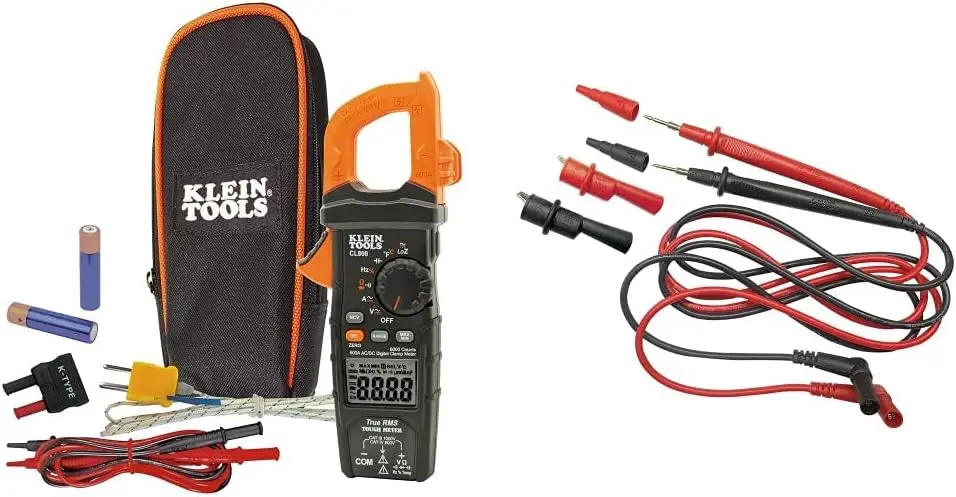
Klein Tools CL800 Digital Clamp Meter
Wide-jaw auto-ranging clamp meter with inrush capture for motor and compressor starting currents.
- Inrush current capture — see the starting surge that trips breakers, not just the running current.
- Wide jaw opening — accepts larger conductors and bundled cables that slim clamps cannot.
- Auto-ranging true-RMS measurement — fast readings you can trust on non-linear loads.
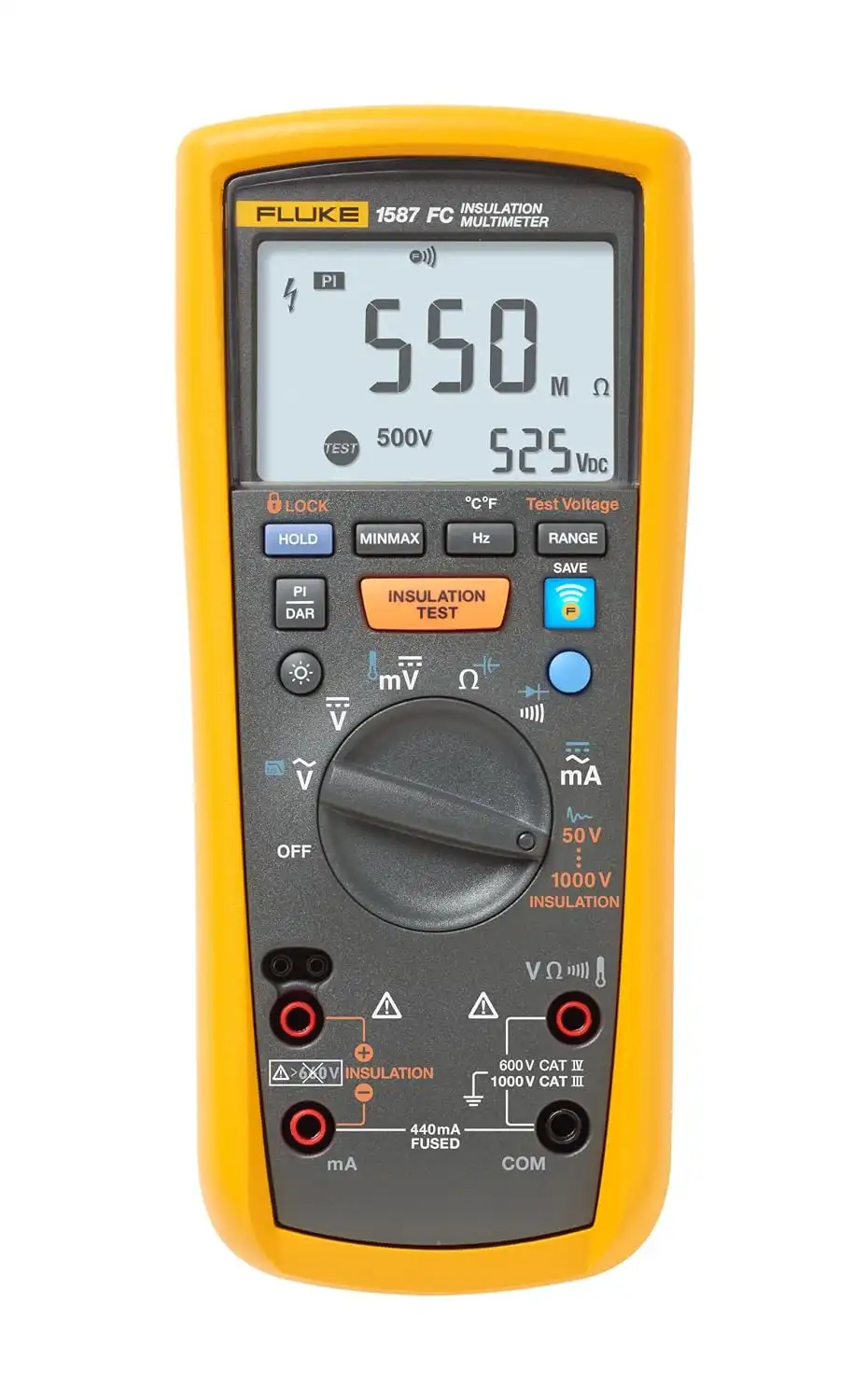
Fluke 1587 FC Insulation Multimeter
Insulation testing and full multimeter functions in one instrument, with selectable test voltages up to 1000 V.
- Insulation test voltages from 50 V to 1000 V — matches the test voltage to the equipment instead of using one fixed setting.
- Full true-RMS multimeter functions — voltage, current, resistance and continuity without a second instrument.
- Wireless result logging — builds a trend over time so you can see insulation degrading before it fails.
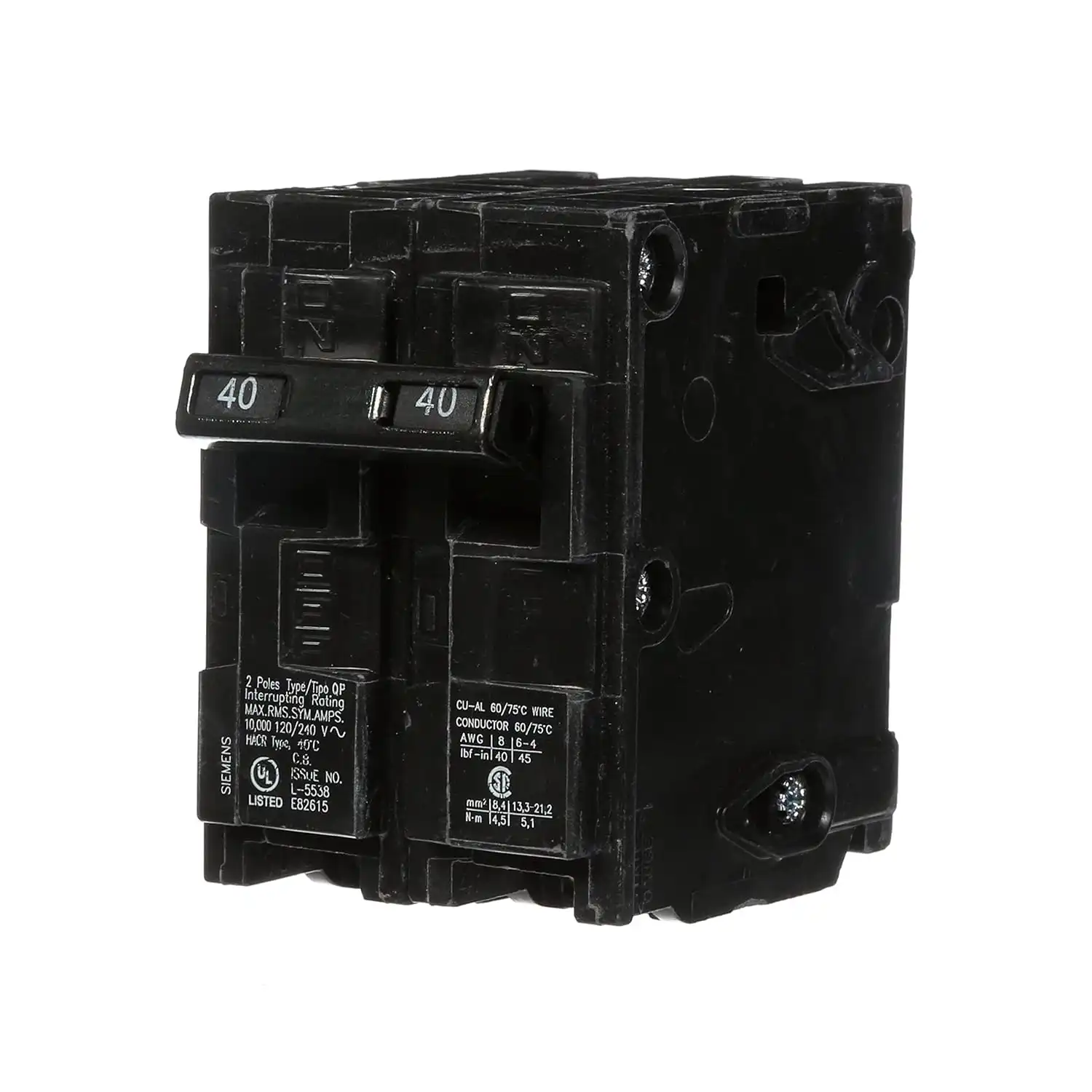
Siemens Q240 40-Amp Double-Pole Circuit Breaker
A 40-amp two-pole breaker for ranges, larger air conditioners and 32-amp EV charger circuits.
- 40 amps per pole at 120/240 V — suitable for ranges, large AC units and 32 A EV charging.
- Common trip — both poles open together, so neither leg stays live after a fault.
- 10 kA interrupting rating, HACR rated for air conditioning and refrigeration.
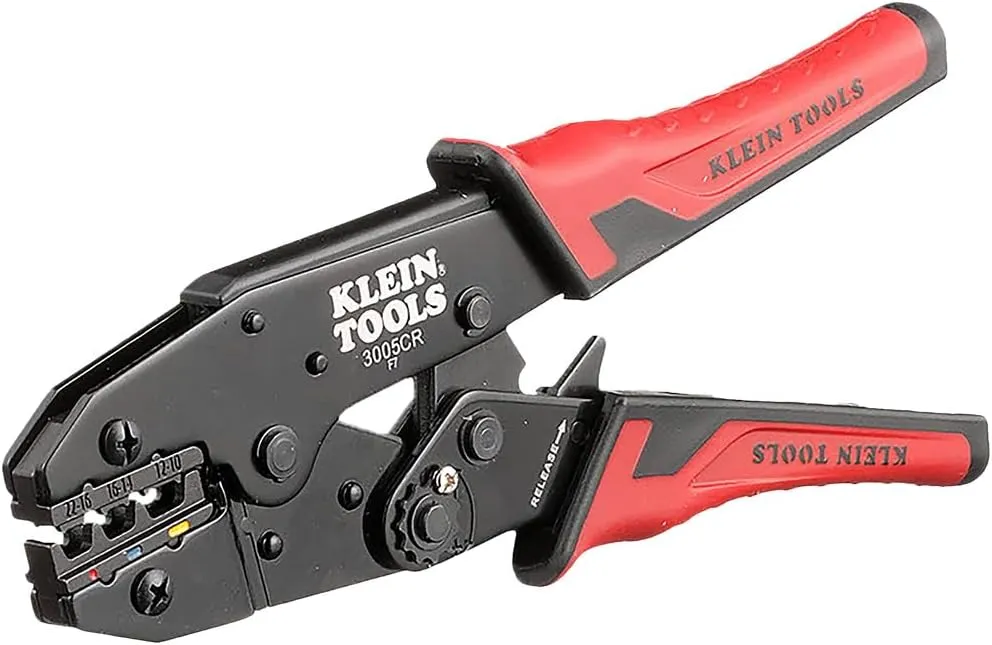
Klein Tools 3005CR Ratcheting Crimper
Ratcheting crimper that locks until the crimp is complete, so every termination is fully formed.
- Ratcheting mechanism — the tool stays locked until the crimp is fully formed, so a weak grip cannot produce a weak joint.
- 22–10 AWG range — covers the terminal sizes used in most panel and control wiring.
- Insulated and non-insulated terminals — one tool handles both, so you are not carrying two.