Fuse Size Calculator
Select North American UL fuse classes (RK1, RK5, J, T, CC, L) and IEC 60269 utilization categories (gG general cable protection and aM motor protection) with adiabatic I²t thermal let-through verification.
Step-by-step calculation
- Active Context: NFPA 70 (NEC 2026) | Class RK5 TD
- Full-Load / Design Current (Ib / FLA) = 20 A
- Utilization / Fuse Class: UL Class RK5 Dual-Element Time-Delay (Multiplier = 1.75×)
- Minimum Required Rating = 20 A × 1.75 = 35.00 A → Select 35 A standard fuse
- Cable Adiabatic Limit Reference (k²S²): (115)² × (4 mm²)² = 211,600 A²s — verify fuse total clearing I²t is below this limit.
NEC 2023 & IEC 60364 reference. Check the result against NEC Table 310.16 or IEC 60364-5-52 at your termination temperature, and size the protective earthing / grounding conductor to the circuit rating.
Formula
Input definitions
| Symbol | Input | Unit | Meaning & code relevance |
|---|---|---|---|
| Std | Engineering Standard | — | Engineering input parameter for engineering standard, evaluated in real-time by the solver. |
| I_b / FLA | Full Load / Design Current | A | Steady-state operating load current in amperes; compare with NEC Table 310.16 or IEC 60364-5-52 conductor ampacity. |
| Duty | Load Duty Category | — | Engineering input parameter for load duty category, evaluated in real-time by the solver. |
| Class | Fuse Class / Utilization Category | — | Engineering input parameter for fuse class / utilization category, evaluated in real-time by the solver. |
| S | Protected Cable Area S (for I²t Check) | mm² | Engineering input parameter for protected cable area s (for i²t check) measured in mm², evaluated in real-time by the solver. |
| k | Cable Adiabatic k Factor (115 PVC Cu / 143 XLPE Cu) | — | Engineering input parameter for cable adiabatic k factor (115 pvc cu / 143 xlpe cu), evaluated in real-time by the solver. |
| I²t | Fuse Total Clearing I²t (Optional Let-Through Check) | A²s | Engineering input parameter for fuse total clearing i²t (optional let-through check) measured in A²s, evaluated in real-time by the solver. |
Worked example
20 A Motor Branch Circuit with UL Class RK5 Time-Delay Fuse
Size a dual-element time-delay fuse per NEC Table 430.52 and check cable k²S² thermal limit.
- Motor FLA = 20 A; UL Class RK5 Time-Delay multiplier = 1.75× (NEC Table 430.52) → 20 A × 1.75 = 35 A standard fuse.
- For a 4 mm² PVC copper conductor (k = 115), maximum thermal energy withstand k²S² = 115² × 4² = 211,600 A²s.
Assumptions
- In NEC mode, dual-element time-delay fuses are sized up to 175% of motor FLA per NEC Table 430.52, while general continuous loads use 125%.
- In IEC mode, gG fuses provide both overload and short-circuit protection (Ib ≤ In ≤ Iz), whereas aM fuses protect against short circuits only and must be paired with a separate thermal overload relay.
- Adiabatic cable withstand is computed as k² × S² in A²s.
Limitations
- Motor branch fuses sized at 175% or 300% FLA provide short-circuit and ground-fault protection only; separate motor running overload protection (115%–125% FLA per NEC 430.32) is required.
- Always verify fuse voltage rating (AC vs. DC) and interrupting rating against available fault current.
How it works
Applies NEC 240.6(A) & Table 430.52 multipliers for North American UL fuse classes (125% general/heating, 175% dual-element time-delay motor, 300% non-time-delay motor) or IEC 60269 utilization rules (gG full-range overload + short-circuit protection vs. aM motor short-circuit protection) and verifies adiabatic let-through coordination (Fuse I²t ≤ k²S²).
When to use it
- Selecting standard UL 248 (time-delay dual-element vs. non-time-delay) or IEC 60269 (gG general-purpose vs. aM motor-accompanied) fuse ratings.
- Sizing branch-circuit short-circuit and ground-fault protective fuses for squirrel-cage induction motors under NEC Table 430.52.
- Protecting sensitive control transformers, solar PV strings, battery banks, and industrial feeder circuits.
Practical real-world applications
- Motor Starter Fuse Sizing: Selecting a 175% time-delay dual-element fuse (or next standard NEC 240.6(A) size) so a 3-phase motor starts without blowing the fuse on locked-rotor inrush.
- Industrial Control Panel Protection: Choosing IEC gG fuses for general feeder overload/short-circuit protection or aM fuses paired with a thermal overload relay.
- Battery & Inverter DC Main Fuse Selection: Sizing high-interrupting-capacity Class T or NH DC fuses for 12 V / 24 V / 48 V energy storage banks.
Original Editorial Review & Technical Evaluation
Selects UL/NEC Class J/RK5/CC or IEC gG/aM/gPV fuse ampere ratings and checks thermal clearing coordination against conductor limits.
Control-panel engineers (UL 508A), industrial maintenance electricians, and solar PV combiners sizing fusible disconnects.
- Applies load-specific inrush multipliers for general resistive, continuous, motor-branch, and transformer primary circuits
- Switches cleanly between North American UL Class (RK5/J/CC) and IEC 60269 (gG general vs. aM motor backup) standards
- Checks minimum fuse melting clearing headroom against circuit continuous current
Accuracy & methodology: Sizes cartridge/HRC fuse ratings using standard steady-state and typical starting-inrush multipliers rather than full I²t let-through integration. Ambient temperatures above 40 °C inside sealed NEMA/IP enclosures require thermal fuse-link derating per datasheet. Computational standards →
What to verify independently: Cross-check minimum melting and total clearing I²t curves against NEC 240.6 / 430.52 or IEC 60269 / IEC 60947-4-1 Type 2 coordination tables.
Put the numbers to work with the Circuit Breaker Size Calculator, Wire Size Calculator (Dual-Criteria Solver) and Short-Circuit Thermal Withstand & Fault Loop Calculator. For the background behind the numbers, read Circuit Protection Basics: Breakers, Fuses, RCDs and Coordination and How to Choose Electrical Components.
Common mistakes
- Using an IEC aM (motor starter) fuse without a thermal overload relay, leaving the cable and motor unprotected against sustained overloads between 1.0× and 4.0× In.
- Installing a non-time-delay fast-acting fuse at 125% on an induction motor circuit, which blows immediately during 6× locked-rotor starting inrush.
- Neglecting to verify that fuse total clearing I²t is less than cable adiabatic withstand k²S² on high-fault industrial feeders.
Safety & code notice
Calculator results are planning estimates. Always verify electrical designs against applicable local codes, standards (NEC / IEC), and consult a qualified professional.
Frequently asked questions
Related Calculators
Circuit Breaker Size Calculator
Select circuit breaker and MCB ratings for continuous loads and cable ampacity.
Wire Size Calculator (Dual-Criteria Solver)
Size copper and aluminum conductors in AWG or mm² for ampacity and voltage drop.
Short-Circuit Thermal Withstand & Fault Loop Calculator
Calculate cable short-circuit thermal withstand current and max clearing time.
Motor Current Calculator
Calculate full-load motor current, speed, starting inrush, and overload trip.
Related Unit Converters
AWG to mm² Converter (American Wire Gauge to Metric)
Convert American Wire Gauge (AWG) to metric mm² area, diameter, and resistance.
mm² to AWG Converter (Metric Cable to American Wire Gauge)
Convert metric conductor area in mm² to the nearest AWG size and DC resistance.
Watts to Amps Converter
Convert active power in watts (W) to current in amps (A) for DC and AC circuits.
Electrical Length Converter (Meters, Feet, Inches, Yards, km, Miles)
Convert cable lengths between meters, feet, inches, millimeters, yards, and miles.
Related Engineering Guides
Recommended Wire Strippers, Crimpers & Circuit Protection Gear
Strip conductors without nicking strands, complete full-cycle ratcheting terminal crimps, tighten breaker and lug terminations to manufacturer pound-inch / N·m ratings with a calibrated torque screwdriver (NEC 110.14(D) / IEC 60947), and verify insulation resistance before energizing.
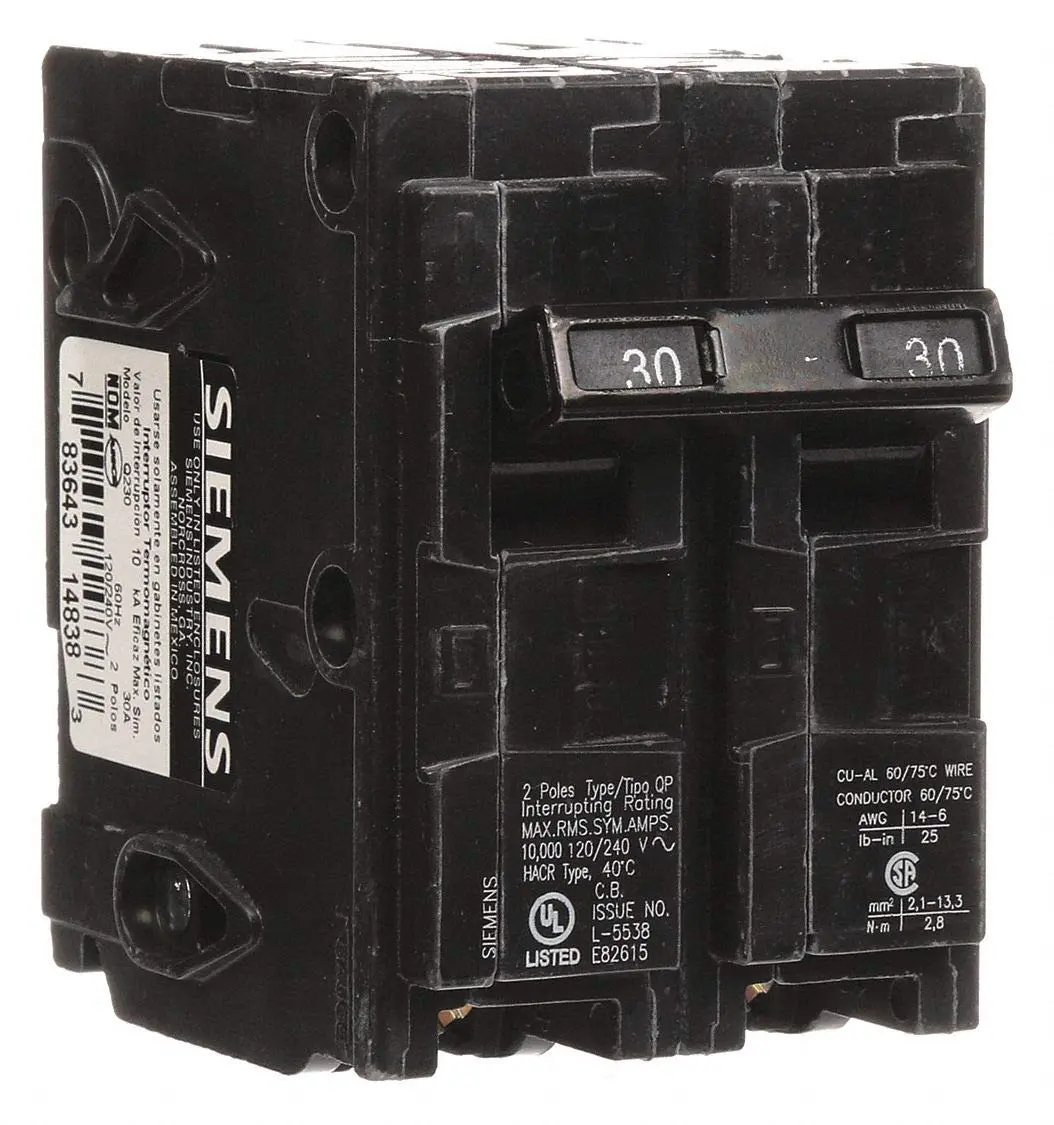
Siemens Q230 30-Amp Double-Pole Circuit Breaker
The 30-amp two-pole breaker that feeds an electric dryer, a small AC unit or a water heater.
- 30 amps per pole at 120/240 V — the standard feed for an electric dryer or small AC unit.
- Common trip — both poles open together on a fault or overload.
- 10 kA interrupting rating and HACR listing for air conditioning and refrigeration loads.
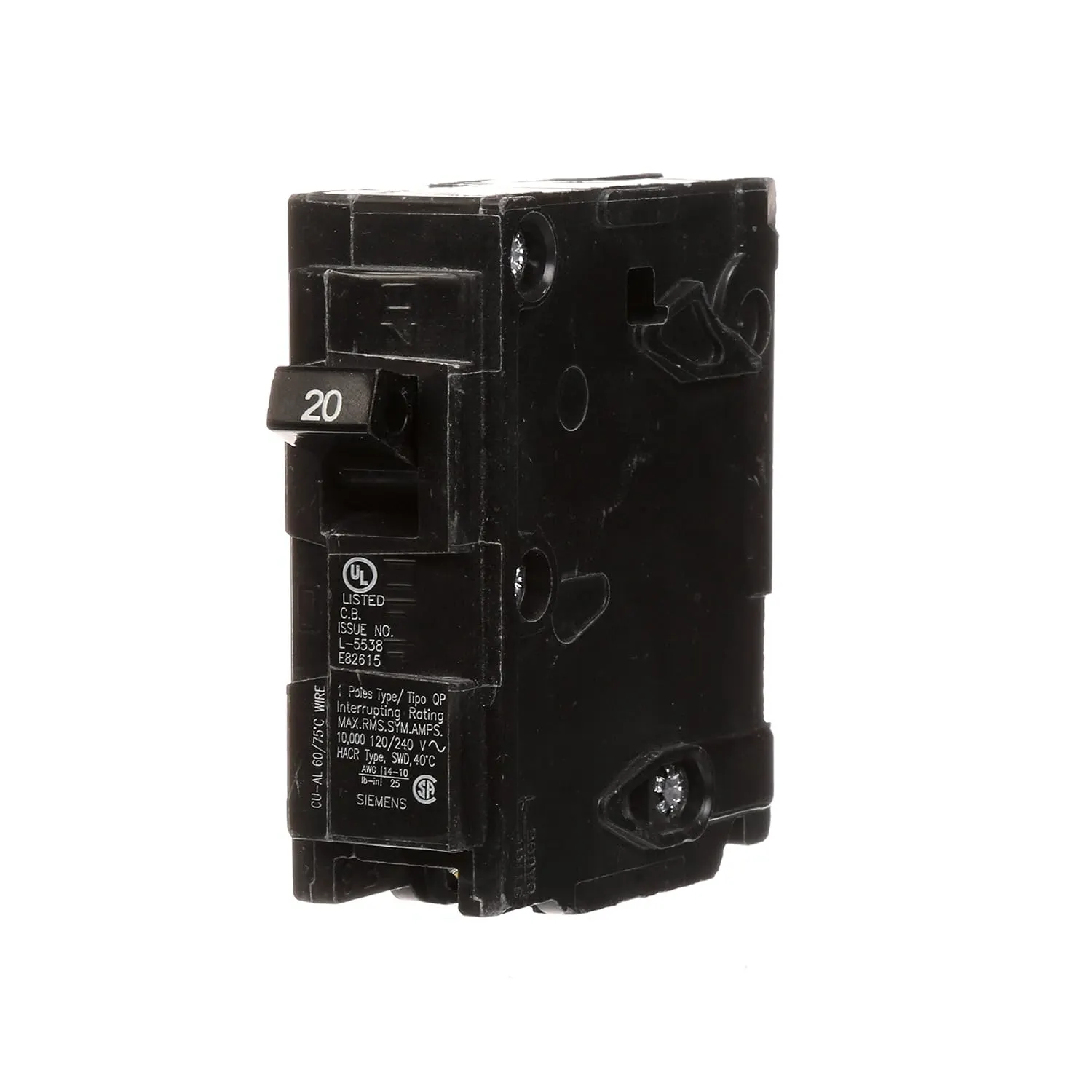
Siemens Q120 20-Amp Single-Pole Circuit Breaker
The standard 20-amp single-pole breaker for lighting, receptacles and small appliances on 120 V circuits.
- 20-amp single pole for 120 V circuits — sized for standard 12 AWG receptacle and lighting circuits.
- 10 kA interrupting rating — handles the fault current available in typical residential panels.
- SWD (switching duty) listed — approved for switching fluorescent lighting loads, not just overload protection.
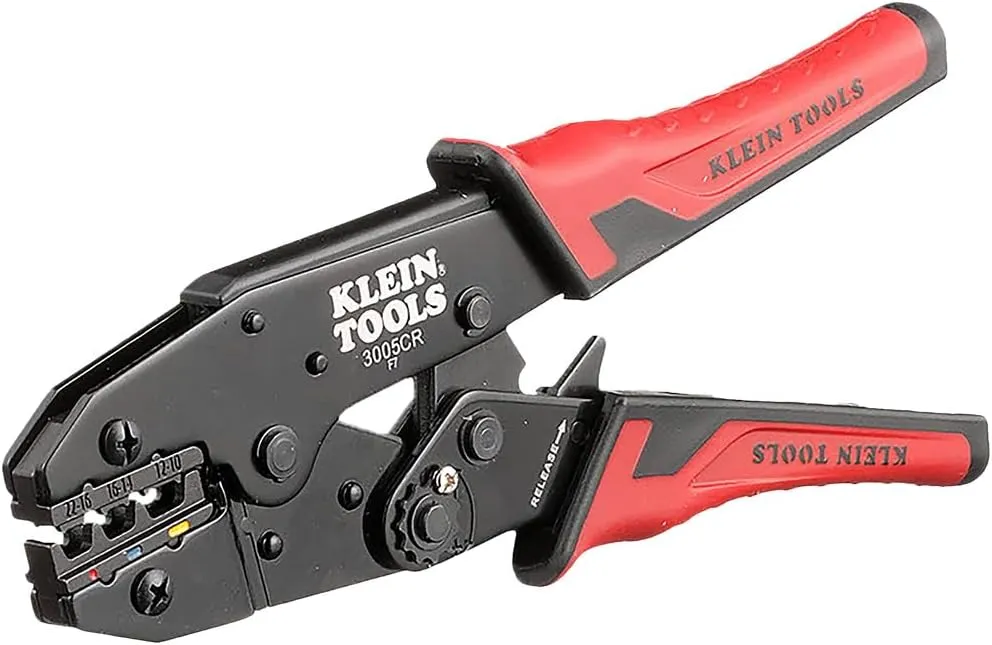
Klein Tools 3005CR Ratcheting Crimper
Ratcheting crimper that locks until the crimp is complete, so every termination is fully formed.
- Ratcheting mechanism — the tool stays locked until the crimp is fully formed, so a weak grip cannot produce a weak joint.
- 22–10 AWG range — covers the terminal sizes used in most panel and control wiring.
- Insulated and non-insulated terminals — one tool handles both, so you are not carrying two.
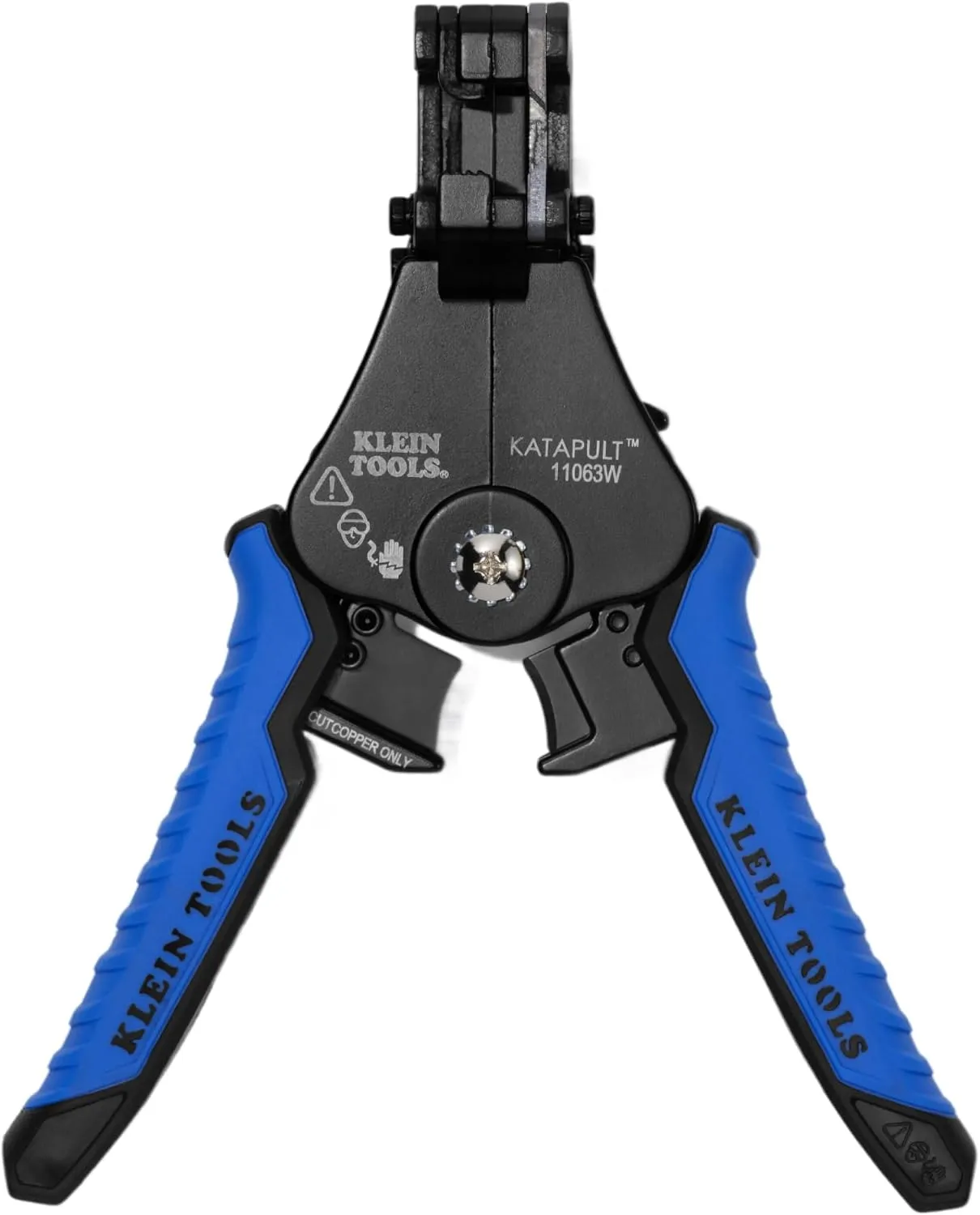
Klein Tools 11063W Wire Stripper and Cutter
Self-adjusting stripper that grips, strips and cuts common building wire in one motion.
- Self-adjusting action — squeeze once and the tool sets itself to the conductor size, so strips are repeatable.
- Clean strip without nicking — protects the copper, which is what keeps a termination reliable long term.
- Built-in cutter and plier nose — you can cut, strip and twist without swapping tools.