How to Choose Tool Bags & Storage
Storage is a productivity tool
A tool bag is not a container you tolerate; it is the system that decides how long it takes to find a connector, whether your meter still reads accurately after a week in the van, and whether you walk back to the vehicle because something is missing. Buy it with the same care as the tools inside it.
Start with what you actually carry
Before comparing bags, separate your kit into three groups, because they want different homes:
- Hand tools. Reached for constantly, tough, tolerant of an open tote.
- Instruments. Meters, testers and calibration-sensitive equipment that need padding, dryness and separation.
- Consumables. Connectors, screws, fixings, tape and blades — small, numerous, and the main cause of a disorganised bag.
Most disappointment with storage comes from trying to make one bag do all three jobs. It is far better to have a modest open tote for hand tools and a separate closed case for instruments.
Open tote, closed bag or hard case
Open totes are the fastest option. Nothing has to be opened, everything is visible, and the bag stays put while you work out of it. Their weakness is protection: rain, dust and impact all reach the contents, and a small part can leave without you noticing.
Closed bags trade a few seconds of access for real protection. Zipped, weather-resistant and often padded, they are the right answer for instruments and for anyone working outside in poor conditions.
Hard cases are for the equipment that must not be crushed or soaked — a good meter, an insulation tester, a thermal camera. They are heavier and bulkier, so they suit a specific instrument rather than your whole kit.
Modular systems — a base unit with interchangeable, labelled boxes — solve organisation rather than protection. Their real benefit is that every item has a fixed place, so you can see at a glance when something is missing and restock before it costs you a trip.
What to inspect before buying
- Stitching at the load points. Handles, strap anchors and pocket seams carry all the weight. Reinforced, multi-stitched panels are the difference between years of service and a bag that splits in month two.
- The base. A hard, water-resistant base stops the bag soaking up moisture from the ground and wearing through on concrete.
- Fabric weight. Heavier woven fabric resists cuts and punctures from the tools inside it.
- The opening. A bag that stays open on its own is far more usable than one that folds shut every time you reach in.
- Pockets sized for your tools. Too many tiny pockets is as bad as none; check that the loops and sleeves fit the tools you own.
- Carry options. Handles, shoulder strap, or both. A fully loaded bag carried on one shoulder all day is a back problem waiting to happen.
Protecting instruments specifically
Instruments deserve separation from the rest of the kit. Metal tools, damp fabric and impact are all bad for a meter, and its calibration is the reason you trust the readings.
- Keep the meter in its own case or padded compartment, not loose in a pocket full of screwdrivers.
- Keep the leads coiled and stored with the meter so they are not lost or kinked.
- Keep instruments away from moisture and from the metal offcuts that scratch a display and hide a damaged one.
- After any significant knock, verify the meter against a known source before relying on it.
The tools worth protecting are the ones that give you a reading you can act on — a true-RMS multimeter, an insulation multimeter for verification work, or the clamp meter you reach for on a packed distribution board.
Site versus van
Storage needs change with where you are. On a site, a bag you carry all day should be as light as the job allows and organised so one hand can find anything. In the van or workshop, the priority shifts to bulk capacity, labelled drawers and a fixed place for everything, so restocking is quick and nothing migrates between jobs.
The most common storage mistake is treating the carry bag as permanent storage. Load for the task and leave the rest behind; you will work faster and carry less.
Our verdict
Buy a well-stitched open tote for hand tools and a separate closed, padded case for your instruments, and add modular boxes for consumables if you find yourself hunting for fixings. Inspect the stitching and the base before you buy — those are what decide how long the bag lasts — and keep the weight down by loading for the job rather than for the whole van.
VoltCalc provides educational information only and does not publish invented ratings or reviews.
Side-by-Side Worked Examples: North America (NEC) vs. International (IEC 60364 / BS 7671)
North American (NEC) Field Kit Example
Outfitting a commercial service bag for 120/240 V and 480Y/277 V fault-finding:
- Dedicated padded instrument pouch: True-RMS CAT III/IV multimeter, 400 A AC/DC clamp meter, fused silicone leads, and a 120 V NEMA 5-15 GFCI outlet tester.
- Open hand-tool tote: Self-adjusting AWG strippers, ratcheting ferrule crimper, and 1,000 V insulated drivers kept separate from test probes so meter displays and insulation stay undamaged.
International (IEC 60364 / BS 7671) Field Kit Example
Organizing a commissioning kit for 230/400 V residential and commercial verification:
- Hard IP65 instrument case: Multifunction tester (MFT) for insulation resistance (250/500/1,000 V DC), earth-fault loop impedance (Z_s), and 30 mA RCD trip testing, plus a GS38 two-pole CAT IV voltage indicator and proving unit.
- Modular consumable case: Metric 1.5–16 mm² bootlace ferrules (IEC colour-coded), Wago-style lever connectors, and calibrated torque screwdriver.
Related Calculators
Electrical Load Calculator
Calculate residential and commercial service demand loads and feeder current.
Wire Size Calculator (Dual-Criteria Solver)
Size copper and aluminum conductors in AWG or mm² for ampacity and voltage drop.
Voltage Drop Calculator
Calculate AC and DC voltage drop across AWG or metric mm² copper and aluminum runs.
Related Unit Converters
Watts to Amps Converter
Convert active power in watts (W) to current in amps (A) for DC and AC circuits.
Amps to Watts Converter
Convert current in amps (A) to active power in watts (W) for DC and AC systems.
AWG to mm² Converter (American Wire Gauge to Metric)
Convert American Wire Gauge (AWG) to metric mm² area, diameter, and resistance.
Frequently Asked Questions
Recommended Tools & Equipment for This Guide
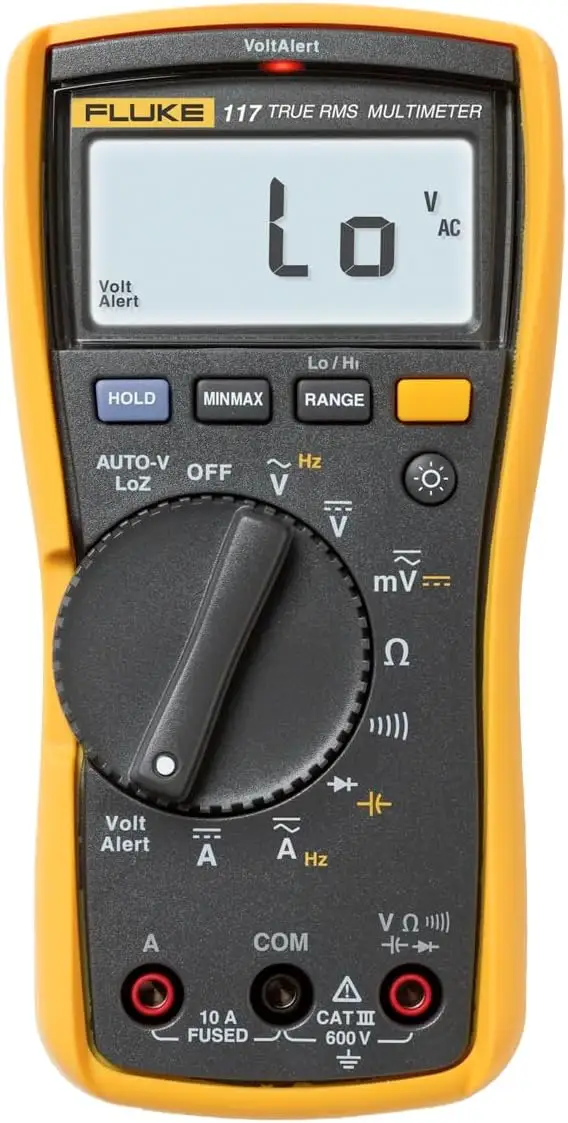
Fluke 117 True-RMS Multimeter
The everyday electrician's meter: true-RMS AC measurement, non-contact voltage detection and a CAT III 600 V rating in a compact body.
- True-RMS AC measurement — accurate readings on the electronic loads that fool cheaper average-sensing meters.
- Built-in non-contact voltage detection — confirm a circuit is live before you put a probe anywhere near it.
- CAT III 600 V safety rating — rated for the transient energy you meet in distribution panels and fixed wiring.
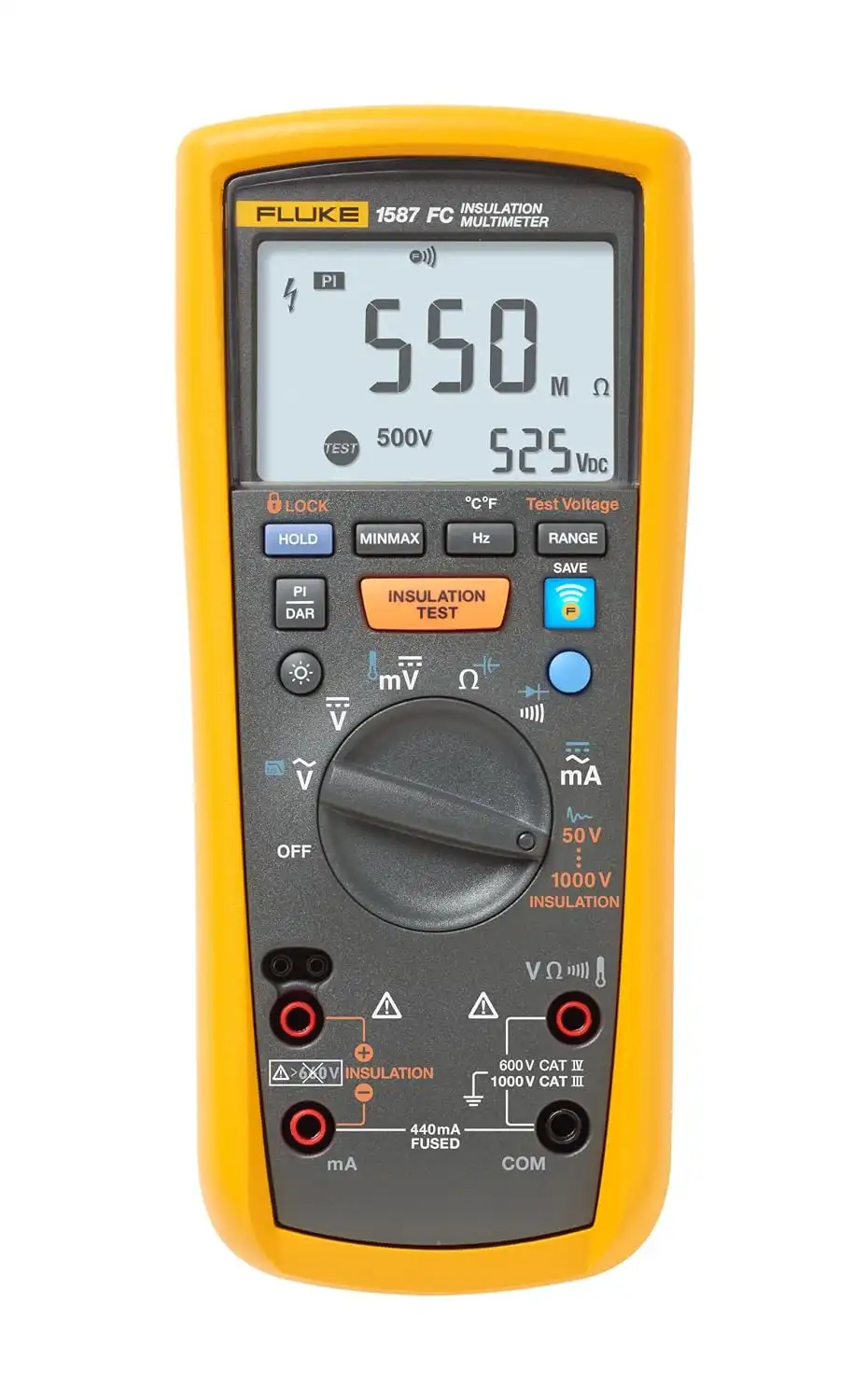
Fluke 1587 FC Insulation Multimeter
Insulation testing and full multimeter functions in one instrument, with selectable test voltages up to 1000 V.
- Insulation test voltages from 50 V to 1000 V — matches the test voltage to the equipment instead of using one fixed setting.
- Full true-RMS multimeter functions — voltage, current, resistance and continuity without a second instrument.
- Wireless result logging — builds a trend over time so you can see insulation degrading before it fails.
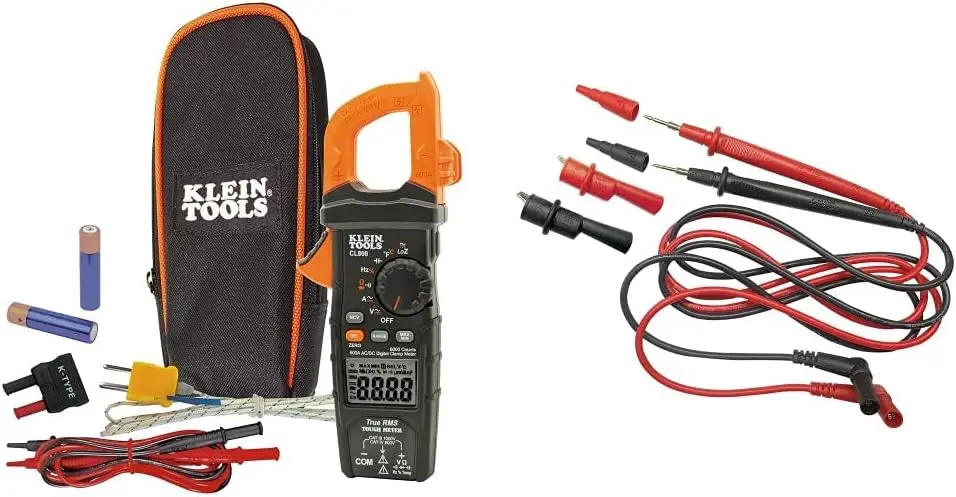
Klein Tools CL800 Digital Clamp Meter
Wide-jaw auto-ranging clamp meter with inrush capture for motor and compressor starting currents.
- Inrush current capture — see the starting surge that trips breakers, not just the running current.
- Wide jaw opening — accepts larger conductors and bundled cables that slim clamps cannot.
- Auto-ranging true-RMS measurement — fast readings you can trust on non-linear loads.
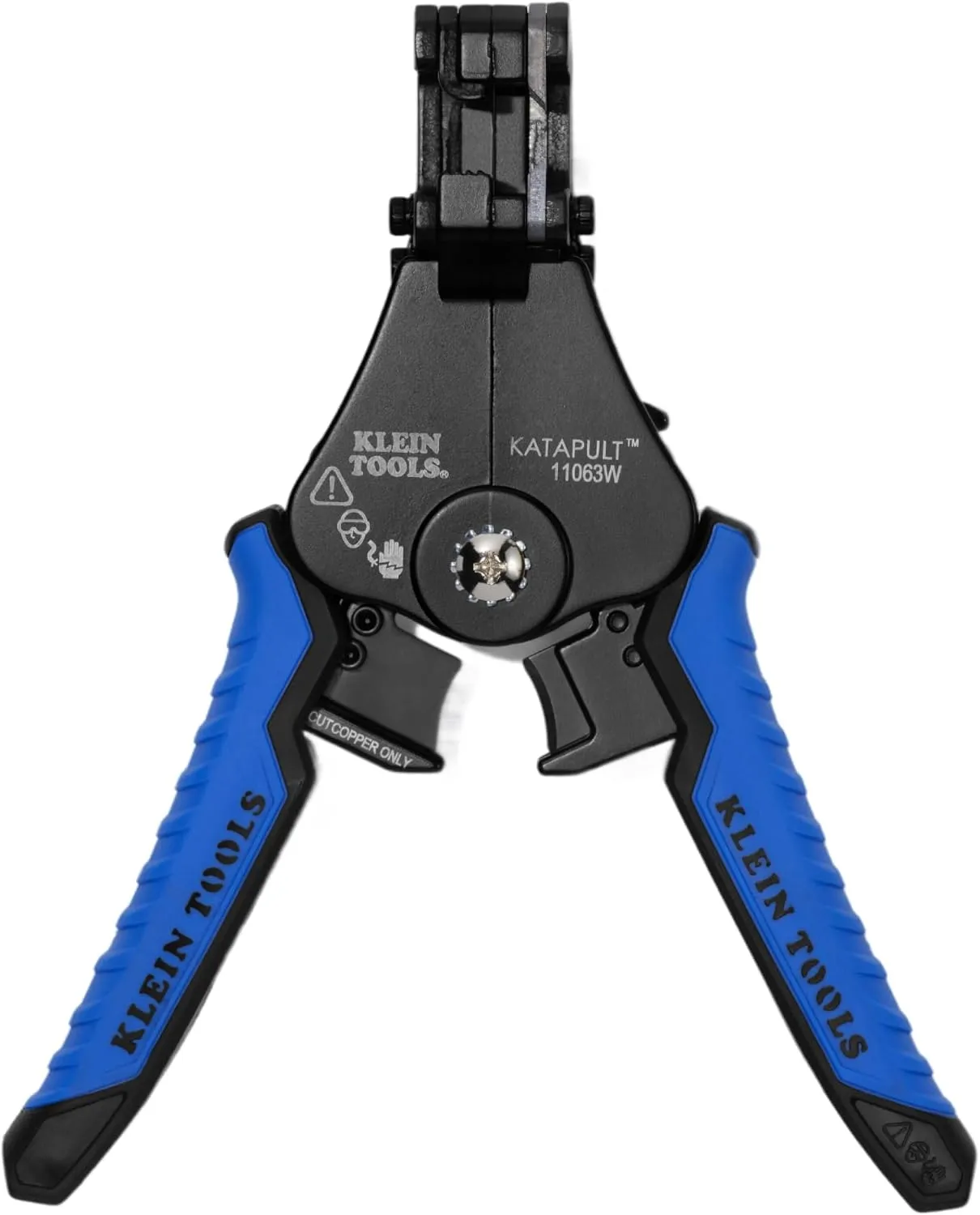
Klein Tools 11063W Wire Stripper and Cutter
Self-adjusting stripper that grips, strips and cuts common building wire in one motion.
- Self-adjusting action — squeeze once and the tool sets itself to the conductor size, so strips are repeatable.
- Clean strip without nicking — protects the copper, which is what keeps a termination reliable long term.
- Built-in cutter and plier nose — you can cut, strip and twist without swapping tools.
Related Engineering Guides
How to Choose Wire Strippers & Crimpers
Match precision wire strippers and ratcheting crimpers to solid and stranded wire.
How to Choose Power Tools for Electrical Work
Compare cordless platforms, SDS rotary hammers, knockout punches, and cable cutters.
How to Choose Electronic Components
Verify resistor power ratings, capacitor voltage derating, and thermal limits.