How to Choose Power Tools for Electrical Work
Match the tool to the work
Electrical work needs a narrower set of power tools than general building, but it uses them constantly. A cordless drill, an impact driver, a rotary hammer for masonry, a hole saw set for fittings, and a reciprocating saw for cutting containment and trunking covers most installations. Buy those well rather than accumulating a wide, shallow kit.
The battery platform is the real decision
The tool is a one-off purchase; the battery system is a commitment. Once you own batteries and a charger, every future tool arrives as a cheaper bare unit on the same platform.
So choose the platform on breadth — does it offer the rotary hammer, the reciprocating saw and the lighting you will want in three years — and on battery availability locally. Buy the first tool as a kit with two batteries so you are never waiting on a charge. Then stay on the platform.
Voltage is a per-tool decision. High-voltage batteries suit saws and rotary hammers where sustained power matters; compact mid-voltage packs suit drills and drivers you hold overhead. Match the pack to the tool and keep a couple of compact packs for the light work.
Drills, drivers and hammers
- A combi or hammer drill is the general-purpose tool: drilling, driving and light masonry.
- An impact driver drives long screws without cam-out and is the tool you will reach for most on fixings. Its rotary impact is not suitable for tightening terminal screws — use a hand driver there.
- An SDS-plus rotary hammer is the answer for concrete and repeated masonry drilling. It drills faster, with far less effort, and does not destroy your wrist or the drill.
Two speed ranges, a clutch for driving, and a metal chuck are worth checking. A keyless chuck that grips properly is more important than it sounds.
Cutting: saws and hole saws
For fittings — downlights, back boxes, conduit entries — a hole saw set with the right diameters for the fittings you install is essential. Bi-metal saws cover wood, plastic and sheet metal; carbide or grit saws handle tile and masonry. Run them slowly, let the teeth cut, and keep the pilot bit matched to the arbor.
For containment, trunking and cable tray, a reciprocating saw with a fine-tooth metal blade is quick and controllable; a multi-tool reaches into corners and cuts flush, which a reciprocating saw cannot. Both are worth having if you install containment regularly.
When you are planning circuits for the tools you run — a site transformer, a large saw, a workshop machine — size the supply properly rather than guessing. The Electrical Load Calculator and the Wire Size Calculator will tell you what the circuit needs before you find out the hard way.
Safety, dust and noise
- RCD protection on any site supply, every time. Tools are routinely used in damp conditions and on damaged leads.
- Eye and hearing protection whenever you cut or drill. Hearing damage is cumulative and permanent.
- Dust extraction or a mask when cutting masonry, plasterboard or anything containing silica.
- Check the lead and the plug before use on corded tools; a damaged lead is the commonest cause of a shock on site.
- Batteries stored away from heat and moisture, and never left charging unattended in a van.
What to look for when buying
- A platform with the tools you will need next, not just the tool you need today.
- Brushless motors on the tools you use daily.
- Two batteries from the start, plus a fast charger.
- Metal chucks, two speeds and a clutch on the drill.
- A rotary hammer if you drill concrete more than occasionally.
- Hole saws and blades matched to your materials, bought as a set.
Our verdict
Pick a battery platform with real breadth and stay on it. Buy a good combi drill and an impact driver as kits with two batteries, add an SDS rotary hammer if you drill masonry, and build a hole saw set around the fittings you actually install. Then protect the supply you plug into and the eyes and ears you work with.
VoltCalc provides educational information only and does not publish invented ratings or reviews.
Side-by-Side Worked Examples: North America (NEC) vs. International (IEC 60364 / BS 7671)
North American (NEC 2023/2026) Worked Example
Powering a 120 V, 15 A miter saw and HEPA dust extractor simultaneously on a temporary site GFCI circuit 100 ft (30.5 m) from the panel.
- Combined draw: 12 A saw + 6 A vacuum = 18 A peak (would trip a 15 A breaker; split across two 20 A 120 V GFCI circuits or size dedicated 12 AWG heavy-duty cord).
- Voltage drop check on a 12 AWG (3.31 mm²) 100 ft cord at 14 A: ΔV = 2 × 14 × (0.0175 × 30.5 ÷ 3.31) = 4.51 V (3.76%) — upgrading to 10 AWG (5.26 mm²) drops loss to 2.84 V (2.37%), preventing motor brush overheating.
International (UK/IEC 110 V CTE & 230 V RCD Site Supply) Worked Example
Running a 1,600 W rotary hammer on a 110 V Centre-Tapped Earth (CTE) site transformer vs. a 230 V 30 mA RCD workshop circuit.
- 110 V CTE draw: I = 1,600 ÷ (110 × 0.85 PF) = 17.1 A -> requires a 32 A 110 V CEE-form socket and 4 mm² HO7RN-F extension cable (voltage to earth limited to 55 V AC for shock reduction per BS 7671 Section 704).
- On a 230 V bench circuit, draw drops to 8.2 A, protected by a 16 A Type C 30 mA RCBO to ride through starting inrush without losing earth-fault protection.
Related Calculators
Related Unit Converters
Watts to Amps Converter
Convert active power in watts (W) to current in amps (A) for DC and AC circuits.
Amps to Watts Converter
Convert current in amps (A) to active power in watts (W) for DC and AC systems.
AWG to mm² Converter (American Wire Gauge to Metric)
Convert American Wire Gauge (AWG) to metric mm² area, diameter, and resistance.
Frequently Asked Questions
Recommended Tools & Equipment for This Guide
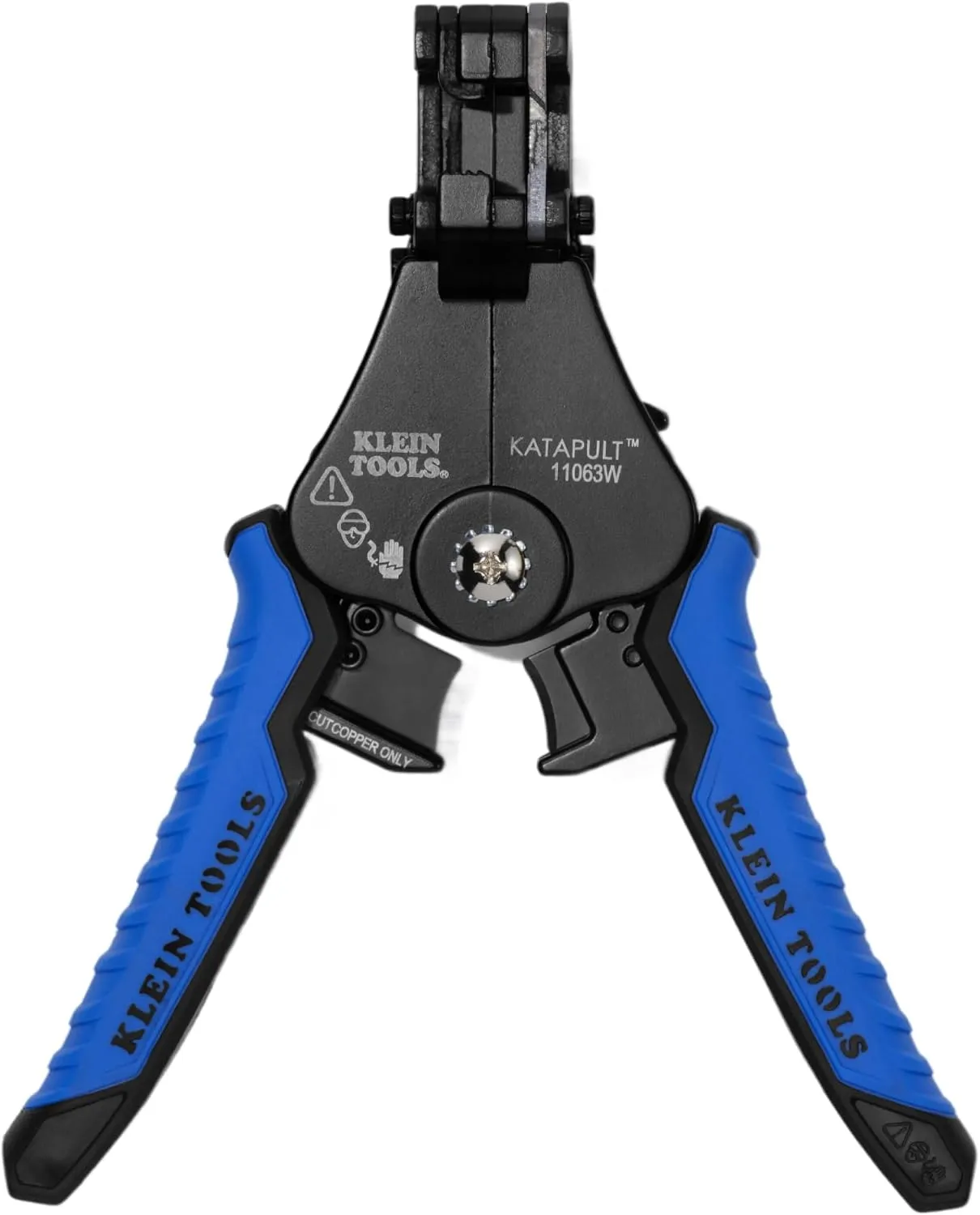
Klein Tools 11063W Wire Stripper and Cutter
Self-adjusting stripper that grips, strips and cuts common building wire in one motion.
- Self-adjusting action — squeeze once and the tool sets itself to the conductor size, so strips are repeatable.
- Clean strip without nicking — protects the copper, which is what keeps a termination reliable long term.
- Built-in cutter and plier nose — you can cut, strip and twist without swapping tools.
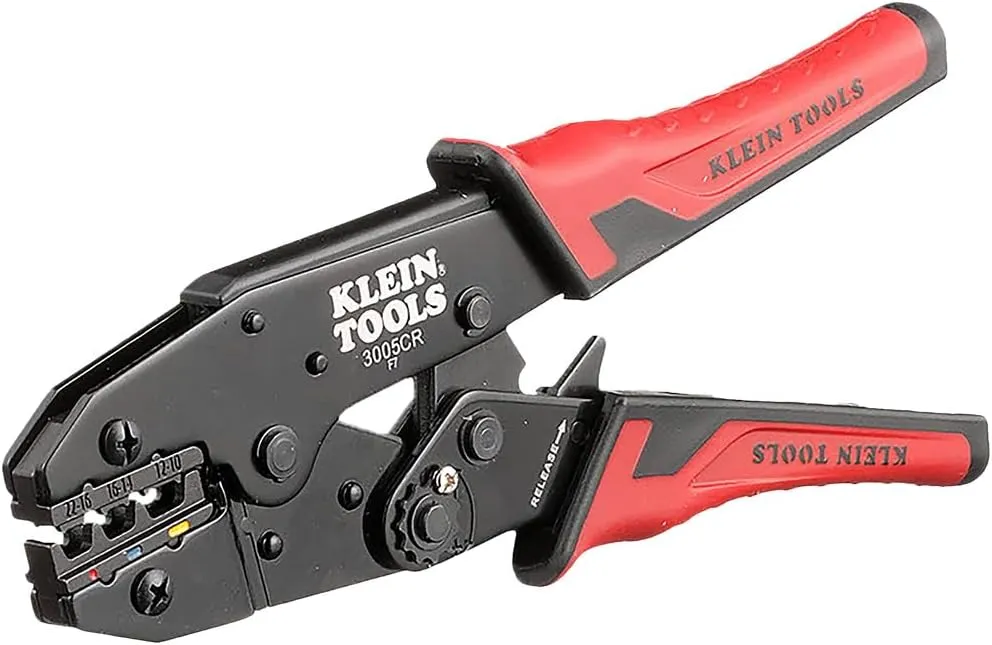
Klein Tools 3005CR Ratcheting Crimper
Ratcheting crimper that locks until the crimp is complete, so every termination is fully formed.
- Ratcheting mechanism — the tool stays locked until the crimp is fully formed, so a weak grip cannot produce a weak joint.
- 22–10 AWG range — covers the terminal sizes used in most panel and control wiring.
- Insulated and non-insulated terminals — one tool handles both, so you are not carrying two.
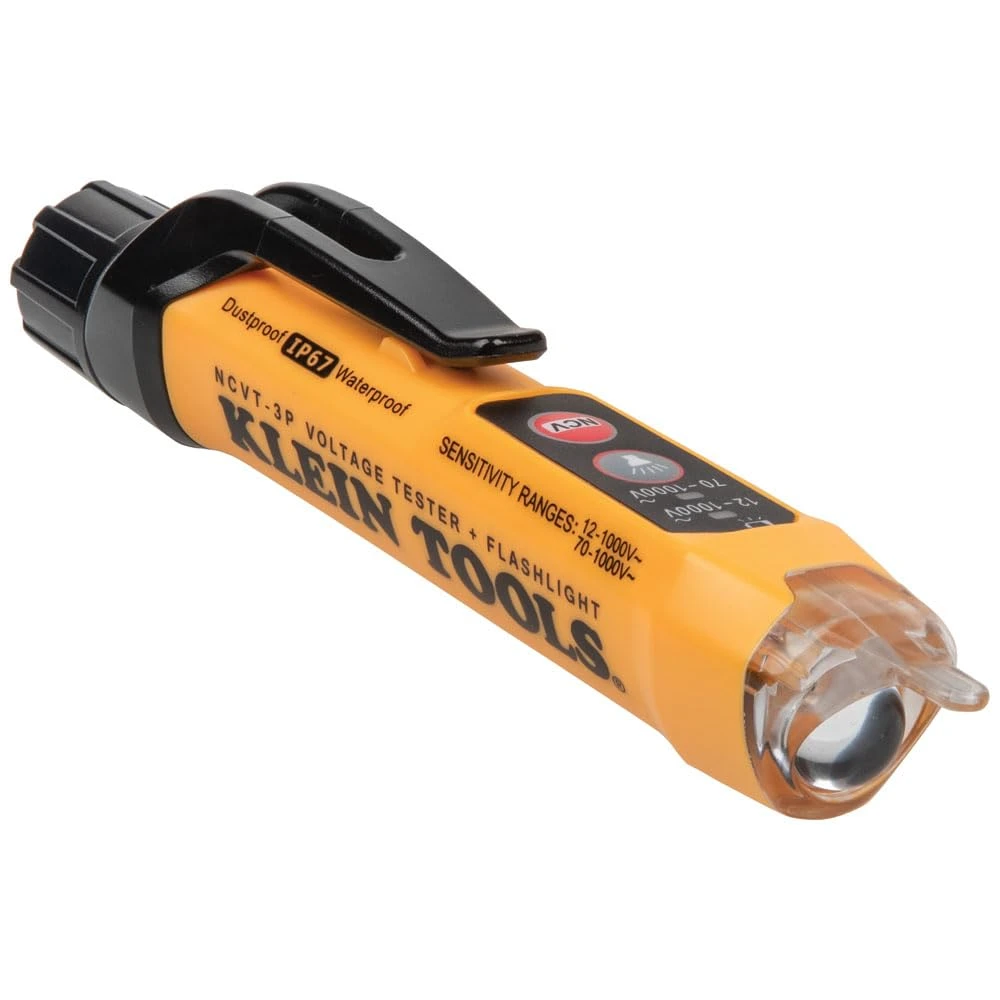
Klein Tools NCVT-3P Non-Contact Voltage Tester
Dual-range voltage tester with an integrated flashlight for working in dark panels.
- Built-in flashlight — no separate torch needed when you are working inside a dark enclosure.
- Dual sensitivity ranges — narrows detection so adjacent wiring causes fewer false positives.
- 12–1000 V AC detection — covers everything from control circuits up to mains voltage.
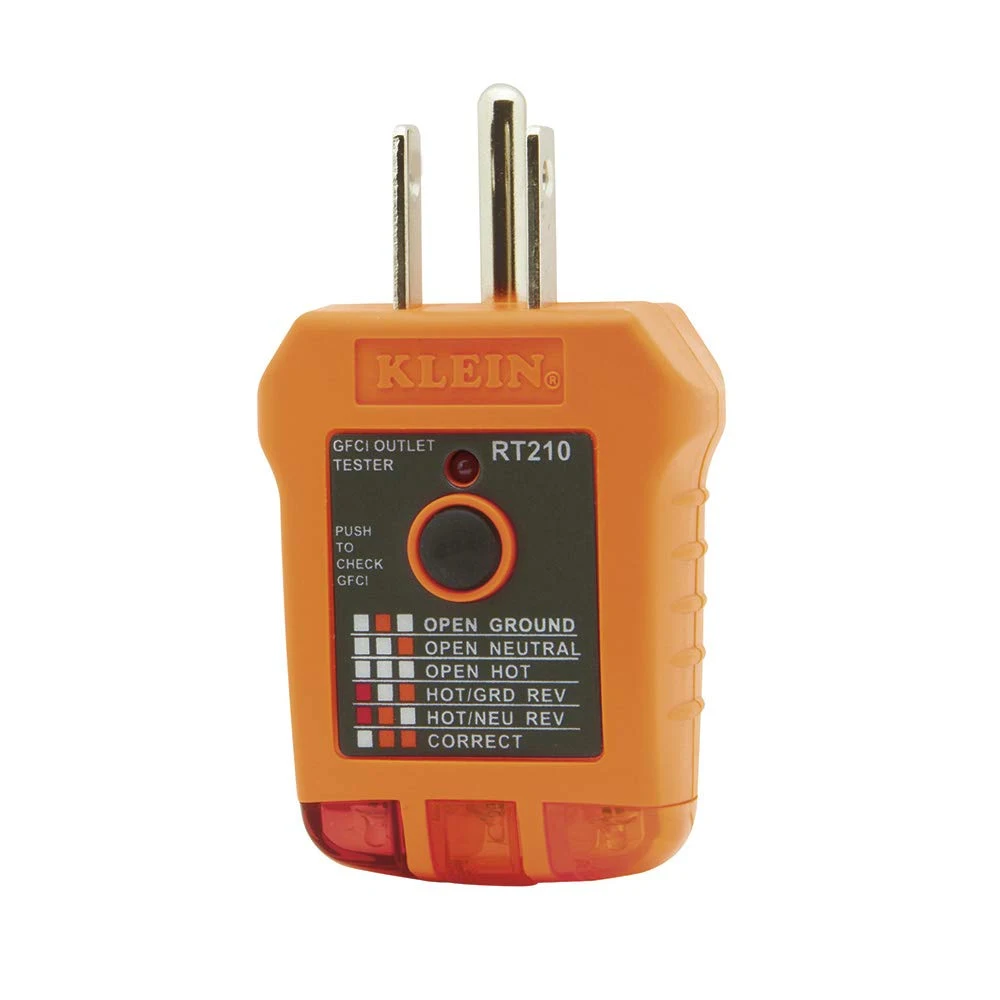
Klein Tools RT210 GFCI Outlet Tester
Plug it in and the LED legend tells you the wiring fault; press the button to trip a GFCI and confirm it works.
- Reads wiring faults from an LED legend — open ground, open neutral, open hot, hot/ground reversed and hot/neutral reversed, all identified at a glance.
- Trips GFCI devices with a push button — confirms the device actually interrupts the circuit rather than simply being installed.
- Three-prong plug with a two-prong adapter — reaches outlets without a ground pin in older wiring.
Related Engineering Guides
How to Choose Tool Bags & Storage
Compare open tool totes, rugged IP-rated meter cases, and modular storage systems.
How to Choose Wire Strippers & Crimpers
Match precision wire strippers and ratcheting crimpers to solid and stranded wire.
How to Choose Electronic Components
Verify resistor power ratings, capacitor voltage derating, and thermal limits.