kW to kVA Converter (Kilowatts to Kilovolt-Amperes)
Convert real power in kilowatts (kW) to apparent power in kilovolt-amperes (kVA) using Power Factor (cos φ).
Step-by-step calculation
- Real Power P = 40 kW, Power Factor cos φ = 0.8
- Apparent Power S = 40 ÷ 0.8 = 50 kVA
- Reactive Power Q = √(kVA² − kW²) = 30 kVAR
Formula & mathematical explanation
Input definitions
| Symbol | Parameter | Unit | Engineering meaning & standards relevance |
|---|---|---|---|
| P | Real Power (kW) | kW | Input parameter for real power (kw). |
| cos φ | Power Factor (cos φ) | Selection | Input parameter for power factor (cos φ). |
Worked example
40 kW Commercial Load at 0.80 Power Factor
Find the generator kVA rating required.
- kVA = 40 kW ÷ 0.80 = 50 kVA.
Assumptions
- Steady-state sinusoidal power factor.
Limitations
- Generators and transformers also require starting surge margin.
How it works
Divides real power in kilowatts (kW) by the load power factor (cos φ) to obtain apparent power in kVA.
When to use it
- Translating total connected real load in kilowatts (kW) into required standby generator or utility transformer capacity in kVA.
- Determining reactive power demand (kVAR) from active kW and power factor for capacitor bank sizing.
Practical real-world applications
- Standby Diesel Generator Sizing: Converting a 120 kW commercial building load at 0.80 lagging PF into a 150 kVA generator requirement.
- Industrial Plant Transformer Upgrade: Checking kVA load on a substation transformer when adding a 60 kW compressor at 0.85 PF (70.6 kVA).
Original Editorial Review & Technical Evaluation
Converts real power in kilowatts (kW) into apparent power in kilovolt-amperes (kVA) and reactive power in kVAR.
Generator specifiers, MEP engineers, and industrial facility managers.
- Computes kVA, VA, and reactive kVAR from kW and Power Factor.
- Shows full step-by-step power triangle verification.
Accuracy & methodology: Uses S = P ÷ cos φ and Q = √(S² − P²).
What to verify independently: Check ISO 8528 generator rating classes and NEC Article 445 / 450.
Common mistakes
- Multiplying kW by Power Factor instead of dividing (since cos φ ≤ 1.0, kVA must always be greater than or equal to kW).
- Assuming a standby generator rated at 100 kVA can deliver 100 kW of real power (standard industrial generators are prime-mover limited to 0.80 PF = 80 kW).
Safety & code notice
Standby generators must be sized for both the prime mover’s real power limit (kW) and the alternator winding’s apparent power limit (kVA), plus motor starting skVA.
Related Unit Converters
kW to Watts Converter (Kilowatts to Watts)
Convert kilowatts (kW) to watts (W), megawatts, and mechanical horsepower (HP).
Watts to kW Converter (W to Kilowatts)
Convert watts (W) to kilowatts (kW), horsepower, and BTU/hr for load sizing.
Electrical & Thermal Power Converter (W, kW, MW, HP, BTU/hr)
Convert between watts, kilowatts, megawatts, horsepower, metric PS, and BTU/hr.
Related Calculators
Related Engineering Guides
Recommended Tools & Instruments
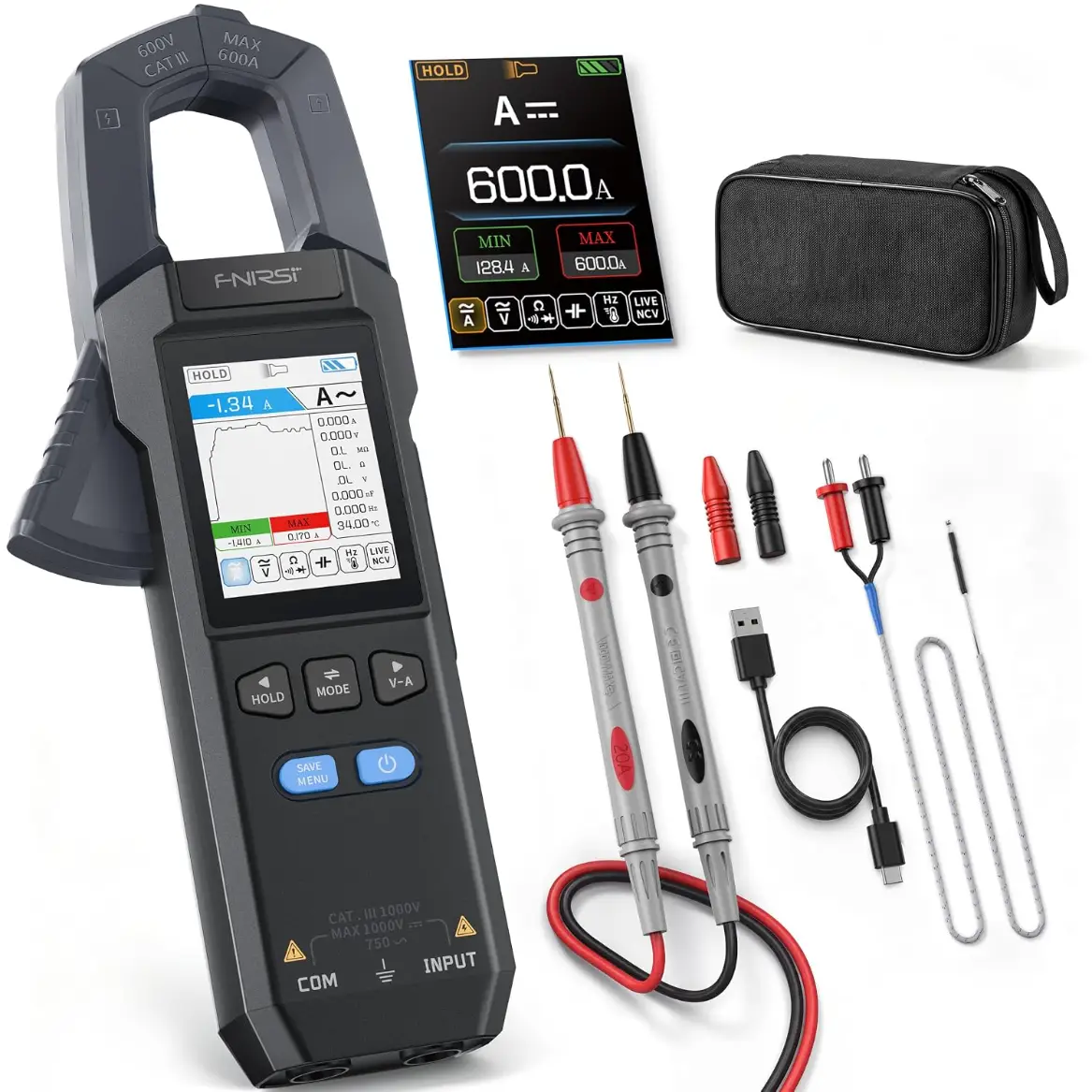
FNIRSI Rechargeable Digital Clamp Meter
A rechargeable clamp with a colour screen that graphs the waveform live — a different class of display from a budget meter.
- Colour display with live waveform graphing — see the shape of the current or voltage as it happens, plus min and max captured on screen, instead of interpreting a flickering number.
- CAT III 1000 V safety rating — a higher transient rating than most clamps at this price, covering measurement on fixed installation wiring and at the distribution board.
- Rechargeable over USB-C — no AA or AAA batteries to hunt for; the same cable as your phone tops it up.
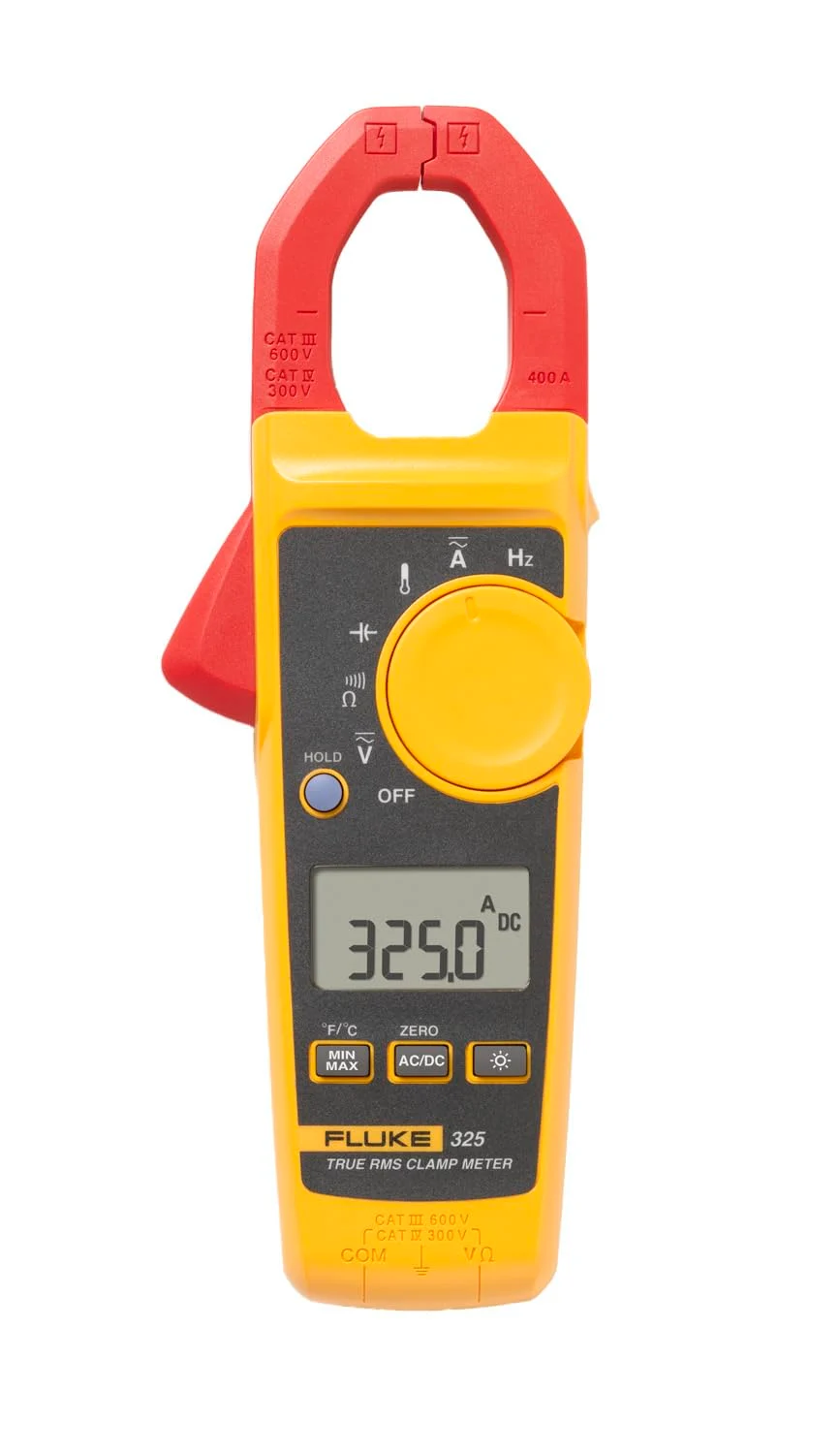
Fluke 325 True-RMS Clamp Meter
Clamp-on AC/DC current measurement in tight panels, with true-RMS accuracy and a CAT III 600 V rating.
- AC and DC current measurement — covers mains circuits, battery banks and solar strings with one tool.
- Clamp-on measurement — read current without disconnecting or disturbing the circuit.
- Slim jaw profile — slides into crowded panels where bulky clamps will not fit.

Klein Tools CL800 Digital Clamp Meter
Wide-jaw auto-ranging clamp meter with inrush capture for motor and compressor starting currents.
- Inrush current capture — see the starting surge that trips breakers, not just the running current.
- Wide jaw opening — accepts larger conductors and bundled cables that slim clamps cannot.
- Auto-ranging true-RMS measurement — fast readings you can trust on non-linear loads.
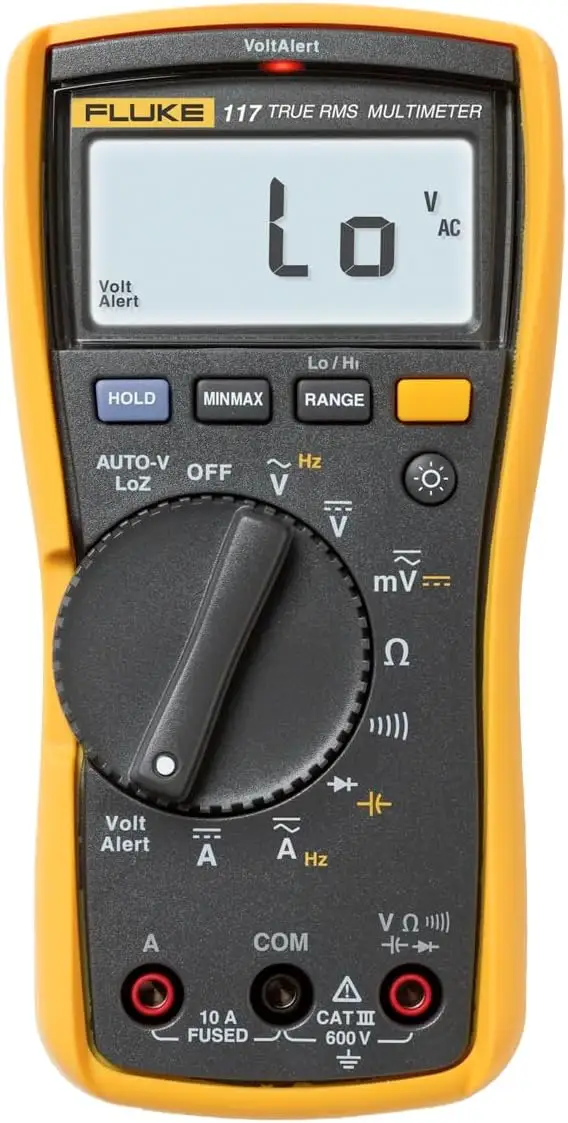
Fluke 117 True-RMS Multimeter
The everyday electrician's meter: true-RMS AC measurement, non-contact voltage detection and a CAT III 600 V rating in a compact body.
- True-RMS AC measurement — accurate readings on the electronic loads that fool cheaper average-sensing meters.
- Built-in non-contact voltage detection — confirm a circuit is live before you put a probe anywhere near it.
- CAT III 600 V safety rating — rated for the transient energy you meet in distribution panels and fixed wiring.