Resistor Color Code Calculator
Select the colors of each band on your 4-band, 5-band, or 6-band resistor to read its resistance, tolerance, and temperature coefficient instantly.
How it works
Standard axial through-hole resistors follow IEC 60062 color coding. On a 4-band resistor, the first two bands give significant digits, the third is the decimal multiplier, and the fourth is tolerance. On 5-band and 6-band precision resistors, the first three bands are digits, the fourth is the multiplier, the fifth is tolerance, and the optional sixth band specifies the temperature coefficient in ppm/°C.
When to use it
Use it when identifying unmarked or dimly printed axial resistors on a breadboard or PCB, sorting component kits, or cross-checking a value you measured with a multimeter.
Common mistakes
Reading the resistor from the wrong end (always place the wider gap or gold/silver tolerance band on the right), or mistaking a 5-band precision resistor for a 4-band resistor with a temperature coefficient band.
Always de-energize circuits and discharge capacitors before measuring resistance or continuity with a digital multimeter. Measuring resistance on a live circuit can damage the meter and produce false readings.
Related Calculators
LED Resistor Calculator
Calculate the current-limiting resistor ohms and wattage for single or series LEDs.
Resistor Series & Parallel Calculator
Calculate total equivalent resistance and drops for series or parallel resistors.
Parallel Resistor Calculator
Calculate exact equivalent resistance and branch currents of parallel resistors.
Ohm's Law Calculator
Calculate voltage, current, resistance, and power in DC or resistive AC circuits.
Related Unit Converters
Electrical Resistance Converter (mΩ, Ω, kΩ, MΩ, GΩ)
Convert resistance between milliohms, ohms, kilohms, megohms, gigohms, and S.
Electrical Current Converter (A, mA, µA, kA)
Convert electrical current across SI decades from microamperes to kiloamperes.
Voltage Unit Converter (V, mV, µV, kV, MV)
Convert electrical potential across SI decades from microvolts to megavolts.
Related Engineering Guides
How to Choose Electronic Components
Verify resistor power ratings, capacitor voltage derating, and thermal limits.
How to Choose Bench Equipment & Soldering Gear
Choose temperature-controlled soldering stations, DC bench supplies, and scopes.
Ohm's Law Explained: Voltage, Current and Resistance
Master the relationship between voltage, current, resistance, and power in circuits.
Frequently Asked Questions
Recommended Testing & Bench Equipment
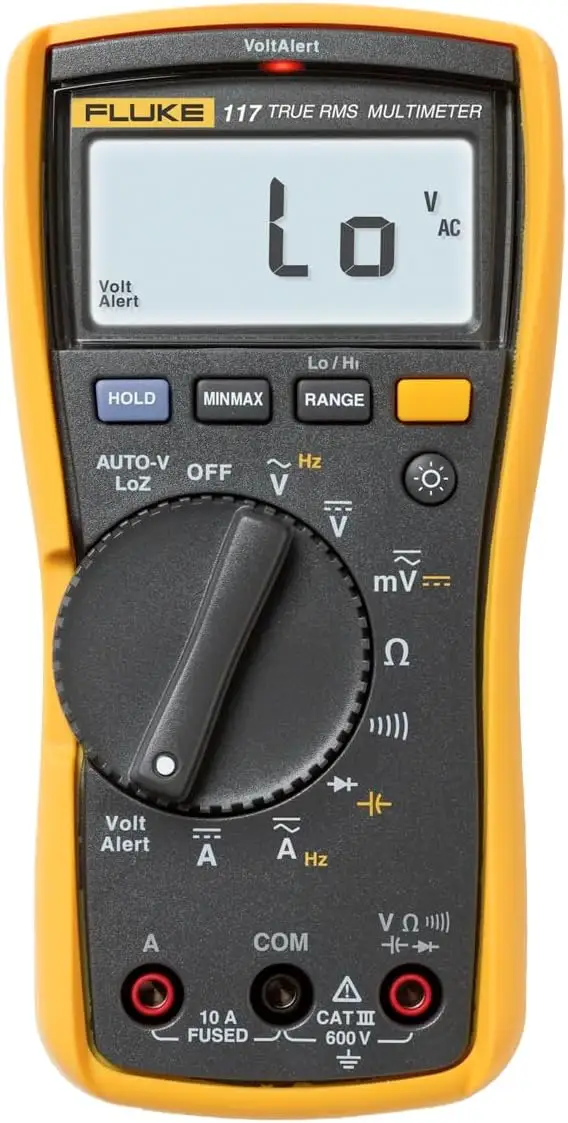
Fluke 117 True-RMS Multimeter
The everyday electrician's meter: true-RMS AC measurement, non-contact voltage detection and a CAT III 600 V rating in a compact body.
- True-RMS AC measurement — accurate readings on the electronic loads that fool cheaper average-sensing meters.
- Built-in non-contact voltage detection — confirm a circuit is live before you put a probe anywhere near it.
- CAT III 600 V safety rating — rated for the transient energy you meet in distribution panels and fixed wiring.
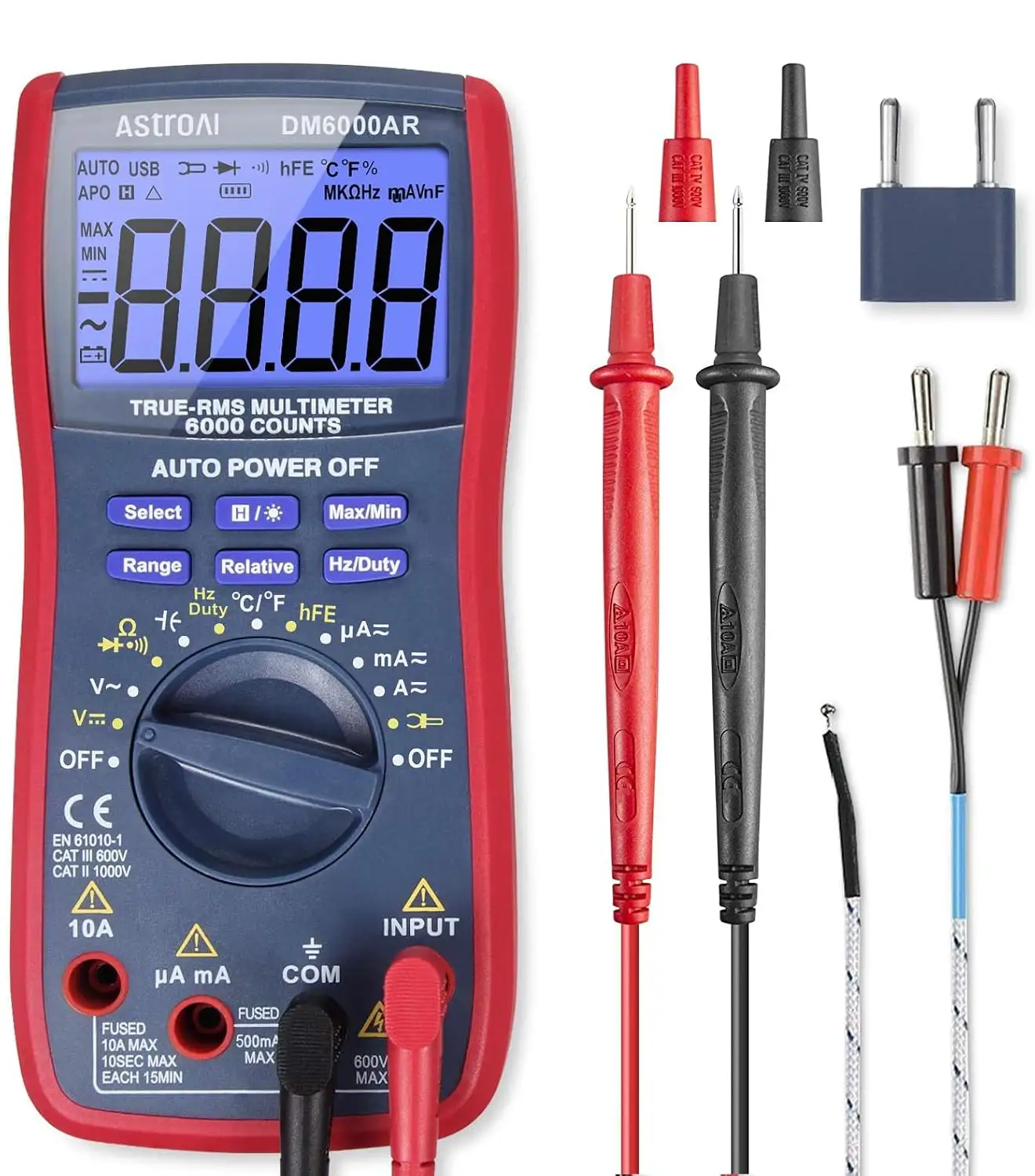
AstroAI DM6000AR True-RMS Digital Multimeter
A true-RMS 6000-count meter with temperature, capacitance and a CAT III 600 V rating — the budget option for DIY, hobby and student work.
- True-RMS AC measurement — accurate readings on the distorted, non-sinusoidal waveforms that switch-mode supplies, dimmers and inverters produce, which is where average-sensing meters quietly mislead.
- 6000-count display with 0.1 mV and 0.1 µA resolution — more resolution on low-voltage and low-current work than a typical 2000-count budget meter, so small changes are visible rather than rounded away.
- CAT III 600 V and CAT II 1000 V safety rating — rated for the transient energy of distribution panels and fixed wiring, not just bench work.
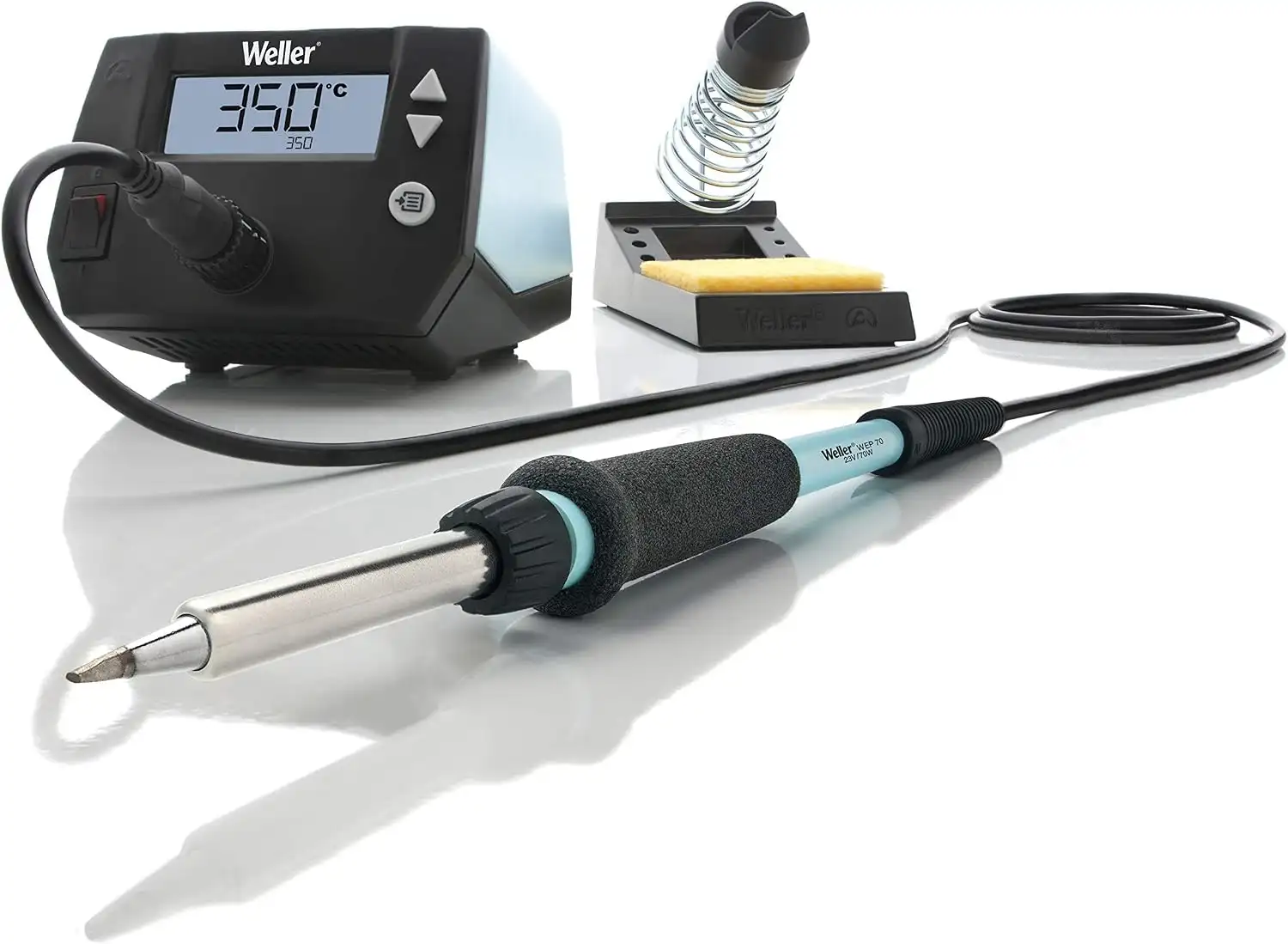
Weller WE1010NA Digital Soldering Station
A 70 W temperature-controlled soldering station with a digital readout for consistent joints.
- 70 W element — recovers heat quickly on larger joints instead of stalling mid-solder.
- Digital temperature setpoint — repeatable settings job to job, rather than a vague dial position.
- Adjustable temperature range — works for fine electronics and heavier control wiring with one station.