Weller WE1010NA Digital Soldering Station
A 70 W temperature-controlled soldering station with a digital readout for consistent joints.
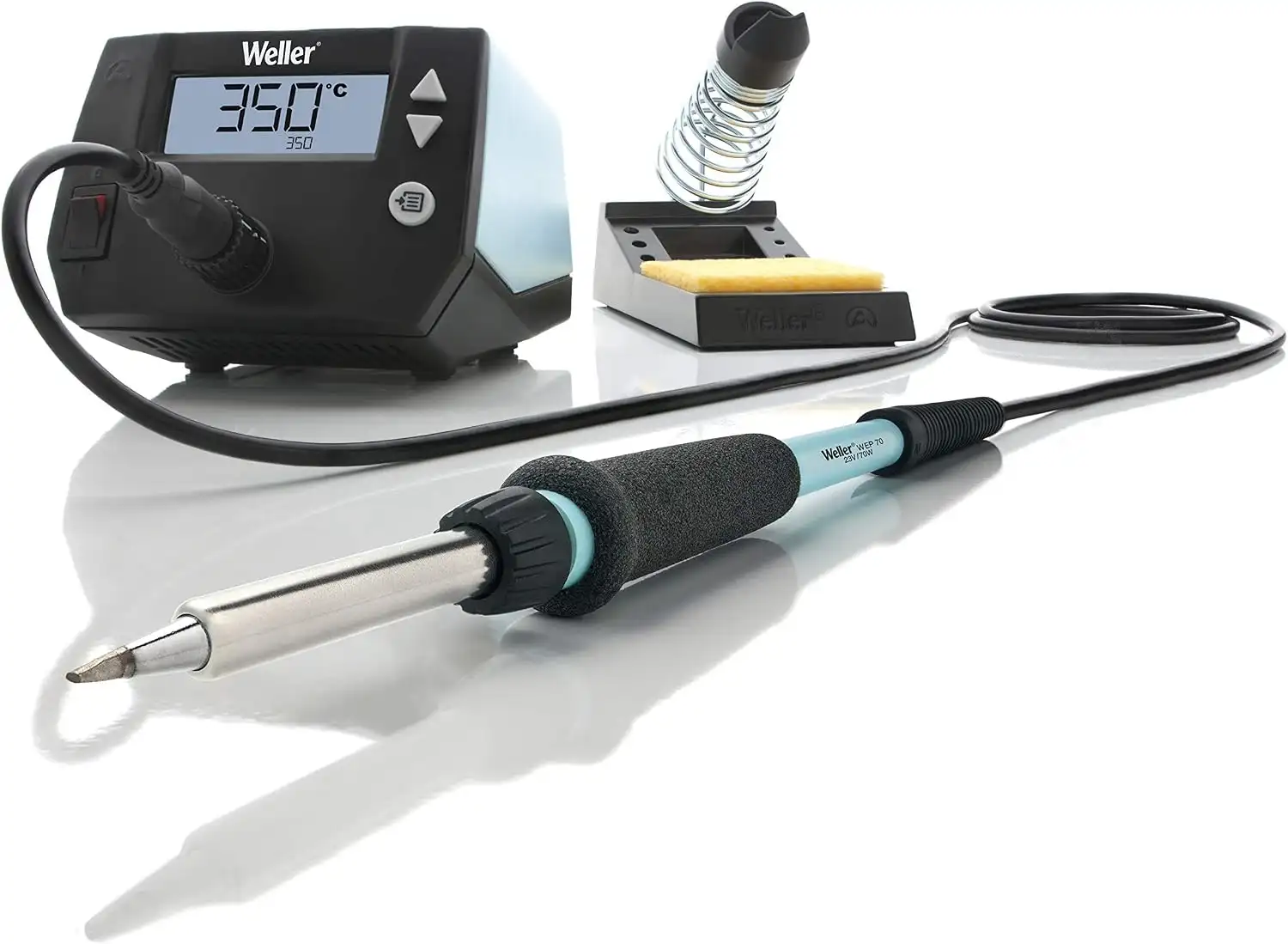
A 70 W digital soldering station with adjustable temperature control, aimed at electronics and control-panel repair work.
- 70 W fast-recovery heating element
- Digital temperature lock & standby
- ESD-safe wand and silicone cable
Affiliate Disclosure: VoltCalc may earn a commission from qualifying purchases made through product links at no extra cost to you. Product specs and availability are for reference and may change.
Field Overview
The reason cheap irons produce bad joints is thermal recovery. Touch a cold tip to a ground plane and the temperature collapses; you hold it there longer, the flux burns off, and the joint goes dull and brittle. A temperature-controlled station fixes this by pushing power back into the tip the moment it starts to sag. The WE1010NA does that with a 70 W element and a digital setpoint, so the same number works tomorrow as it did today.
Detailed Feature Breakdown
- 70 W element — recovers heat quickly on larger joints instead of stalling mid-solder.
- Digital temperature setpoint — repeatable settings job to job, rather than a vague dial position.
- Adjustable temperature range — works for fine electronics and heavier control wiring with one station.
- ESD-safe construction — protects sensitive components from static damage during repair.
Performance & Practical Use
On control panels and board-level repair it holds temperature well enough that joints form quickly and cleanly, which is exactly where a budget iron struggles. The digital setpoint is the quietly important feature: once you find the temperature that suits your solder, you can return to it precisely. It is not a substitute for a high-power iron on heavy busbar work — that is a different tool for a different job.
How It Compares
Pairs with the resistor and LED calculators when you are sizing components for the board you are repairing.
Pros
- Holds temperature well on larger joints
- Digital setpoint is repeatable job to job
- Good for control panels and electronics repair
Cons
- Not a substitute for a high-power iron on heavy busbar work
VoltCalc Verdict
For anyone doing regular electronics or control-panel soldering, this is the sensible step up from a fixed-temperature iron. The thermal recovery and repeatable setpoint are what turn inconsistent joints into reliable ones. If you solder only once or twice a year, a basic iron will do — but if you solder weekly, this earns its place on the bench.