Celsius to Fahrenheit Converter (°C to °F)
Convert Celsius (°C) to Fahrenheit (°F) and Kelvin (K). Ideal for checking NEC and IEC conductor insulation temperature ratings and ambient derating factors.
Step-by-step calculation
- °F = (75 × 1.8) + 32 = 167 °F
- Absolute Temperature K = 75 + 273.15 = 348.15 K
Formula & mathematical explanation
Input definitions
| Symbol | Parameter | Unit | Engineering meaning & standards relevance |
|---|---|---|---|
| T_C | Temperature in Celsius | °C | Temperature in degrees Celsius (°C). Standard conductor insulation ratings are 60°C, 75°C, and 90°C. |
Electrical Insulation & Ambient Temperature Reference (°C to °F)
| Celsius (°C) | Fahrenheit (°F) | Kelvin (K) | Electrical Engineering Significance |
|---|---|---|---|
| -40 °C | -40.0 °F | 233.15 K | Cold outdoor / industrial freezer limit |
| 0 °C | 32.0 °F | 273.15 K | Freezing point of water |
| 20 °C | 68.0 °F | 293.15 K | IEC / NEC Table 8 DC conductor resistance reference |
| 25 °C | 77.0 °F | 298.15 K | Solar STC cell reference temperature |
| 30 °C | 86.0 °F | 303.15 K | Standard NEC Table 310.16 ambient baseline |
| 40 °C | 104.0 °F | 313.15 K | Standard NEMA motor / breaker ambient limit |
| 60 °C | 140.0 °F | 333.15 K | TW / UF / NM-B ampacity termination column |
| 75 °C | 167.0 °F | 348.15 K | THW / THWN / XHHW standard breaker termination limit |
| 90 °C | 194.0 °F | 363.15 K | THHN / THWN-2 / XLPE insulation derating column |
Worked example
Converting 75°C THWN Conductor Rating to Fahrenheit
Find the Fahrenheit equivalent of a 75°C NEC terminal temperature rating.
- Multiply 75°C × 1.8 = 135.
- Add 32: 135 + 32 = 167 °F.
Assumptions
- Exact linear thermodynamic conversion °F = 1.8 × °C + 32.
- Copper resistance multiplier uses standard temperature coefficient α = 0.00393 per °C at 20°C.
- Absolute zero is -273.15 °C (-459.67 °F).
Limitations
- When converting a temperature rise or difference (ΔT, such as a 30°C transformer temperature rise), multiply by 1.8 ONLY — do not add 32 (Δ30°C = Δ54°F).
- Conductor ampacity derating requires consulting NEC Table 310.15(B)(1) or IEC 60364-5-52.
How it works
Multiplies the Celsius temperature by 9/5 (1.8) and adds 32 to align with the Fahrenheit zero point. Also computes Kelvin (K) and the copper conductor resistance temperature correction factor relative to 20°C.
When to use it
- Cross-checking cable insulation ratings (60°C, 75°C, 90°C) against ambient rooftop or conduit temperatures in °F.
- Evaluating thermal imaging camera readings on switchgear, lugs, and transformers.
Practical real-world applications
- Conductor Ampacity Derating: Converting a 45°C mechanical room ambient into 113°F to select the proper NEC ampacity correction factor.
- Solar Module Temperature Coefficient: Converting cell operating temperatures (e.g., 55°C = 131°F) to calculate Voc and power derating.
Original Editorial Review & Technical Evaluation
Converts Celsius to Fahrenheit and Kelvin while also computing the exact copper resistance multiplier at the target temperature.
Electricians, thermographers, solar designers, and electrical engineers.
- Instant °C to °F and Kelvin conversion.
- Calculates the copper conductor resistance multiplier relative to 20°C.
- Reference table maps key electrical temperatures (20°C, 25°C, 30°C, 60°C, 75°C, 90°C).
Accuracy & methodology: Exact thermodynamic scale conversion.
What to verify independently: Verify equipment terminal temperature ratings printed on breaker and lug housings.
Common mistakes
- Adding 32 when converting a temperature rise (Δ°C to Δ°F); a 40°C temperature rise above ambient is 40 × 1.8 = 72°F rise, not 104°F.
- Using the 90°C ampacity column directly on a 75°C-rated circuit breaker lug (NEC 110.14(C)).
Safety & code notice
Terminations exceeding 75°C (167°F) under normal load on standard equipment indicate loose lugs, overloaded conductors, or harmonic heating and should be inspected immediately.
Frequently asked questions
Related Unit Converters
Fahrenheit to Celsius Converter (°F to °C)
Convert Fahrenheit (°F) to Celsius (°C) and Kelvin for ambient derating checks.
Temperature Converter (°C, °F, Kelvin)
Convert between Celsius, Fahrenheit, and Kelvin with wire resistance factors.
AWG to mm² Converter (American Wire Gauge to Metric)
Convert American Wire Gauge (AWG) to metric mm² area, diameter, and resistance.
Related Calculators
Voltage Drop Calculator
Calculate AC and DC voltage drop across AWG or metric mm² copper and aluminum runs.
Wire Size Calculator (Dual-Criteria Solver)
Size copper and aluminum conductors in AWG or mm² for ampacity and voltage drop.
Joule Heating Calculator
Calculate thermal heat energy in joules, calories, and BTU from I²R and time.
Solar Panel Calculator
Calculate solar PV array wattage and panel count from daily kWh and sun hours.
Related Engineering Guides
Recommended Tools & Instruments
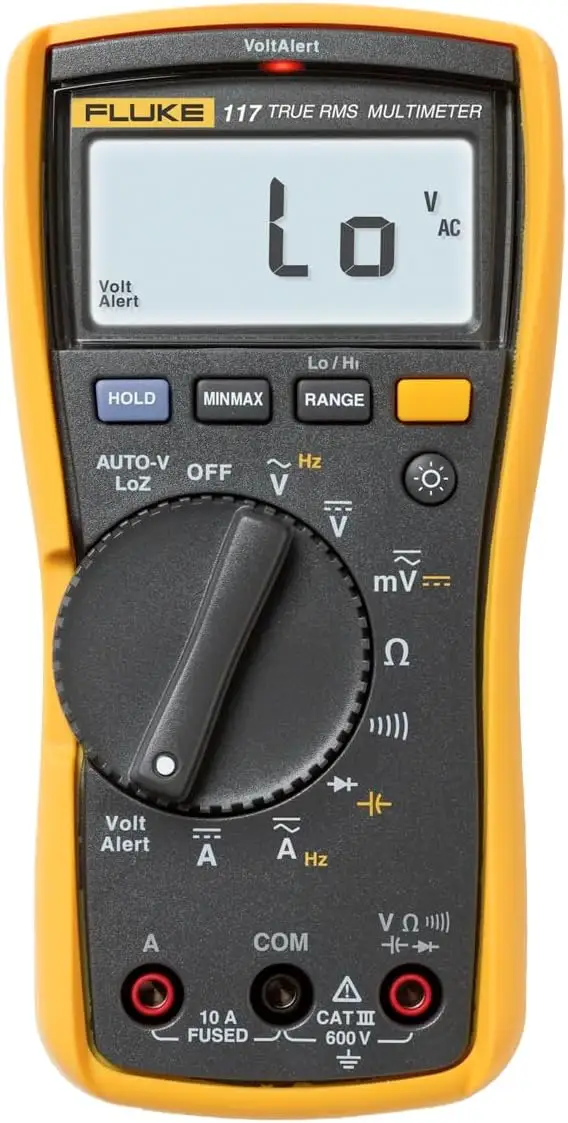
Fluke 117 True-RMS Multimeter
The everyday electrician's meter: true-RMS AC measurement, non-contact voltage detection and a CAT III 600 V rating in a compact body.
- True-RMS AC measurement — accurate readings on the electronic loads that fool cheaper average-sensing meters.
- Built-in non-contact voltage detection — confirm a circuit is live before you put a probe anywhere near it.
- CAT III 600 V safety rating — rated for the transient energy you meet in distribution panels and fixed wiring.
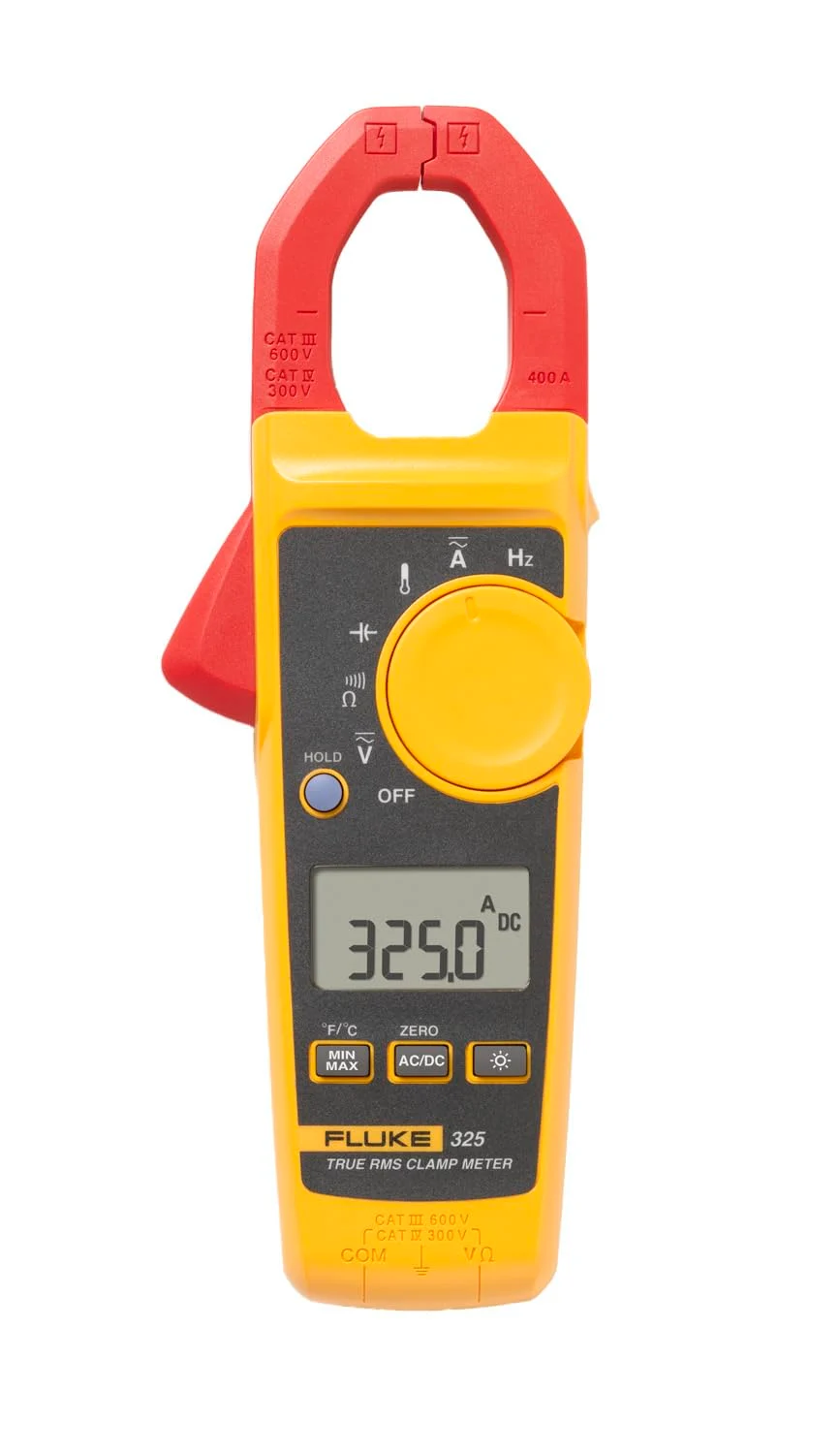
Fluke 325 True-RMS Clamp Meter
Clamp-on AC/DC current measurement in tight panels, with true-RMS accuracy and a CAT III 600 V rating.
- AC and DC current measurement — covers mains circuits, battery banks and solar strings with one tool.
- Clamp-on measurement — read current without disconnecting or disturbing the circuit.
- Slim jaw profile — slides into crowded panels where bulky clamps will not fit.
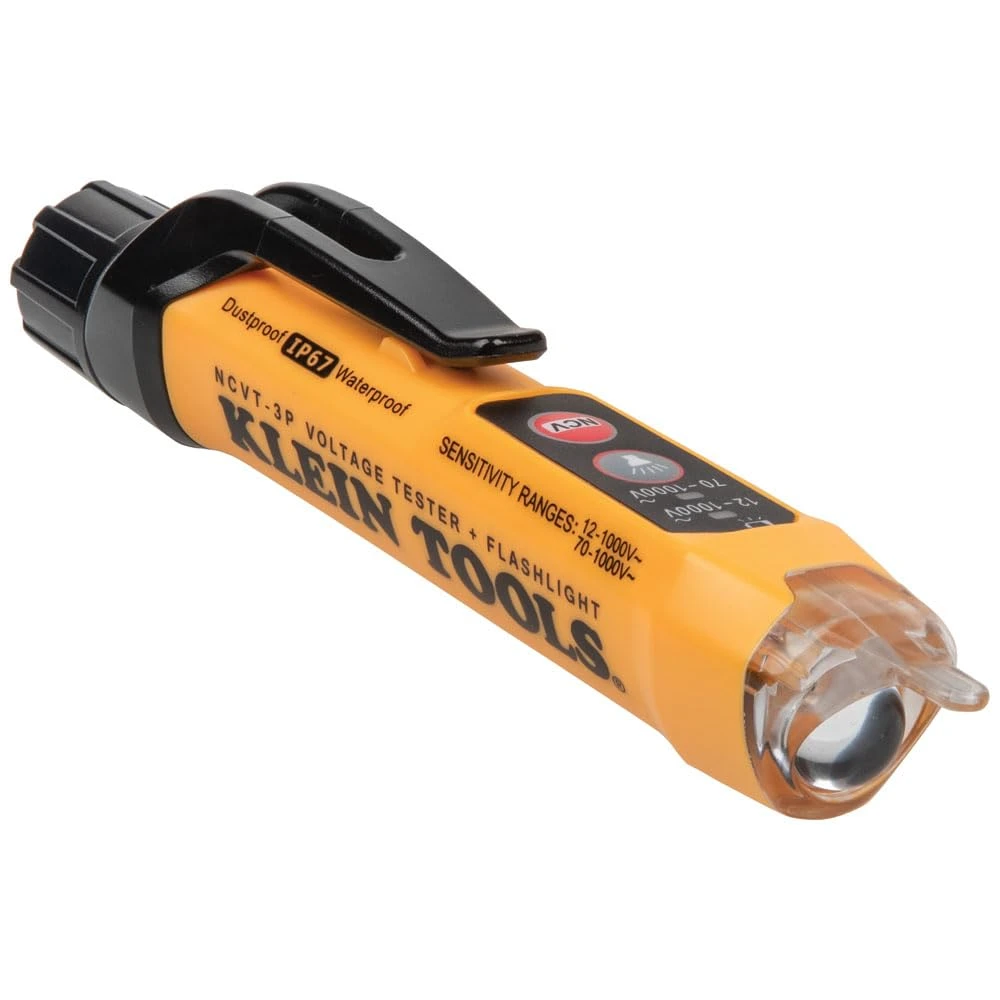
Klein Tools NCVT-3P Non-Contact Voltage Tester
Dual-range voltage tester with an integrated flashlight for working in dark panels.
- Built-in flashlight — no separate torch needed when you are working inside a dark enclosure.
- Dual sensitivity ranges — narrows detection so adjacent wiring causes fewer false positives.
- 12–1000 V AC detection — covers everything from control circuits up to mains voltage.
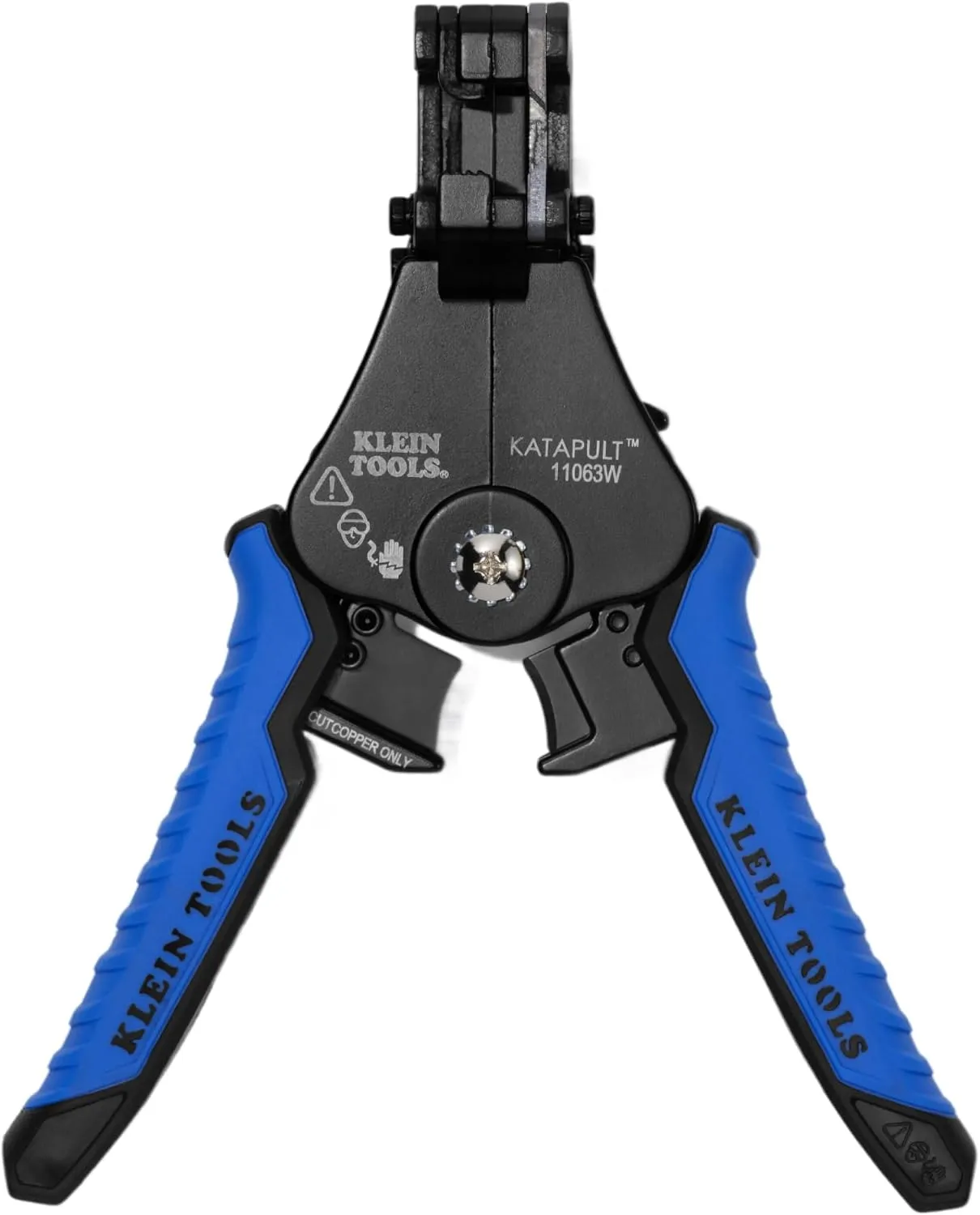
Klein Tools 11063W Wire Stripper and Cutter
Self-adjusting stripper that grips, strips and cuts common building wire in one motion.
- Self-adjusting action — squeeze once and the tool sets itself to the conductor size, so strips are repeatable.
- Clean strip without nicking — protects the copper, which is what keeps a termination reliable long term.
- Built-in cutter and plier nose — you can cut, strip and twist without swapping tools.