How to Choose Electrical Safety Gear
PPE is the last line of defence
Protective equipment is exactly that: protection for when everything else has already been done. Isolate the circuit, lock it off, prove it dead and work de-energised wherever the job allows. Gear is what you wear for the residual risk — it is not a licence to work live.
That ordering matters when you shop, because it tells you what to prioritise. A well-chosen voltage tester you actually use is worth more than an expensive pair of gloves you leave in the van.
Understand the rating, not the colour
Safety gear is sold on ratings, and the ratings are the only part worth paying for. A yellow glove with no legible class marking is a costume. Before buying anything, find the standard it is tested to, the maximum voltage it is rated for, and the date of manufacture or last test where that applies.
For any given item, ask three questions:
- What does it protect against? Shock, arc flash, impact, cuts and chemical exposure are different hazards with different equipment.
- What is it rated for? The voltage, energy or impact figure — not the marketing description.
- How does it fail? Gloves puncture, insulation gets cut, eye protection fogs and gets removed. Buy gear that will still be worn at the end of the day.
Insulating gloves
Gloves are the single most important item for work near live conductors. Choose by class, which sets the maximum working voltage with a safety margin above it, and pick a class that comfortably exceeds the highest voltage you could meet — not the voltage you expect to find.
Fit matters as much as class. A glove that is too large reduces dexterity until you take it off; too small and it splits. Many electricians wear a thin cotton liner underneath for comfort and moisture control, which also makes the gloves easier to put on in a hurry.
Maintenance is where most glove protection is lost. Inspect before every use, air-test for pinholes, store them flat away from heat, sunlight and ozone, and send them for periodic retesting. A glove past its test date should not be in the bag.
Insulated hand tools
Insulated screwdrivers, pliers and cutters protect the user from the conductor they are touching. Look for a recognised insulated-tool standard marking and check that the insulation covers the whole working area — some tools are insulated only to a point, leaving a conductive section beyond it.
Treat the insulation as a wear item. Any cut, burn, gouge or exposed metal where there should be none retires the tool. Foam-taped repairs do nothing except hide a failure.
Testers: the gear that keeps you alive
Every task starts with proving the circuit is dead, and that depends on the tester being right. Three tools cover most work:
- A two-pole voltage tester is the reference instrument for proving dead, because it draws current through the circuit and gives an unambiguous reading.
- A non-contact voltage tester is a fast screening tool for finding which cable is which — useful, but it cannot prove zero volts and should never be the only check.
- An outlet tester verifies wiring polarity and protective-device function at a socket quickly and repeatably.
Whichever you carry, the discipline is the same: prove the tester on a known live source, test the circuit, then prove the tester again. Testers that are dropped, wet or overdue for calibration belong in the bin, not in the bag. See the non-contact voltage tester and the VoltAlert for typical examples, and the outlet tester for socket checks.
Eye, arc and foot protection
- Eye protection. Arc flash, molten metal and flying debris are all real on electrical work. Safety glasses with side protection are the baseline; arc-rated face shields are needed where the incident energy is higher.
- Arc-rated clothing. For work with a credible arc-flash risk, ordinary synthetic workwear makes things worse — it melts onto skin. Arc-rated garments are a different category of product entirely.
- Footwear. Non-conductive, closed footwear with a defined sole. Footwear is also part of a shock path, not just a comfort item.
- Insulating mats and barriers. Where work must happen near energised equipment, mats and temporary barriers create a defined safe zone.
A practical buying checklist
- The standard and rating are legible on the item itself, not just the packaging.
- The item is rated for the highest voltage or energy you could actually meet.
- It fits well enough that you will keep wearing it.
- It is inspectable — you can see the insulation, and you know how to test it.
- Consumables (gloves, testers, fuses for the tester) can be replaced or retested easily.
- It is stored properly, away from heat, sunlight and moisture.
Our verdict
Buy the tester you will use on every job first, and make sure it can actually prove dead. Then buy insulating gloves of the correct class and look after them properly, and insulated hand tools you can inspect at a glance. Everything else supports that core.
No piece of equipment substitutes for isolation, lock-off and a proven-dead check. VoltCalc provides educational information only and cannot assess your specific installation — where the risk is significant, work to the standards that apply where you are and involve a competent person.
IEC 61010 Category Ratings & Verification Checklist
When selecting testers and insulating gear for live diagnostics, confirm four safety parameters:
- IEC 61010 Overvoltage Categories: CAT II (outlets & plug-in appliances), CAT III (fixed distribution boards & branch circuits), CAT IV (service entrance, meters & outdoor overhead/underground origins). Fused probe tips and leads must carry the same or higher CAT rating.
- Live-Dead-Live Proving: Never trust a panel schedule or NCV pen alone; prove a two-pole CAT III/IV voltage tester on a known source before and after confirming zero volts.
- Commissioning & Protection Checks: Verify insulation resistance (MΩ), earth-fault loop impedance (Z_s), and trip thresholds on GFCI (4–6 mA) vs. RCD (30 mA) protection.
Side-by-Side Worked Examples: North America (NEC / NFPA 70E) vs. International (IEC 60364 / BS 7671)
North American (NFPA 70E / NEC) Worked Example
Inspecting a 480Y/277 V industrial motor starter panel with Class 00 (500 V max) or Class 0 (1,000 V max) rubber insulating gloves.
- Class selection: 480 V line-to-line sits right under Class 00's 500 V limit, so Class 0 (1,000 V AC) gloves with leather protectors give a safe working margin, paired with 1,000 V VDE/ASTM F1505 insulated tools and arc-rated PPE per the panel's incident-energy label.
- Instrument check: Use a CAT III 600 V / CAT IV 600 V meter + Live-Dead-Live verification before changing out a starter overload.
International (IEC 60900 / EN 50365 / BS 7671) Worked Example
Isolating a 400/230 V TN-S distribution board prior to testing Z_s and insulation resistance:
- Put on IEC 60903 Class 0 (1,000 V) gloves if exposed live shrouding is possible, verify dead with a GS38-compliant two-pole CAT III/IV tester, and lock off the incomer.
- Measure insulation resistance at 500 V DC (≥1.0 MΩ target) and confirm 30 mA Type A RCD trips in ≤40 ms at 5× IΔn before restoring supply.
Related Calculators
Related Unit Converters
Watts to Amps Converter
Convert active power in watts (W) to current in amps (A) for DC and AC circuits.
Amps to Watts Converter
Convert current in amps (A) to active power in watts (W) for DC and AC systems.
AWG to mm² Converter (American Wire Gauge to Metric)
Convert American Wire Gauge (AWG) to metric mm² area, diameter, and resistance.
Frequently Asked Questions
Recommended Tools & Equipment for This Guide
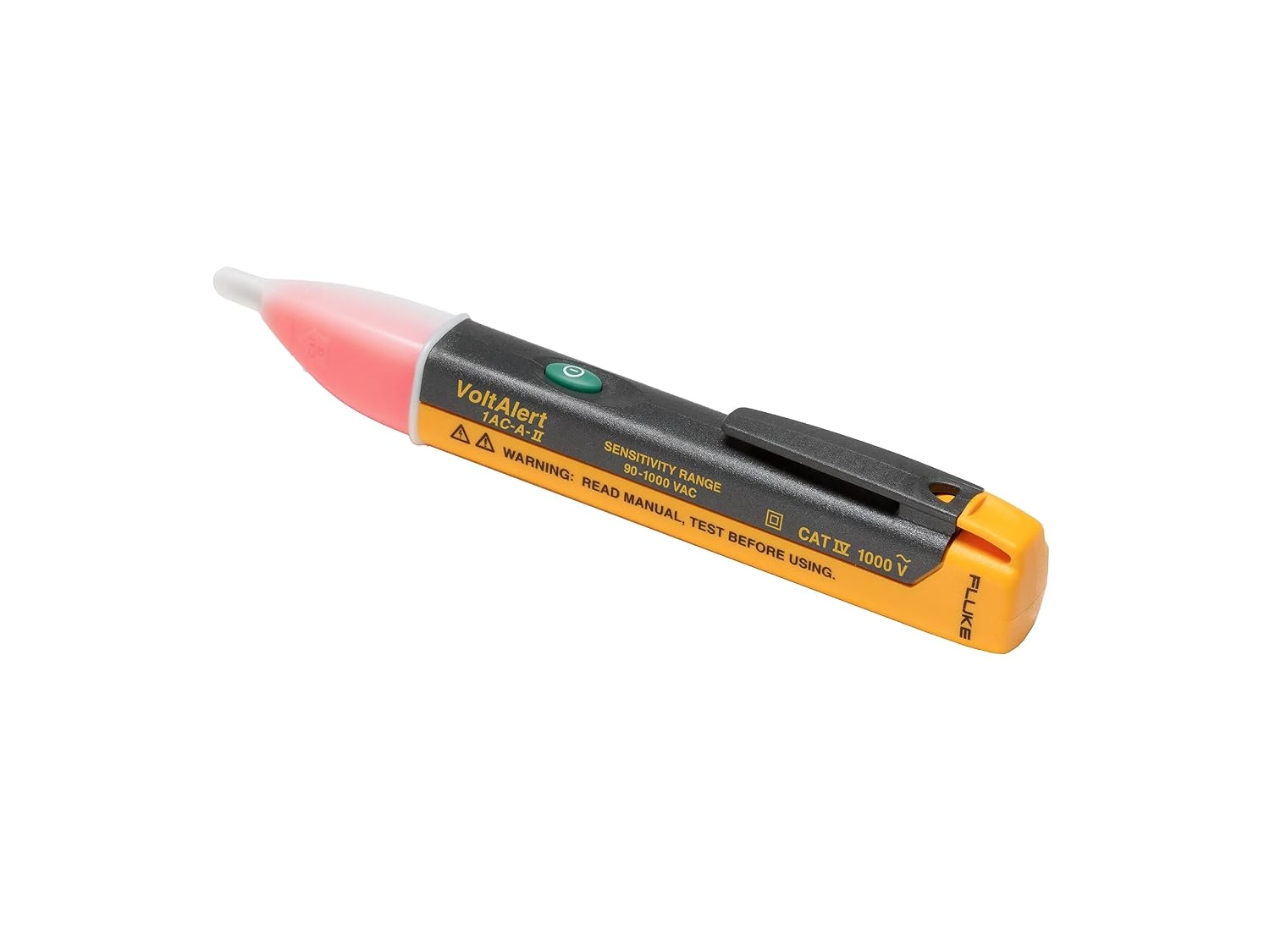
Fluke 1AC-II VoltAlert Non-Contact Voltage Tester
A quick live-wire check you can keep in a shirt pocket — CAT IV 1000 V rated.
- Non-contact detection — confirms voltage is present without any contact or exposed metal.
- Audible and visual indication — clear beep and bright glow, so you can confirm while looking elsewhere.
- CAT IV 1000 V rating — safety category suited to service entrances and outdoor conductors.
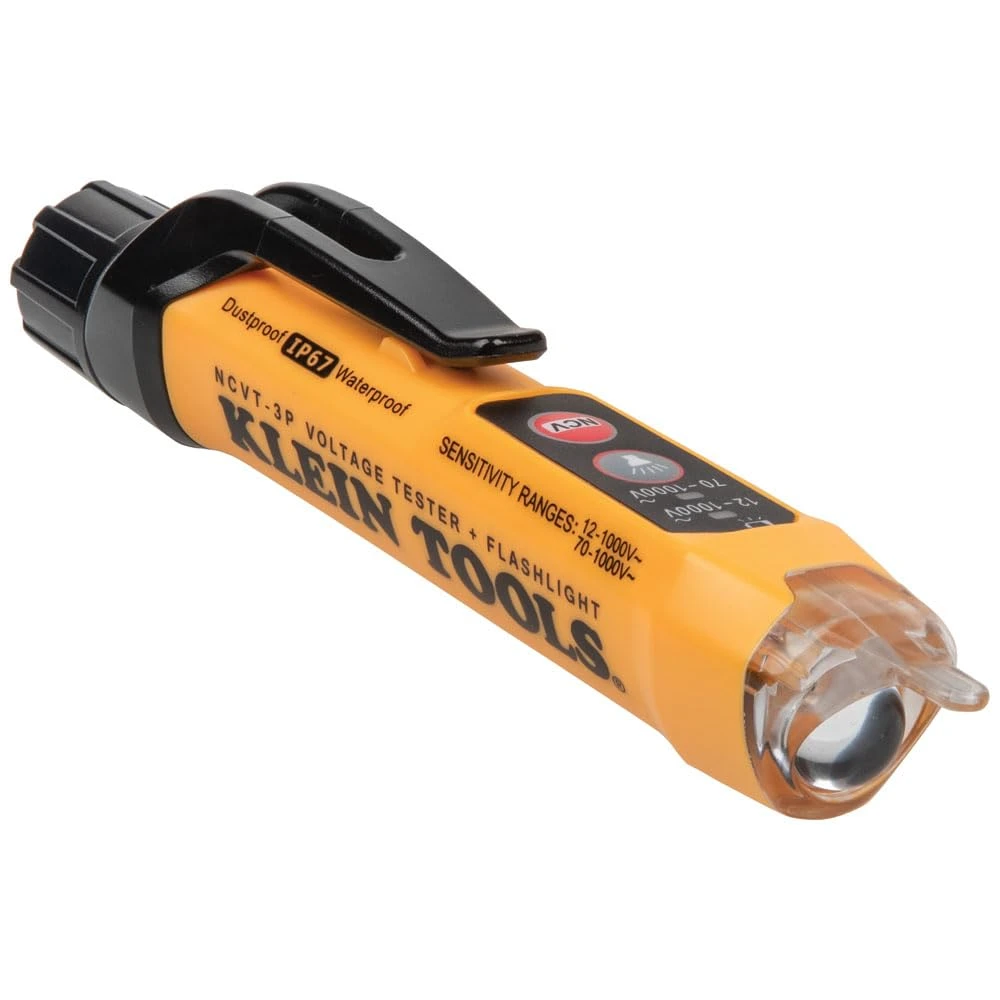
Klein Tools NCVT-3P Non-Contact Voltage Tester
Dual-range voltage tester with an integrated flashlight for working in dark panels.
- Built-in flashlight — no separate torch needed when you are working inside a dark enclosure.
- Dual sensitivity ranges — narrows detection so adjacent wiring causes fewer false positives.
- 12–1000 V AC detection — covers everything from control circuits up to mains voltage.
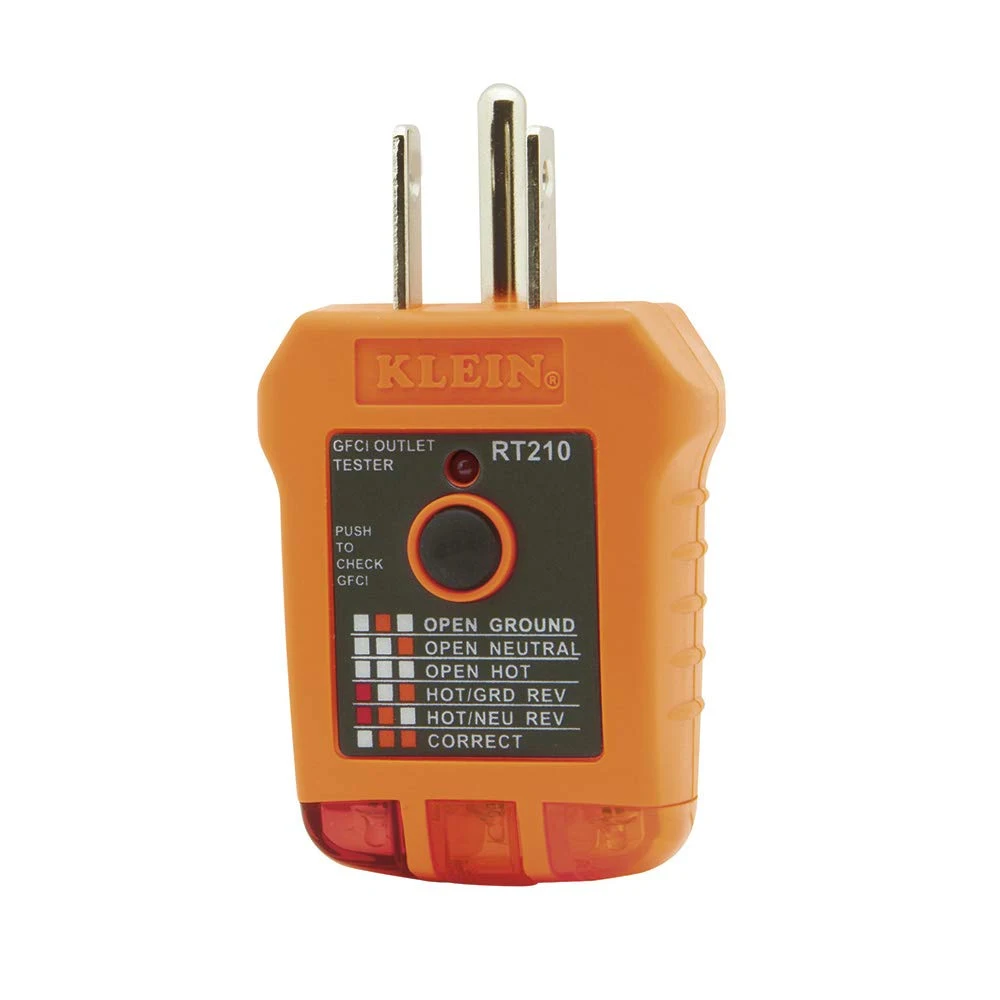
Klein Tools RT210 GFCI Outlet Tester
Plug it in and the LED legend tells you the wiring fault; press the button to trip a GFCI and confirm it works.
- Reads wiring faults from an LED legend — open ground, open neutral, open hot, hot/ground reversed and hot/neutral reversed, all identified at a glance.
- Trips GFCI devices with a push button — confirms the device actually interrupts the circuit rather than simply being installed.
- Three-prong plug with a two-prong adapter — reaches outlets without a ground pin in older wiring.
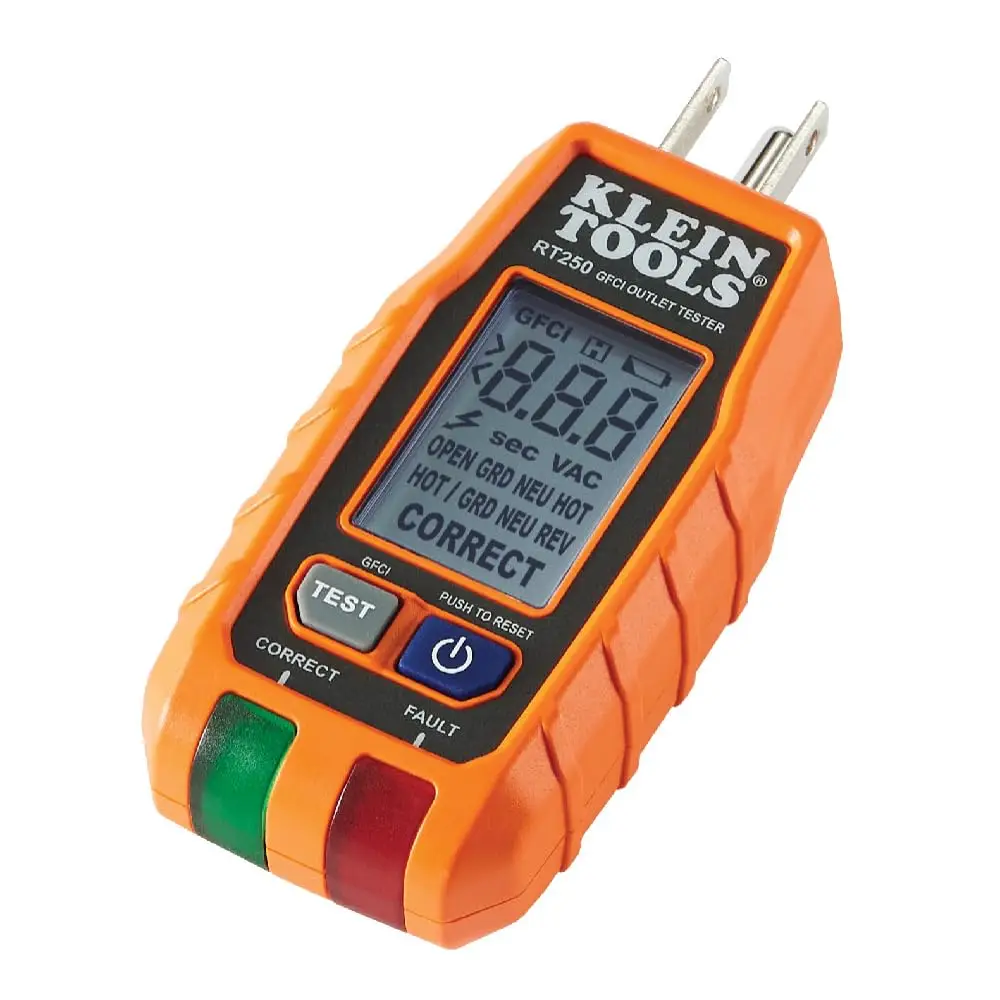
Klein Tools RT250 GFCI Receptacle Tester
An outlet tester with a screen: it shows the voltage and times the GFCI trip, so you get a number rather than a pass or fail.
- LCD screen showing the supply voltage — confirms what is actually at the outlet rather than assuming nominal voltage.
- GFCI trip time displayed in seconds — shows how long the device took to interrupt, so a slow or marginal GFCI is visible rather than hidden.
- Full wiring fault checks — open ground, open neutral, open hot, hot/ground reversed and hot/neutral reversed, on screen.