Electrical Safety Basics Everyone Should Know
Treat every circuit as live until proven otherwise
The single most important habit is verification. Before touching any conductor, isolate the circuit and then test it dead with a proven voltage tester. Labels on distribution boards are often wrong.
The main hazards
- Electric shock — current through the body, which can disrupt heart rhythm at surprisingly low values.
- Arc flash — an explosive release of energy from a fault, causing severe burns.
- Fire — from overloaded conductors, loose connections or damaged insulation.
Core principles
- Isolate and lock off. Switch off, lock the isolator where possible, and verify dead.
- Protect the circuit. Correctly rated breakers and fuses protect the cable, not just the appliance.
- Earth properly. Effective earthing ensures protective devices operate during a fault.
- Use the right cable. Undersized conductors overheat. Check both ampacity and voltage drop.
- Keep connections tight. Loose terminations are a leading cause of fires.
- Use residual current protection. RCDs/ GFCIs detect leakage and disconnect quickly.
Personal protective equipment
Insulated tools, voltage-rated gloves, eye protection and non-conductive footwear are the basics for any live-adjacent work. Arc-rated clothing is required for higher-energy tasks.
When to stop
If a job involves the supply intake, main earthing, or unfamiliar equipment, stop and involve a qualified electrician. VoltCalc provides calculations and educational information only — it cannot assess your specific installation.
Reference
The principles above align with widely recognised standards such as IEC 60364, BS 7671 and NFPA 70 (NEC). Always follow the code that applies where you are, and have installation work verified by a competent person.
Pre-Work Verification, IEC 61010 CAT Ratings & Protection Testing
Safe isolation and commissioning depend on using the right instrument category and test sequence:
- IEC 61010 Category Ratings: Match test equipment and fused leads to the energy zone — CAT II for plug-in appliance outlets, CAT III for distribution boards, feeders, and fixed branch circuits, and CAT IV for utility service entrances and outdoor origins.
- Proving Dead (Live-Dead-Live): Lock off the isolator, test a known live source or proving unit, measure phase-to-phase and phase/neutral-to-earth with a two-pole CAT III/IV voltage tester to confirm zero volts, then re-test the known live source.
- Dead & Live Verification Tests: Confirm protective conductor continuity, insulation resistance (MΩ) between live conductors and earth, earth-fault loop impedance (Z_s) to guarantee disconnection time, and trip time on GFCI (4–6 mA North America) vs. RCD (30 mA IEC/BS 7671) protection.
Side-by-Side Worked Examples: North America (NEC) vs. International (IEC 60364 / BS 7671)
North American (NEC 2023/2026) Worked Example
Isolating and verifying a 208Y/120 V commercial panelboard circuit before replacing a 20 A GFCI breaker:
- Use CAT III 600 V (IEC 61010) rated two-pole tester + safety glasses/insulated gloves; lock/tag the 20 A breaker and execute Live-Dead-Live across L1-N, L1-G, and N-G.
- After re-energizing, verify insulation >1 MΩ beforehand (branch check) and confirm the Class A GFCI trips cleanly at 4–6 mA leakage.
International (IEC 60364 / BS 7671) Worked Example
Testing a 230 V 50 Hz TN-S socket circuit protected by a 32 A Type B, 30 mA RCBO:
- Isolate with LOTO and prove dead (Live-Dead-Live) using a GS38-compliant fused CAT III / CAT IV two-pole tester; verify ≥ 1.0 MΩ insulation resistance at 500 V DC.
- Confirm measured earth-fault loop impedance Z_s = 0.62 Ω provides fault current I_ef = (0.95 × 230) ÷ 0.62 = 352.4 A (exceeding Type B magnetic trip 5 × 32 = 160 A for <0.4 s disconnection) and verify 30 mA RCD trip within 300 ms (and ≤40 ms at 5× IΔn).
Related Calculators
Related Unit Converters
Watts to Amps Converter
Convert active power in watts (W) to current in amps (A) for DC and AC circuits.
Amps to Watts Converter
Convert current in amps (A) to active power in watts (W) for DC and AC systems.
AWG to mm² Converter (American Wire Gauge to Metric)
Convert American Wire Gauge (AWG) to metric mm² area, diameter, and resistance.
Frequently Asked Questions
Recommended Tools & Equipment for This Guide
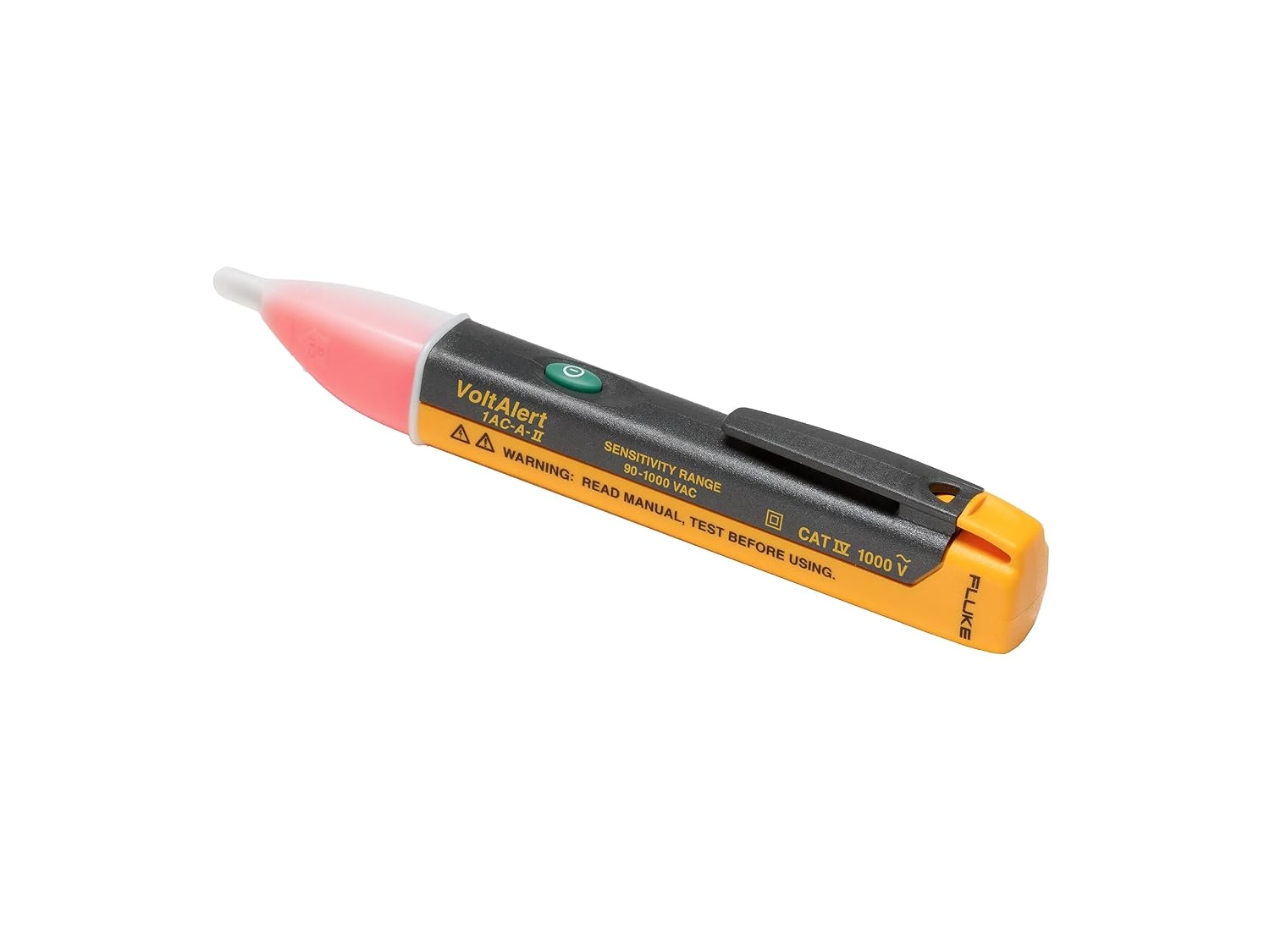
Fluke 1AC-II VoltAlert Non-Contact Voltage Tester
A quick live-wire check you can keep in a shirt pocket — CAT IV 1000 V rated.
- Non-contact detection — confirms voltage is present without any contact or exposed metal.
- Audible and visual indication — clear beep and bright glow, so you can confirm while looking elsewhere.
- CAT IV 1000 V rating — safety category suited to service entrances and outdoor conductors.
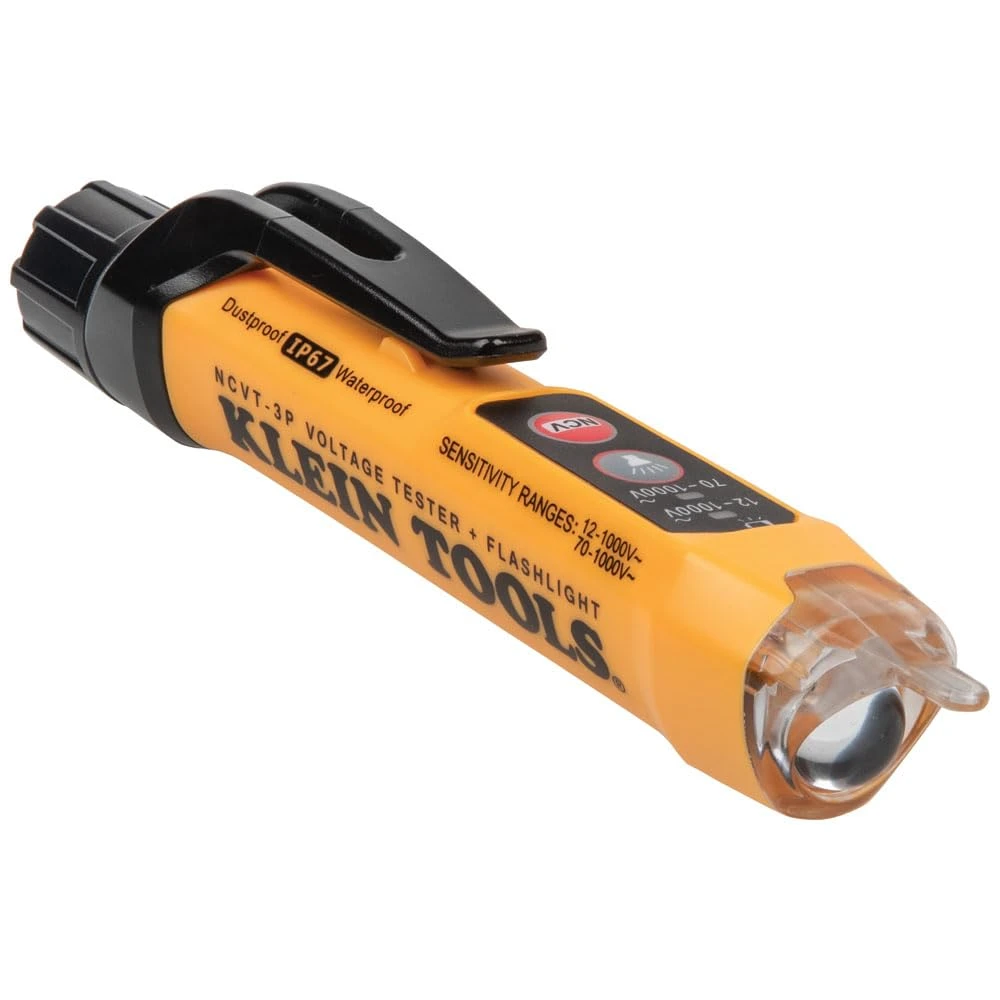
Klein Tools NCVT-3P Non-Contact Voltage Tester
Dual-range voltage tester with an integrated flashlight for working in dark panels.
- Built-in flashlight — no separate torch needed when you are working inside a dark enclosure.
- Dual sensitivity ranges — narrows detection so adjacent wiring causes fewer false positives.
- 12–1000 V AC detection — covers everything from control circuits up to mains voltage.
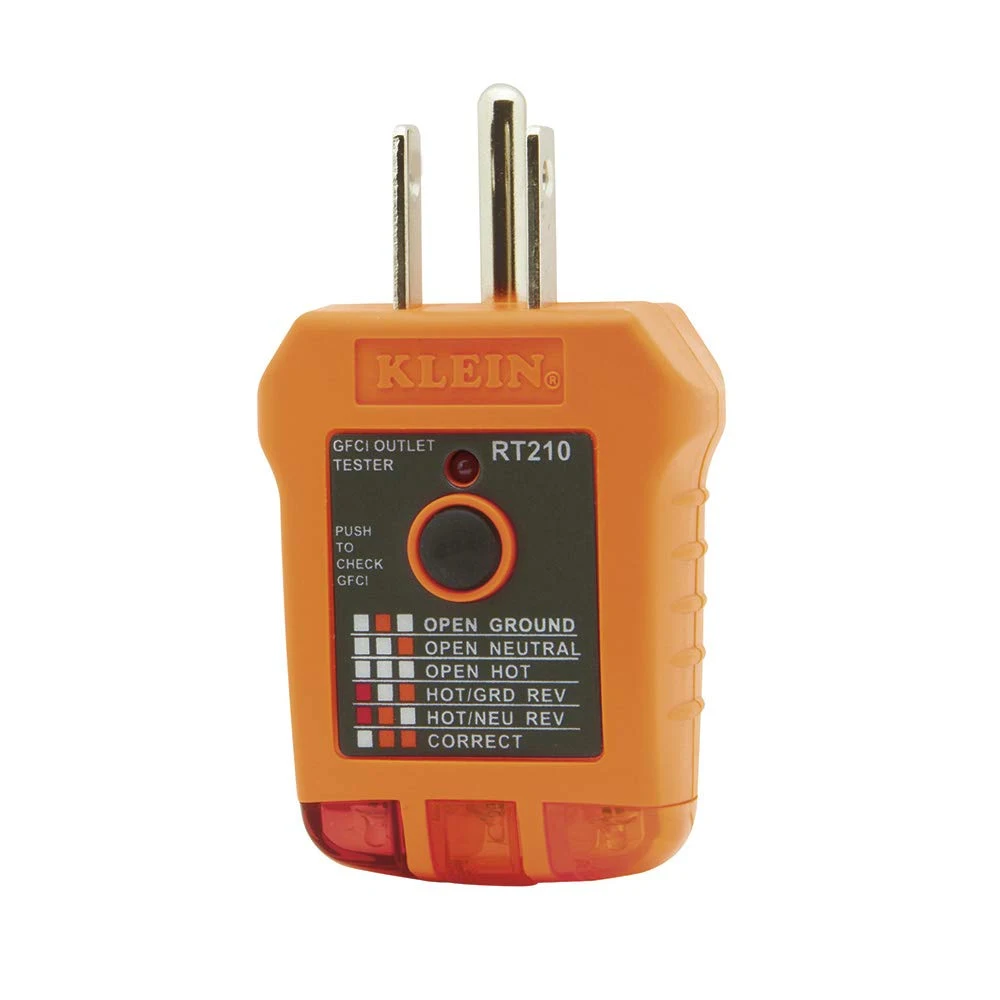
Klein Tools RT210 GFCI Outlet Tester
Plug it in and the LED legend tells you the wiring fault; press the button to trip a GFCI and confirm it works.
- Reads wiring faults from an LED legend — open ground, open neutral, open hot, hot/ground reversed and hot/neutral reversed, all identified at a glance.
- Trips GFCI devices with a push button — confirms the device actually interrupts the circuit rather than simply being installed.
- Three-prong plug with a two-prong adapter — reaches outlets without a ground pin in older wiring.
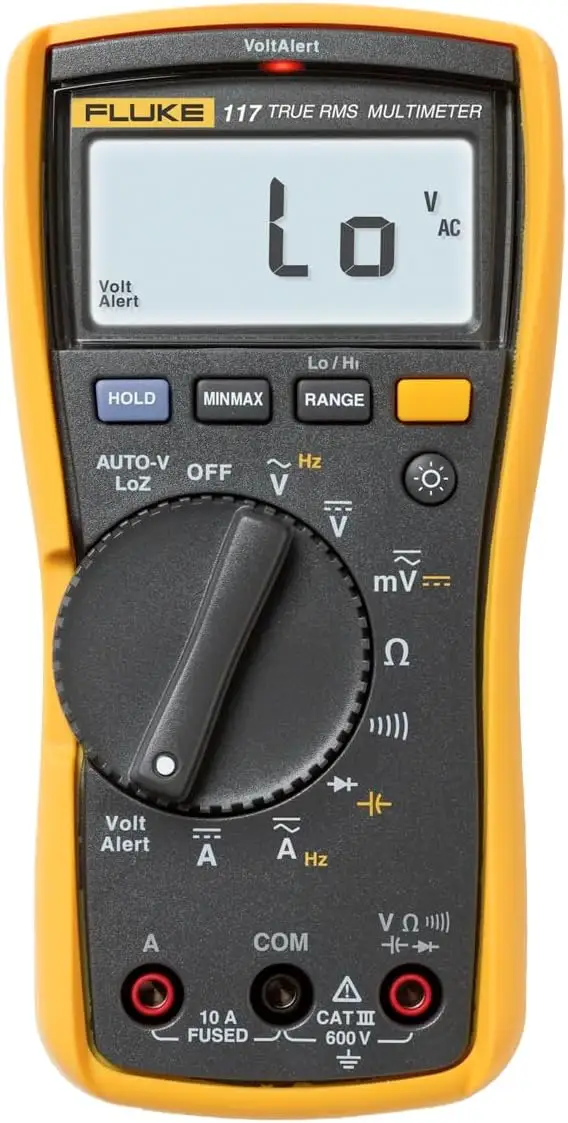
Fluke 117 True-RMS Multimeter
The everyday electrician's meter: true-RMS AC measurement, non-contact voltage detection and a CAT III 600 V rating in a compact body.
- True-RMS AC measurement — accurate readings on the electronic loads that fool cheaper average-sensing meters.
- Built-in non-contact voltage detection — confirm a circuit is live before you put a probe anywhere near it.
- CAT III 600 V safety rating — rated for the transient energy you meet in distribution panels and fixed wiring.